
Field guide · legendary
Tiger
The striped emperor, every pattern unique, every sighting legendary.
Endangered
Panthera tigris
Overview
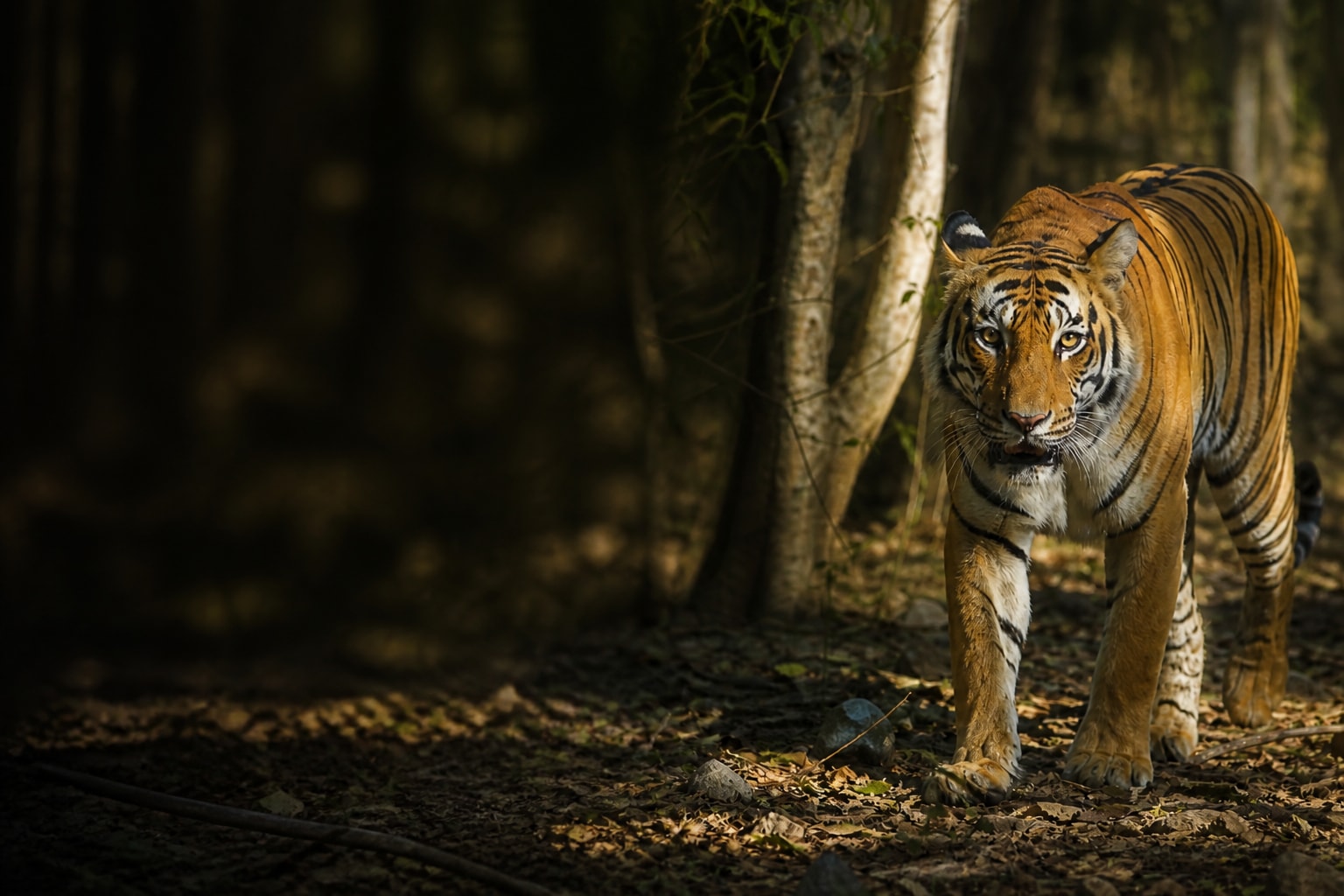
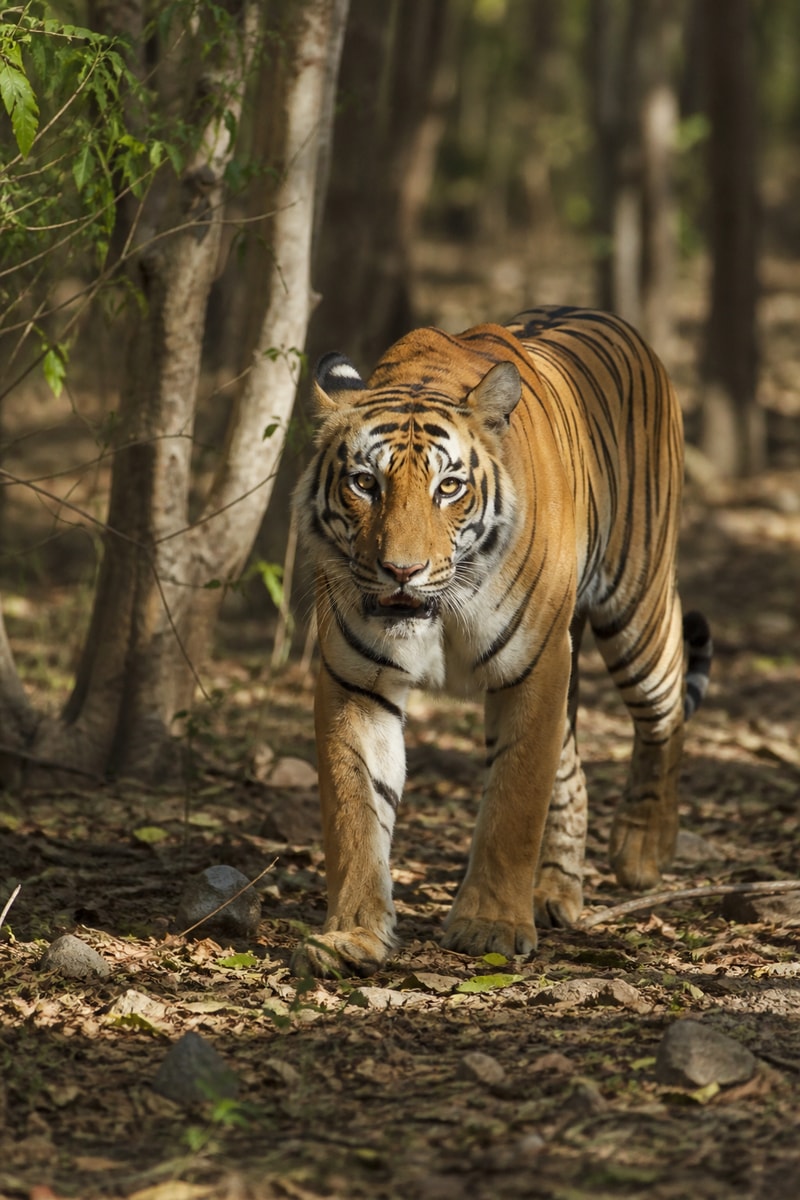
The tiger is the largest cat on Earth and one of the most powerful symbols in nature: orange flame striped with black, moving through jungle and grassland with a confidence that needs no introduction. No two tigers share the same stripe pattern; each is as individual as a fingerprint.
For Catch'Um collectors, the tiger is the definition of legendary: elusive, endangered, and unforgettable. A glimpse through sal forest at Ranthambore or Bandhavgarh, amber eyes, massive head, that unhurried stride, is the kind of discovery that justifies the whole collection.
- Scientific namePanthera tigris
- Length1.4–2.8 m body; tail 60–110 cm
- Height80–110 cm at the shoulder
- WeightFemales ~100–160 kg; males ~180–300 kg (subspecies vary)
- Lifespan10–15 years in the wild
- DietApex ambush predators…
- ConservationEndangered
- RegionJungle & Grassland
Habitat
- Tropical rainforest
- Mangrove forest
- Grassland
- Temperate forest
Bengal tigers range across India, Nepal, Bangladesh, and Bhutan, in tropical forest, dry deciduous woodland, mangrove swamps, and tall grassland. They need large territories with prey and water, and are most often seen in protected reserves where jeep safaris patrol at dawn and dusk.
Countries found
Field notes
Field scale for the Tiger: length around 1.4-2.8 m body; tail 60-110 cm; height 80-110 cm at the shoulder; weight Females ~100-160 kg; males ~180-300 kg (subspecies vary). Typical lifespan: 10-15 years in the wild.
When you are scanning habitat, prioritise tropical rainforest, mangrove forest, grassland, and temperate forest. Those settings are where a clean look and a usable photo are most likely.
Quick ID anchor: Unmistakable large orange-coated cat with black vertical stripes, white underside, and a long ringed tail. Males are bulkier with a ruff; pattern is unique to each individual. Confirm with behaviour and habitat before you log the discovery.
Where to see one
India
In India, strong options include Ranthambore National Park, Bandhavgarh National Park, Kanha National Park, and Sundarbans Mangroves. Dry deciduous forest and ruined fortresses where tigers patrol ancient trails, one of India's most reliable tiger-spotting reserves.
Open the India spotting guide for every park note tied to the tiger.
Diet
Apex ambush predators taking large ungulates—deer, wild boar, and gaur where available. Also take smaller mammals and livestock when wild prey is scarce.
Behaviour
Solitary and largely nocturnal or crepuscular. Mark territory with scent and scrapes; hunt by stalking close then a short explosive rush. Mothers raise cubs alone for about two years.
How to identify
Unmistakable large orange-coated cat with black vertical stripes, white underside, and a long ringed tail. Males are bulkier with a ruff; pattern is unique to each individual.
Interesting facts
- 01
Every tiger has a unique stripe pattern, like a fingerprint.
- 02
Tigers are the largest wild cats. Males can weigh over 260 kilograms.
- 03
Unlike lions, tigers are solitary, each adult holds and patrols its own territory.
- 04
They can consume up to 40 kilograms of meat in a single night after a kill.
- 05
India is home to roughly 70% of the world's wild tigers, around 3,000 individuals.
- 06
Tigers are powerful swimmers and often cool off in pools and rivers during the heat of the day.
Conservation status
Tigers are Endangered, with numbers down from 100,000 a century ago to around 4,500 today. India's Project Tiger and protected reserve network have stabilised Bengal tiger numbers, but poaching and habitat fragmentation remain critical threats across their range.
Sources: IUCN Red List
Keep exploring
Where it lives
Related discoveries
Free on iOS
Catch the Tiger
Spot one in the wild, then scan it in Catch'Um to log your legendary discovery.