
Field guide · legendary
Gharial
India's needle-snouted fish specialist — a Critically Endangered river giant.
Critically Endangered
Gavialis gangeticus
Overview
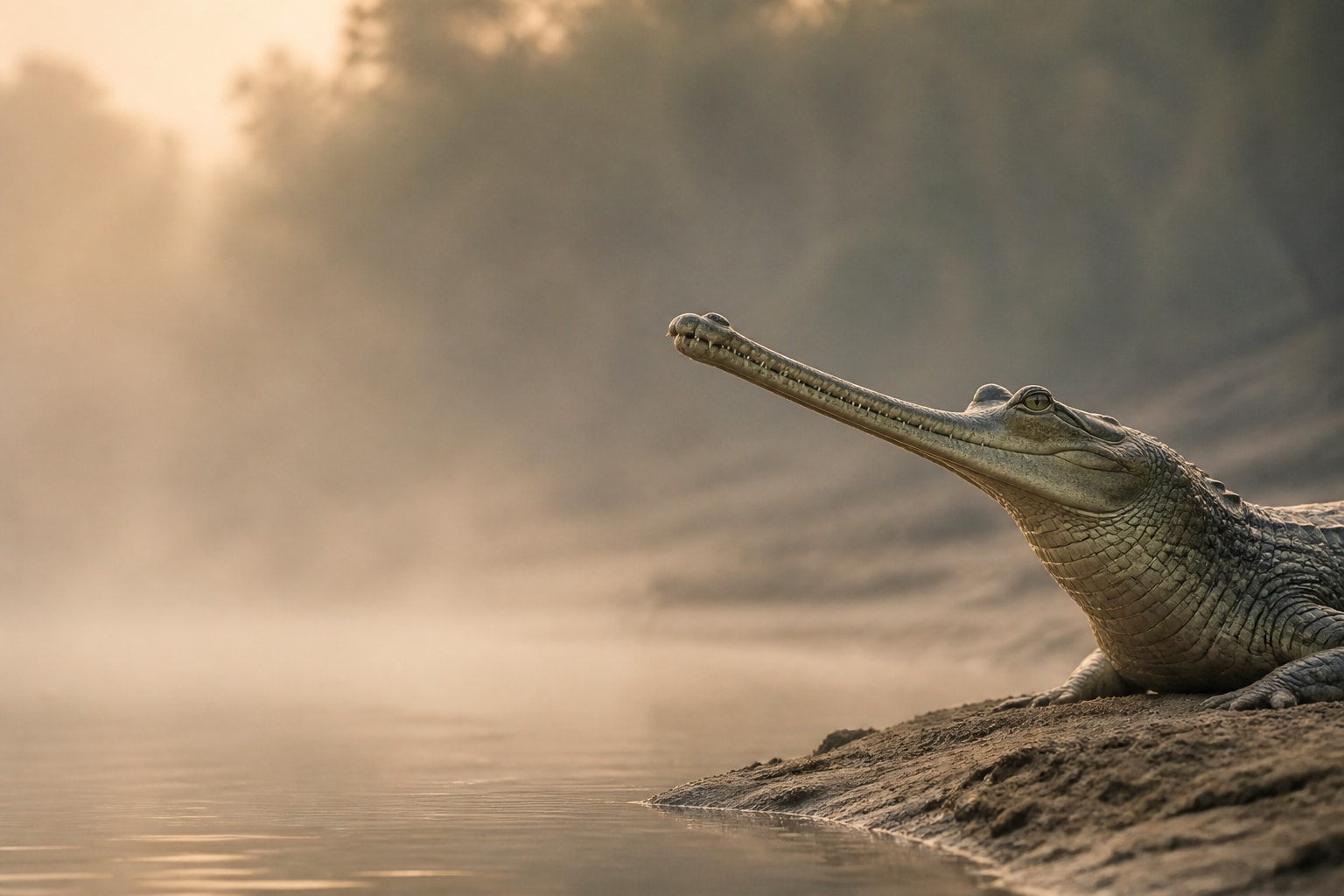
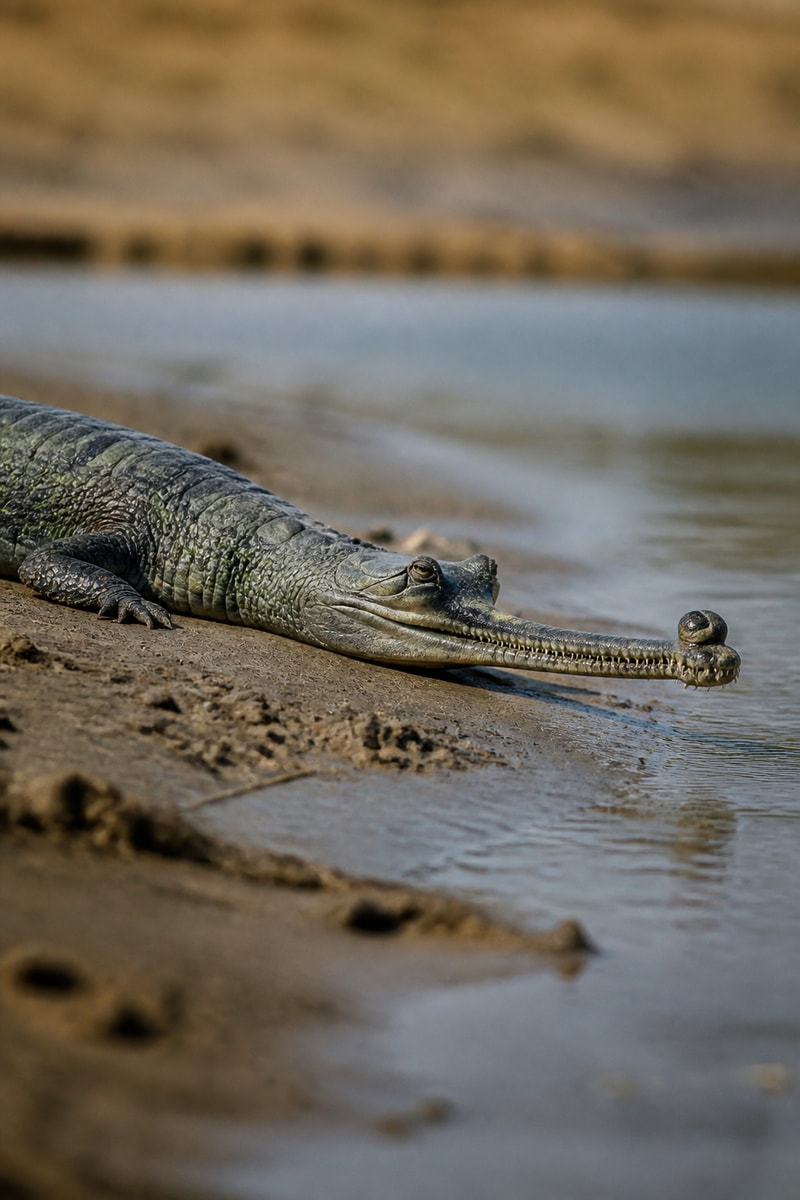
Gharials are long-snouted crocodilians specialised for catching fish in deep rivers. Adult males develop a bulbous boss (ghara) on the snout tip, used in vocal displays and bubble shows on sandbanks.
For India collectors, a gharial on a Ganges sandbar is a legendary river card — ancient, specialised, and hanging on.
- Scientific nameGavialis gangeticus
- Length3.5–5 m typically; large males may exceed 5 m
- Weight150–250 kg typical adults
- LifespanAround 40–60 years in the wild
- DietAdults specialise on…
- ConservationCritically Endangered
- RegionRiverine Sandbanks
Where to see them
Habitat
- Deep rivers
- Sandbanks
- Riverine shallows
Deep, fast-flowing rivers with clean water and sandy banks for nesting and basking, chiefly in the Ganges, Brahmaputra, and Mahanadi systems of India and Nepal.
Field notes
Field scale for the Gharial: length around 3.5-5 m typically; large males may exceed 5 m; weight 150-250 kg typical adults. Typical lifespan: Around 40-60 years in the wild.
When you are scanning habitat, prioritise deep rivers, sandbanks, and riverine shallows. Those settings are where a clean look and a usable photo are most likely.
Quick ID anchor: Elongated needle-like snout, olive-grey body, and long powerful tail. Confirm with behaviour and habitat before you log the discovery.
Diet
Adults specialise on fish seized with rapid sideways snaps of the slender jaws.
Juveniles also take insects, crustaceans, and frogs.
Behaviour
Bask on sandbanks; males advertise with ghara buzzes and bubble displays.
Females nest in sand; hatchlings stay near adults in nursery shallows.
How to identify
Elongated needle-like snout, olive-grey body, and long powerful tail.
Adult males show a distinct bulbous ghara at the snout tip.
Interesting facts
- 01
Extremely narrow snout is packed with interlocking fish-catching teeth.
- 02
Adult males grow a bulbous snout tip called a ghara.
- 03
Among the longest living crocodilians — males can exceed 5 m.
- 04
Almost entirely fish-eating as adults.
- 05
Nest on river sandbanks; females guard nests and young.
- 06
Once ranged widely across the Indian subcontinent.
Conservation status
Gharials are Critically Endangered. Dams, sand mining, fishing nets, and river pollution collapsed wild numbers. Captive rearing and protected stretches of Indian rivers are their last lifeline.
Sources: IUCN Red List
Keep exploring
Where it lives
Related discoveries
Free on iOS
Catch the Gharial
Spot one in the wild, then scan it in Catch'Um to log your legendary discovery.