
Field guide · rare
Caracal
Tufted ears and bird-snatching leaps — Africa and India's silent medium cat.
Least Concern
Caracal caracal
Overview
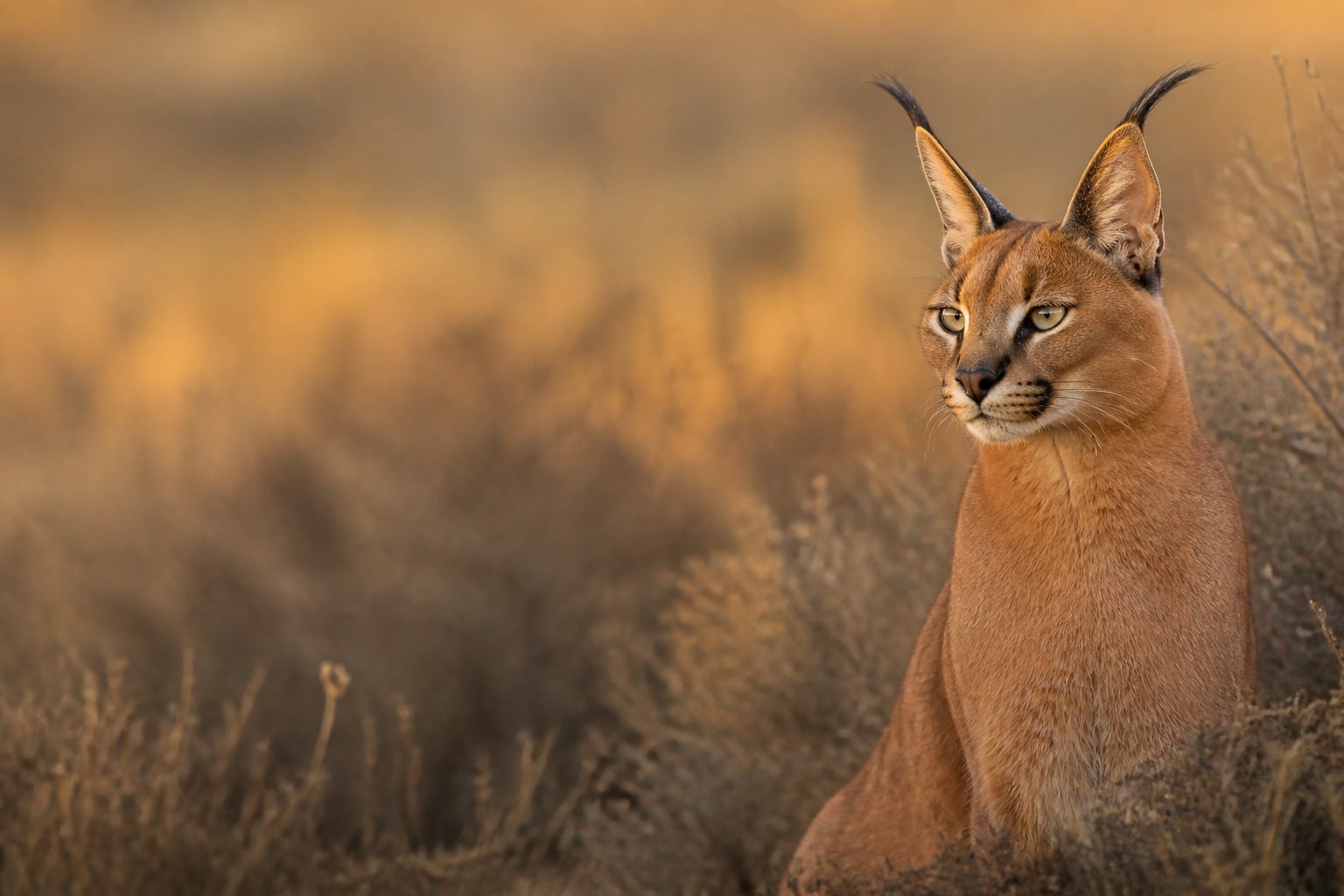
Caracals are powerful medium cats with long black ear tufts and a plain reddish coat. Famous for leaping to intercept birds in flight, they also take rodents, hares, and small antelope across dry country.
For Kenya, India, and South Africa collectors, a caracal silhouette at dusk is a stealthy dryland prize.
- Scientific nameCaracal caracal
- Length60–90 cm body; tail ~20–30 cm
- Height40–50 cm at shoulder
- Weight8–19 kg
- LifespanAround 10–12 years in the wild
- DietHunt birds
- ConservationLeast Concern
- RegionDry Savanna & Scrub
Where to see them
Habitat
- Dry savanna
- Scrubland
- Semi-desert
- Open woodland
Dry woodland, savanna, scrub, and semi-desert from Africa into the Middle East and parts of Central and South Asia, needing cover for stalking and dens for kittens.
Field notes
Field scale for the Caracal: length around 60-90 cm body; tail ~20-30 cm; height 40-50 cm at shoulder; weight 8-19 kg. Typical lifespan: Around 10-12 years in the wild.
When you are scanning habitat, prioritise dry savanna, scrubland, semi-desert, and open woodland. Those settings are where a clean look and a usable photo are most likely.
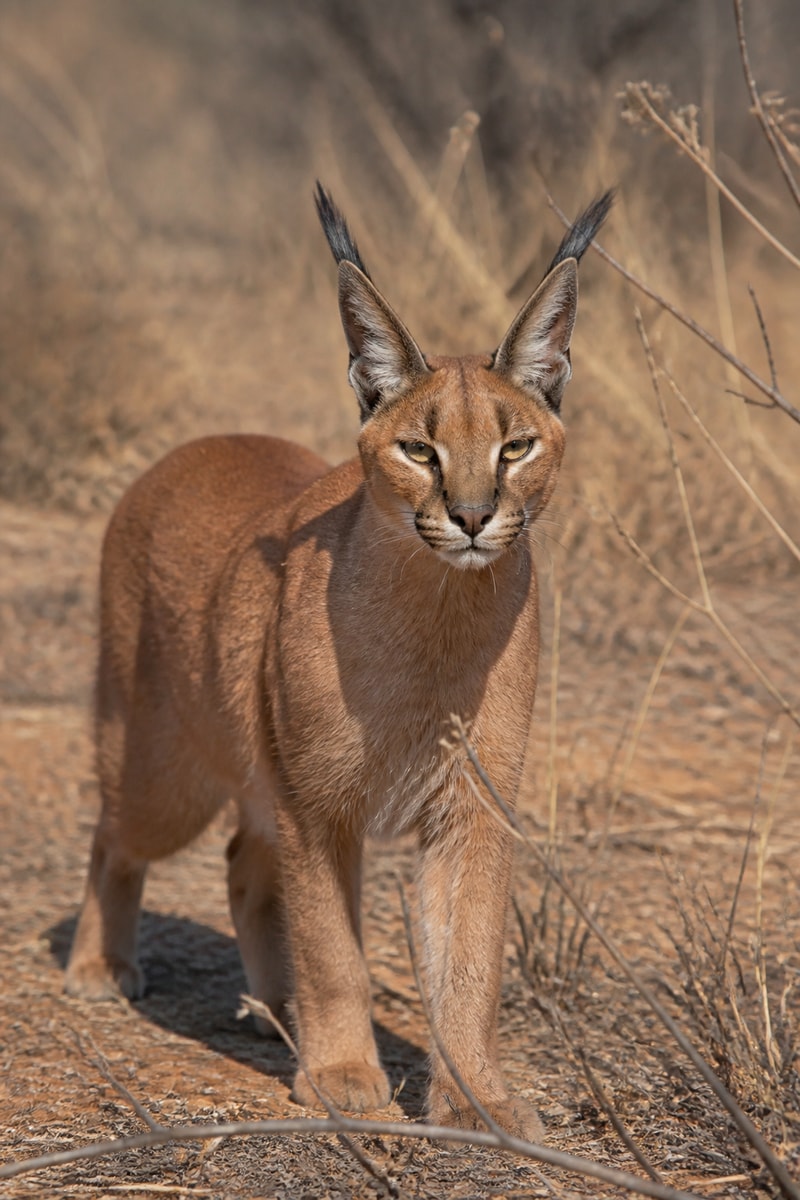
Quick ID anchor: Uniform rufous-tan coat, black-backed ears with long tufts, and a short black-tipped tail. Confirm with behaviour and habitat before you log the discovery.
Where to see one
Kenya
In Kenya, start at Masai Mara National Reserve (Southwest Kenya). Open savanna where lion prides patrol the grassland and the Great Migration crosses the Mara River from July to October.
More context on this destination lives on the Kenya expedition page.
Diet
Hunt birds, rodents, hares, hyraxes, and small antelope; occasionally take livestock.
Ambush from cover and use explosive leaps on flushed birds.
Behaviour
Solitary and primarily nocturnal; scent-mark territories.
Rest in dense scrub or rocky cover by day; raise litters in dens.
How to identify
Uniform rufous-tan coat, black-backed ears with long tufts, and a short black-tipped tail.
Muscular build and relatively long legs; facial markings include a dark line from eye to nose.
Interesting facts
- 01
Black ear tufts are a signature field mark.
- 02
Can leap high to knock flying birds from the air.
- 03
Coat is usually plain reddish-tan without bold spots.
- 04
Strong enough to take prey larger than many similar-sized cats.
- 05
Mostly nocturnal and solitary.
- 06
Range spans Africa, the Middle East, and into India.
Conservation status
Caracals are Least Concern across a wide range, though locally persecuted as livestock predators. Connected dry habitats in Africa and India support persistence.
Sources: IUCN Red List
Common questions
- Where can you see caracals in Kenya?
- Caracals turn up on Masai Mara game drives, especially at dawn and dusk in dry grassland and scrub. They are solitary and easy to miss — look for tufted ears and a plain reddish coat.
- What do caracals eat?
- They take rodents, hares, birds (sometimes leapt from the air), and small antelope. They are powerful hunters for a medium-sized cat.

Keep exploring
Where it lives
Related discoveries
- Tigerlegendary • Jungle & Grassland
- Lionlegendary • Savanna, East Africa
- Great White Sharklegendary • Coastal Ocean
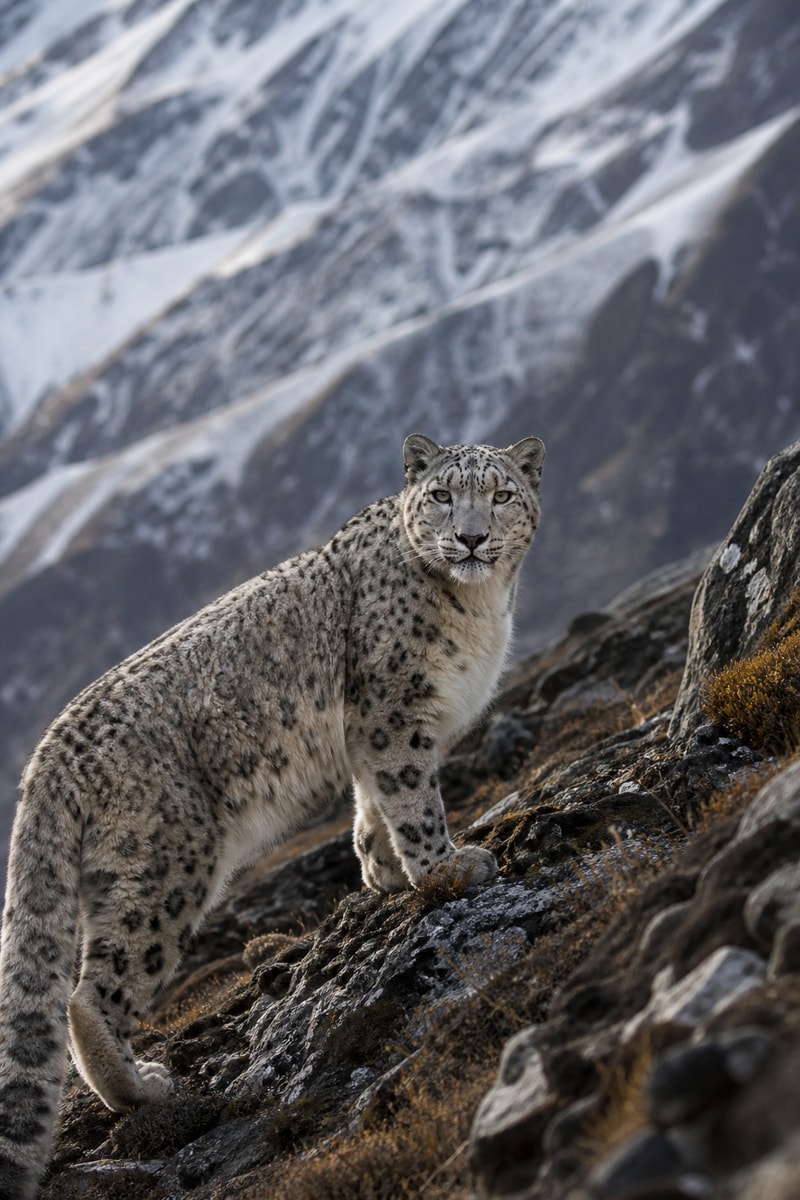
- Snow Leopardlegendary • High Mountains
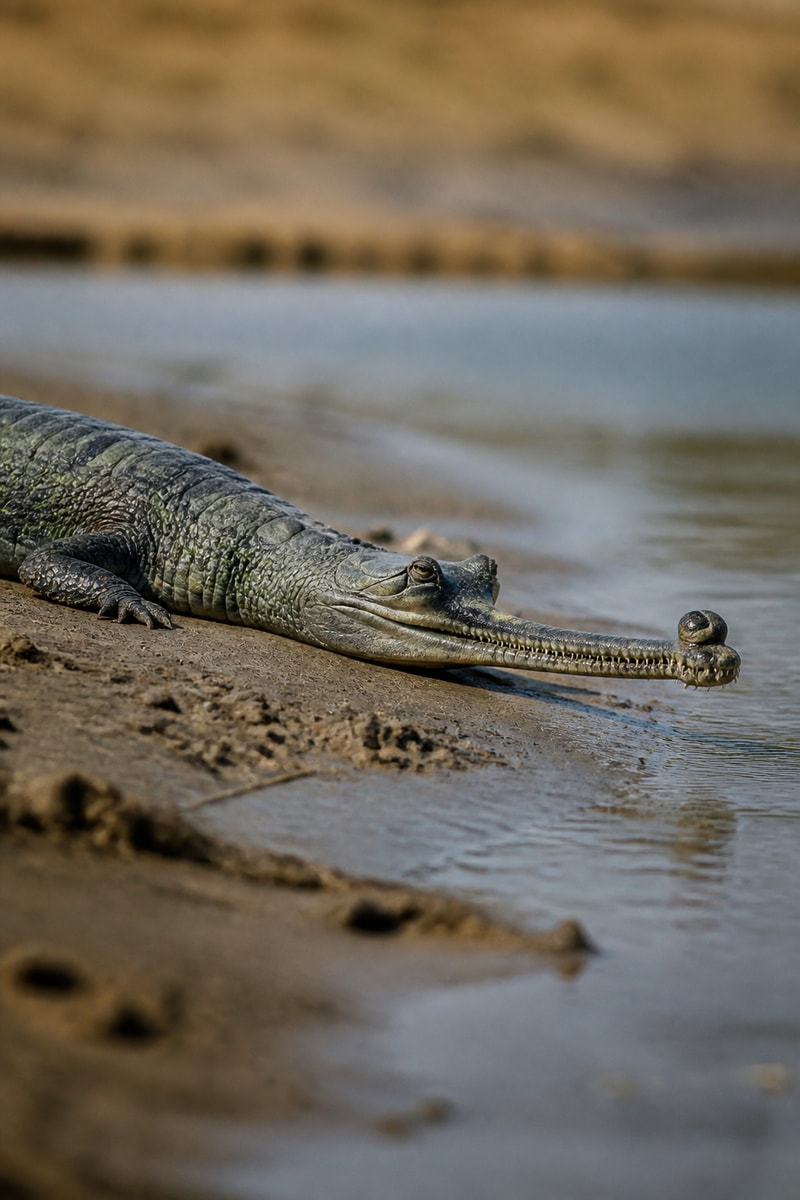
- Ghariallegendary • Riverine Sandbanks
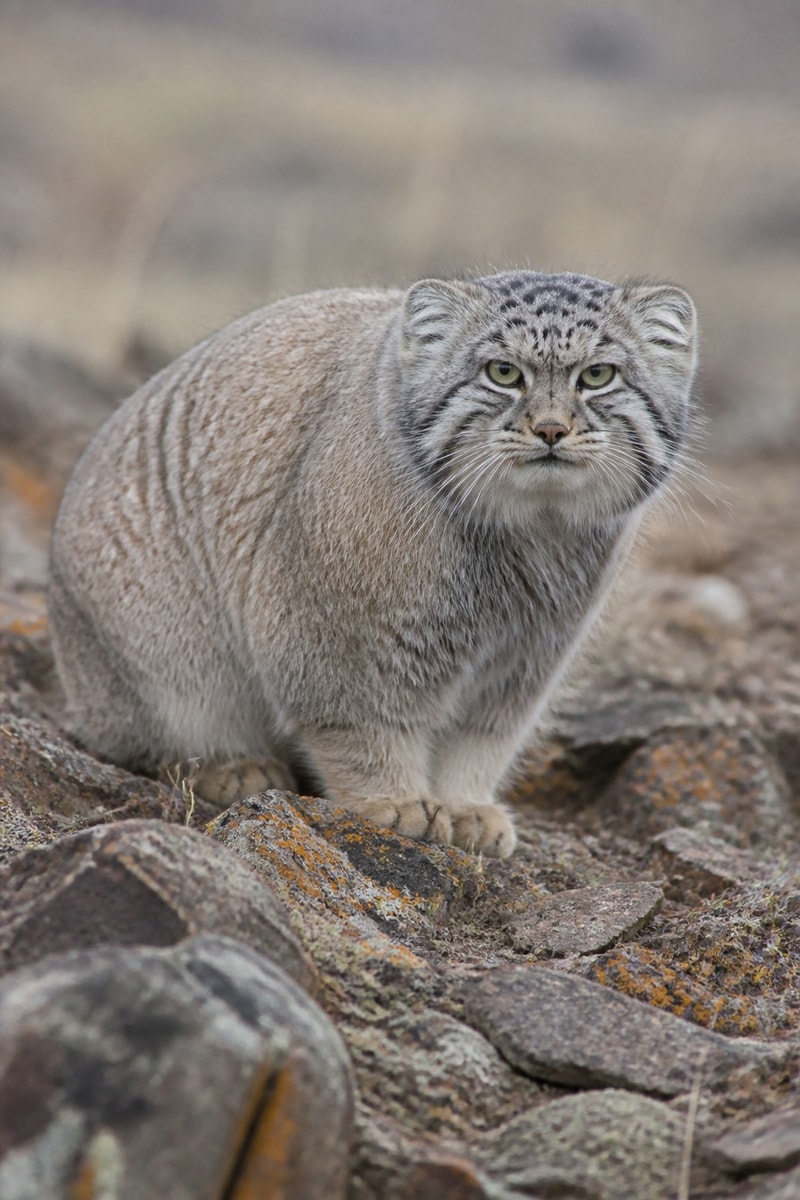
- Pallas's Catlegendary • Central Asian Steppe
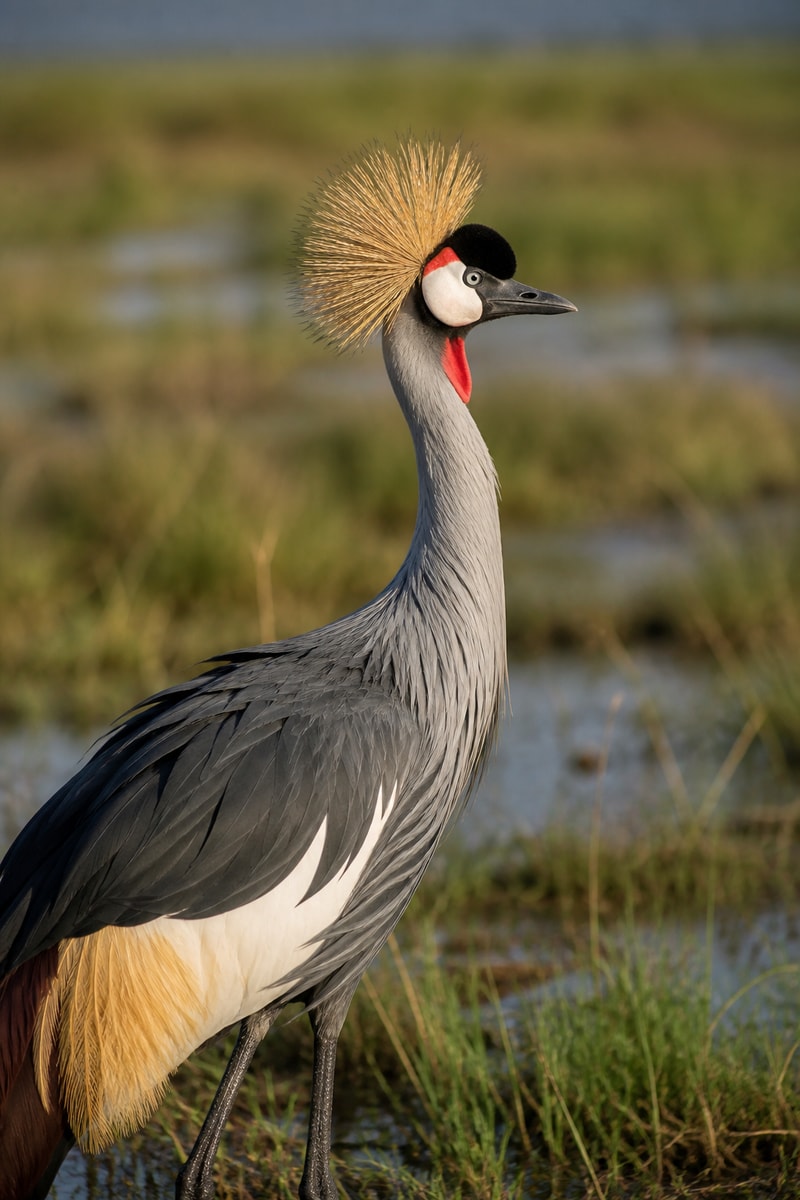
- Grey Crowned Cranelegendary • East African Wetlands
- Indian Rhinoceroslegendary • South Asian Floodplain
Free on iOS
Catch the Caracal
Spot one in the wild, then scan it in Catch'Um to log your rare discovery.