
Field guide · rare
African Elephant
The matriarch of the plains, Earth's largest land animal, led by memory, family bonds, and tusks that have shaped human history.
Endangered
Loxodonta africana
Overview
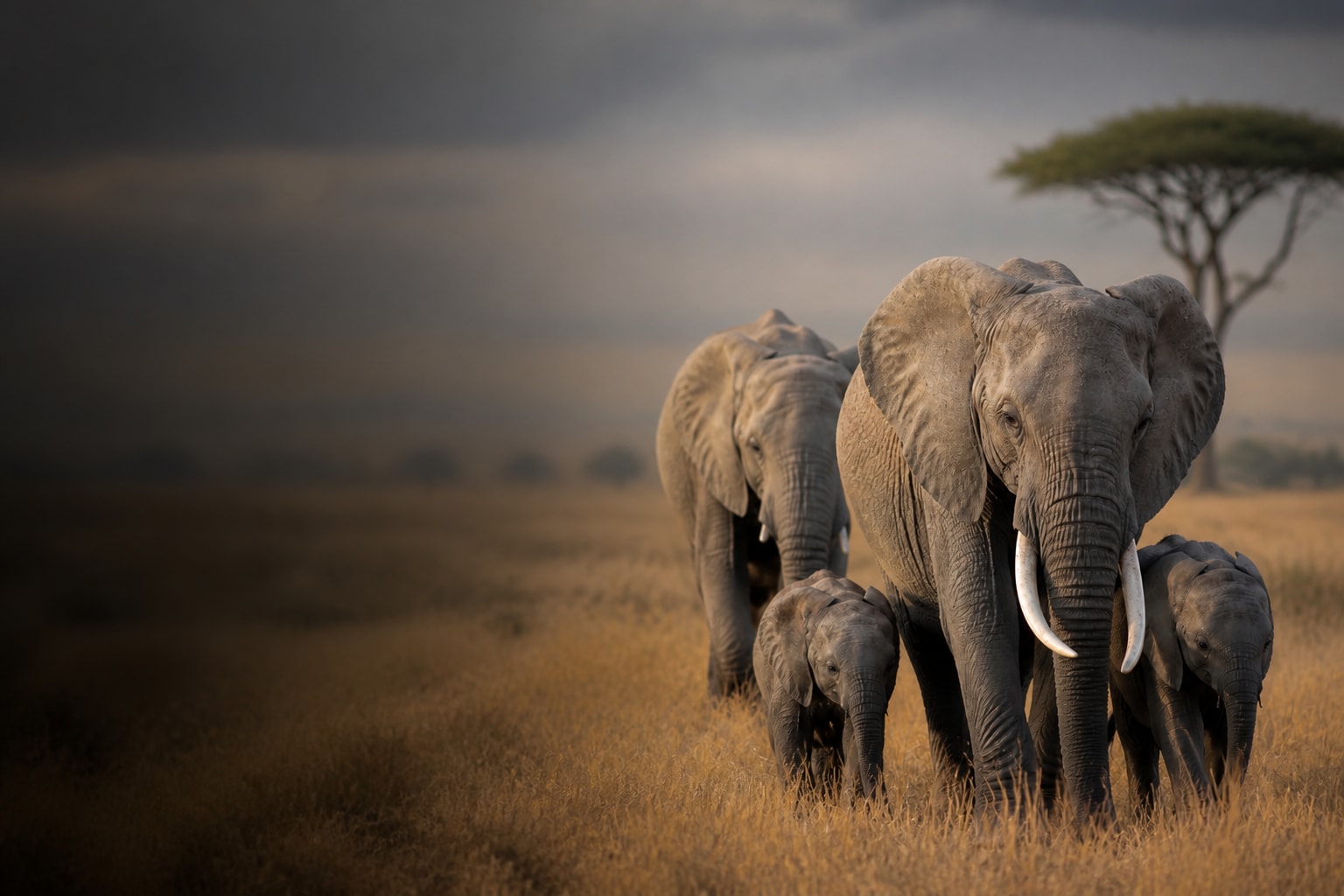
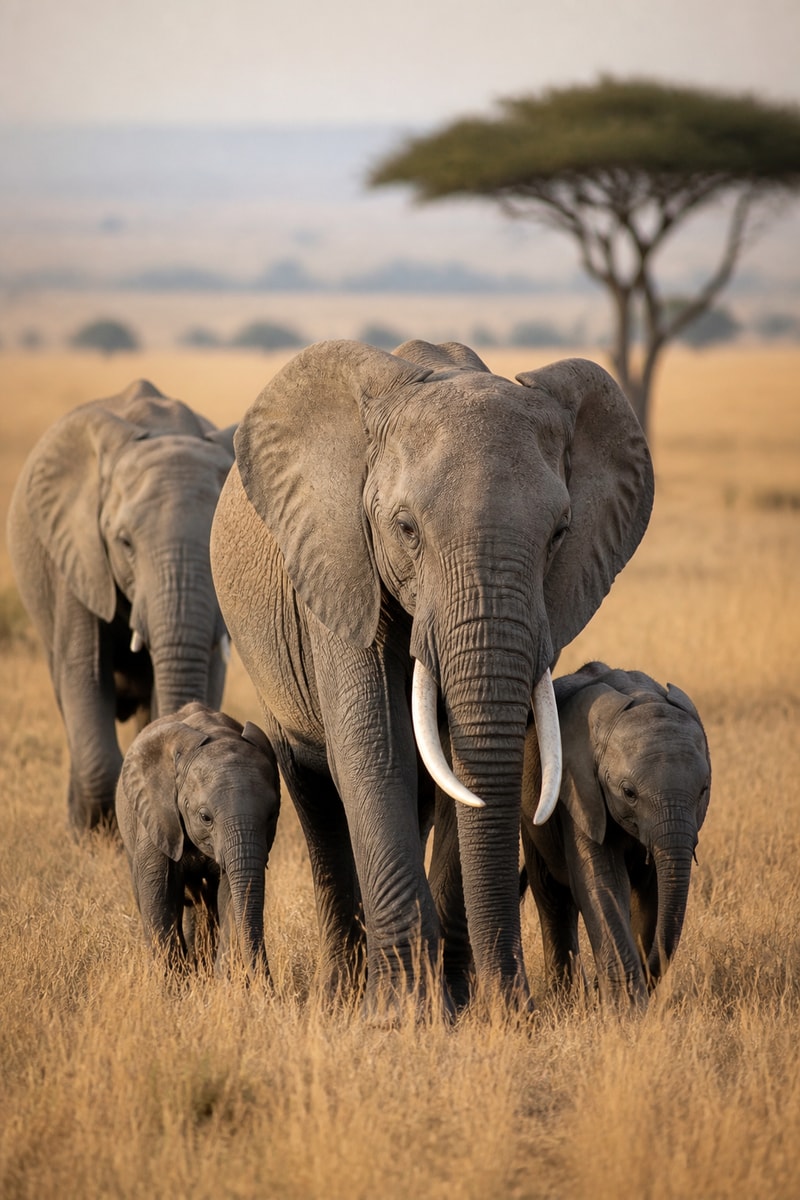
The African elephant is a keystone species of the savanna: a six-tonne herbivore that bulldozes trees, digs waterholes, and spreads seeds across landscapes too vast for any fence. Herds are led by the oldest female, whose memory of water and migration routes can span decades.
Elephants communicate through infrasound that travels kilometres through the ground, touch with trunks that contain 40,000 muscles, and behaviour that suggests deep emotional lives, including mourning dead herd members and revisiting their bones.
- Scientific nameLoxodonta africana
- Height2.5–4 m at shoulder
- Weight2,500–6,000 kg
- LifespanAround 60–70 years in the wild
- DietBrowsers and grazers…
- ConservationEndangered
- RegionSavanna
Habitat
- Savanna
- Woodland
- Floodplain
African elephants range across savanna, woodland, and forest in sub-Saharan Africa. Kenya's Amboseli, Tsavo, and Samburu hold famous herds, but they need vast unfenced landscapes with water, browse, and minimal conflict with farming communities.
Countries found
Field notes
Field scale for the African Elephant: height 2.5-4 m at shoulder; weight 2,500-6,000 kg. Typical lifespan: Around 60-70 years in the wild.
When you are scanning habitat, prioritise savanna, woodland, and floodplain. Those settings are where a clean look and a usable photo are most likely.
Quick ID anchor: Huge grey body, pillar-like legs, large ears that fan to cool, and a muscular trunk ending in two finger-like tips. African savanna elephants have a sloping forehead and usually visible tusks in both sexes. Confirm with behaviour and habitat before you log the discovery.
Where to see one
Kenya
In Kenya, strong options include Masai Mara National Reserve, Amboseli National Park, and Tsavo East & West. Open savanna where lion prides patrol the grassland and the Great Migration crosses the Mara River from July to October.
Open the Kenya spotting guide for every park note tied to the african elephant.
Diet
Browsers and grazers that eat grasses, leaves, bark, twigs, fruit, and roots. Adults may consume 100–150 kg of vegetation daily and drink tens of litres when water is available.
Behaviour
Live in matriarchal family herds; adult bulls often roam alone or in bachelor groups. Communicate with rumbling infrasound, touch, and scent, and maintain strong social bonds including care around the dead.
How to identify
Huge grey body, pillar-like legs, large ears that fan to cool, and a muscular trunk ending in two finger-like tips. African savanna elephants have a sloping forehead and usually visible tusks in both sexes.
Interesting facts
- 01
Elephants mourn their dead and revisit bones of herd members for years.
- 02
Their trunks have over 40,000 muscles and can lift a tonne.
- 03
Herds are matriarchal, the oldest female leads the group.
Conservation status
African elephants are Endangered, with populations falling due to poaching for ivory and habitat loss. Kenya has been a conservation leader, with anti-poaching efforts and community conservancies helping numbers stabilise in some areas.
Sources: IUCN Red List
Keep exploring
Where it lives
Free on iOS
Catch the African Elephant
Spot one in the wild, then scan it in Catch'Um to log your rare discovery.