
Field guide · rare
African Wild Dog
Painted wolves of Kenya and Botswana — endurance pack hunters with one of Africa's most striking coats.
Endangered
Lycaon pictus
Overview
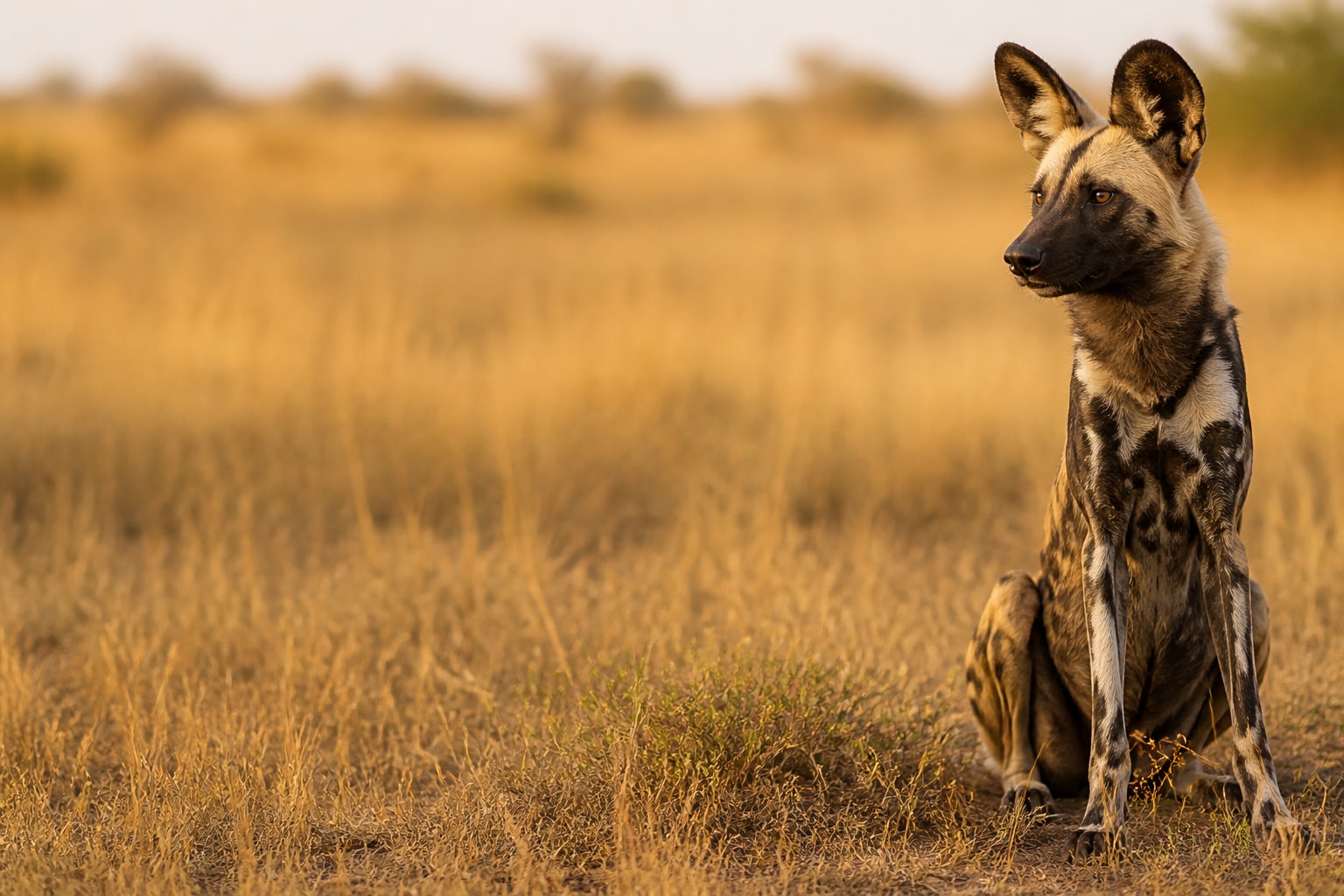
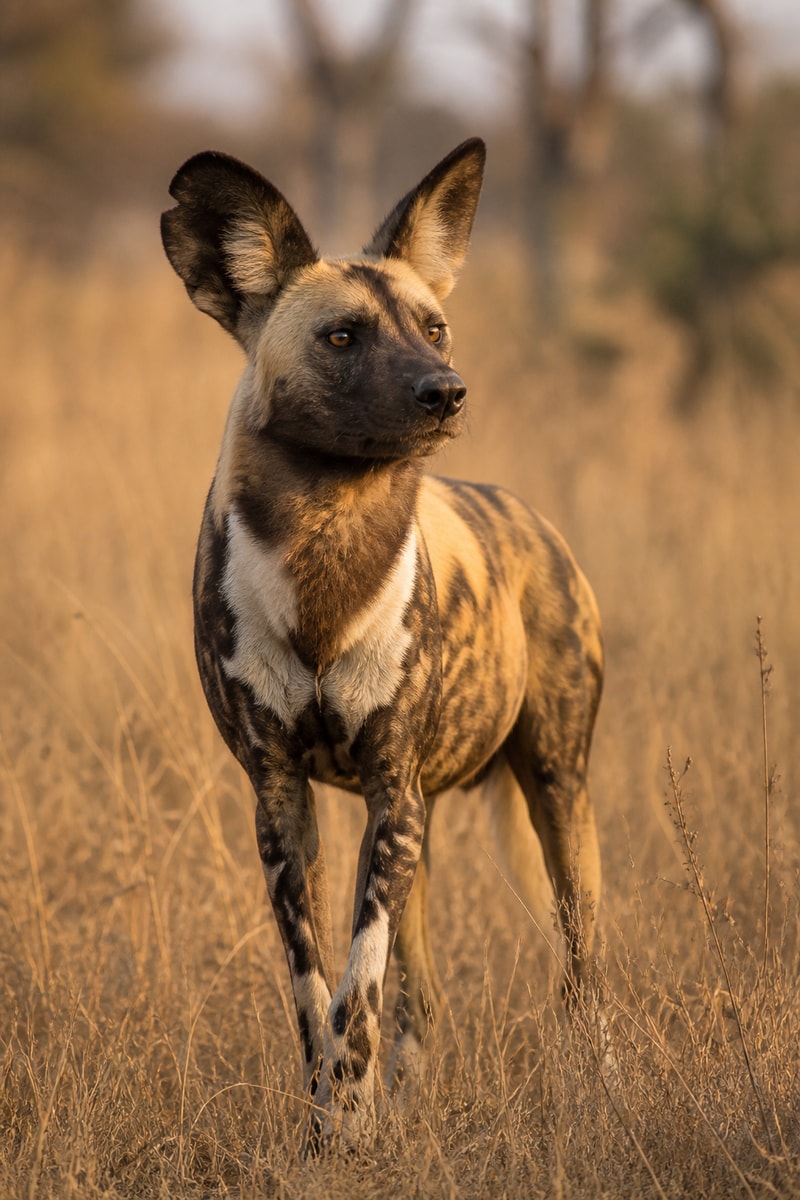
African wild dogs (Lycaon pictus), also called painted wolves, wear mottled coats of black, brown, yellow, and white — each pattern unique. Cooperative packs chase antelope across open plains until prey tires, with hunt-success rates among the highest of any large land predator.
Once widespread across sub-Saharan Africa, they are now among the continent's most endangered large carnivores. Spotting a pack in Kenya's Masai Mara ecosystem or Botswana's Okavango remains a rare safari prize.
Pack life is intensely social: a breeding pair leads, adults share food, and babysitters stay with pups while hunters range widely. Large rounded ears shed heat and pick up distant calls across the savanna.
- Scientific nameLycaon pictus
- Length75–110 cm body; tail 30–40 cm
- Height60–75 cm at the shoulder
- Weight18–36 kg
- LifespanAround 10–12 years in the wild
- DietPack hunters of medium…
- ConservationEndangered
- RegionSavanna
Where to see them
Habitat
- Savanna
- Open woodland
- Grassland
Open woodland and savanna with room to run — from Kenya and Botswana into other eastern and southern African strongholds. Packs need large connected ranges with limited conflict from people, snares, roads, and competing lions and hyenas.
Field notes
Field scale for the African Wild Dog: length around 75-110 cm body; tail 30-40 cm; height 60-75 cm at the shoulder; weight 18-36 kg. Typical lifespan: Around 10-12 years in the wild.
When you are scanning habitat, prioritise savanna, open woodland, and grassland. Those settings are where a clean look and a usable photo are most likely.
Quick ID anchor: Mottled 'painted' coat, large rounded ears, and a white-tipped tail. Confirm with behaviour and habitat before you log the discovery.
Where to see one
Kenya
In Kenya, start at Masai Mara National Reserve (Southwest Kenya). Open savanna where lion prides patrol the grassland and the Great Migration crosses the Mara River from July to October.
More context on this destination lives on the Kenya expedition page.
Botswana
In Botswana, start at Okavango Delta (Northern Botswana). A river that never reaches the sea. Mokoro trips through papyrus channels with elephants, hippos, and painted dogs.
More context on this destination lives on the Botswana expedition page.
Diet
Pack hunters of medium antelope such as impala, gazelle, and wildebeest calves.
Chase prey over long distances rather than relying on ambush.
Behaviour
Highly social packs led by a breeding pair; members share food and babysitting duties.
Diurnal hunters that often move widely between dens and hunting grounds.
How to identify
Mottled 'painted' coat, large rounded ears, and a white-tipped tail.
Lean build built for endurance; dark muzzle and four-toed feet.
Interesting facts
- 01
Each wild dog's coat pattern is unique, like a fingerprint.
- 02
Packs rank among the most successful large land predators when hunting.
- 03
They communicate with twittering calls and elaborate greetings.
- 04
The whole pack helps raise pups, not only the parents.
- 05
Large rounded ears help with heat loss and long-distance hearing.
- 06
Unlike most dogs, they lack a dewclaw (fifth toe).
Conservation status
African wild dogs are Endangered. Habitat fragmentation, snares, roadkill, and disease from domestic dogs keep numbers low. Connected conservancies in Botswana, Kenya, and neighbouring countries are critical strongholds.
Sources: IUCN Red List
Common questions
- What is an African wild dog?
- African wild dogs (Lycaon pictus), also called painted wolves, are social pack hunters with mottled coats. No two dogs share the same pattern.
- Where do African wild dogs live?
- They favour open woodland and savanna across parts of eastern and southern Africa. Strongholds include northern Botswana (Okavango) and areas of Kenya such as the Masai Mara ecosystem.
- Why are African wild dogs endangered?
- Habitat fragmentation, snares, roadkill, conflict with people, and diseases from domestic dogs keep them among Africa’s most threatened large carnivores.
- How do African wild dogs hunt?
- Packs chase prey over long distances with high success rates, then share the kill. Cooperative babysitting lets adults hunt while pups stay at the den.
Keep exploring
Where it lives
Free on iOS
Catch the African Wild Dog
Spot one in the wild, then scan it in Catch'Um to log your rare discovery.