
Field guide · rare
Sea Turtle
Ancient mariner of the tropics, a reptile that crosses oceans and returns to the same beach where it hatched decades earlier.
Endangered
Chelonia mydas
Overview
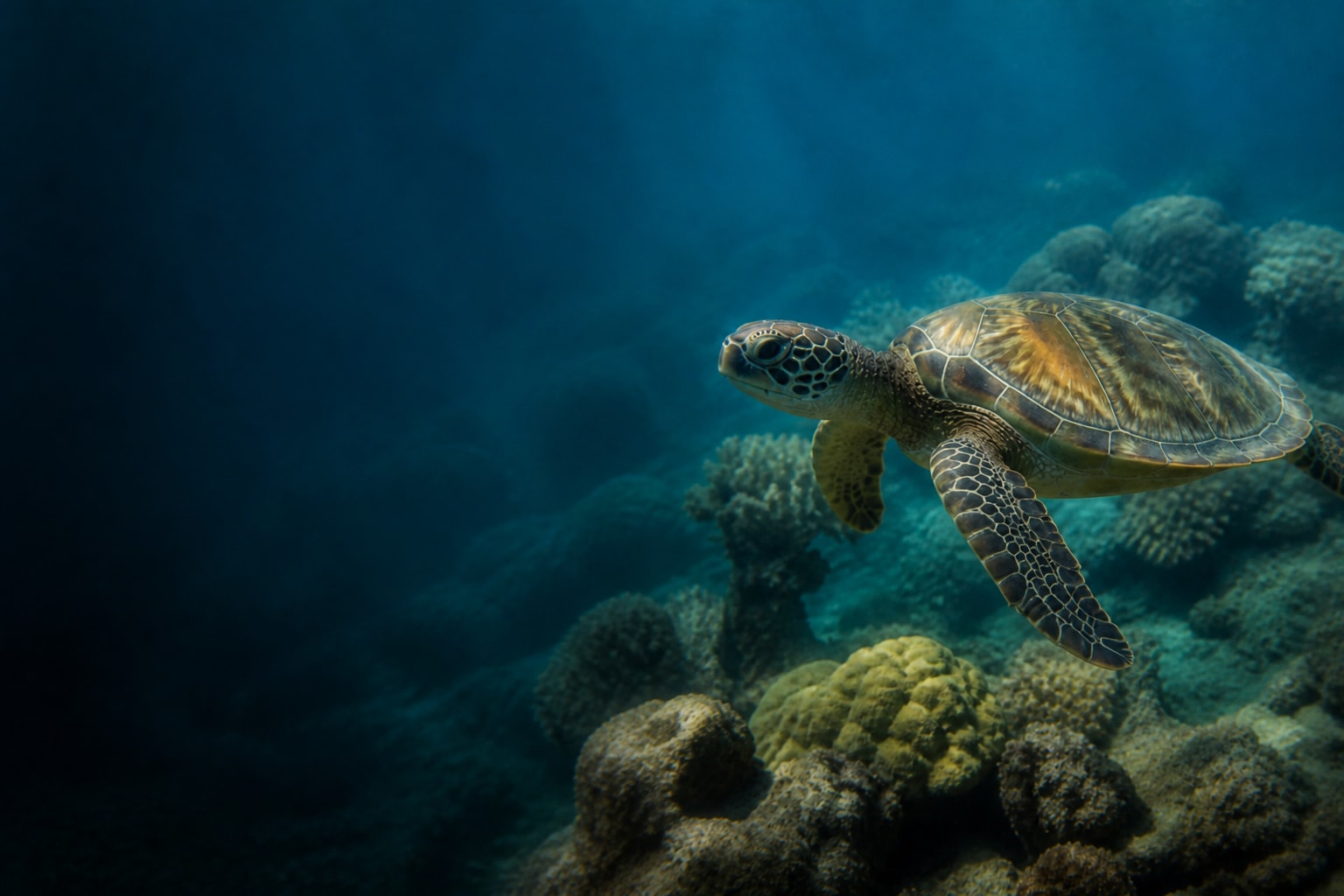
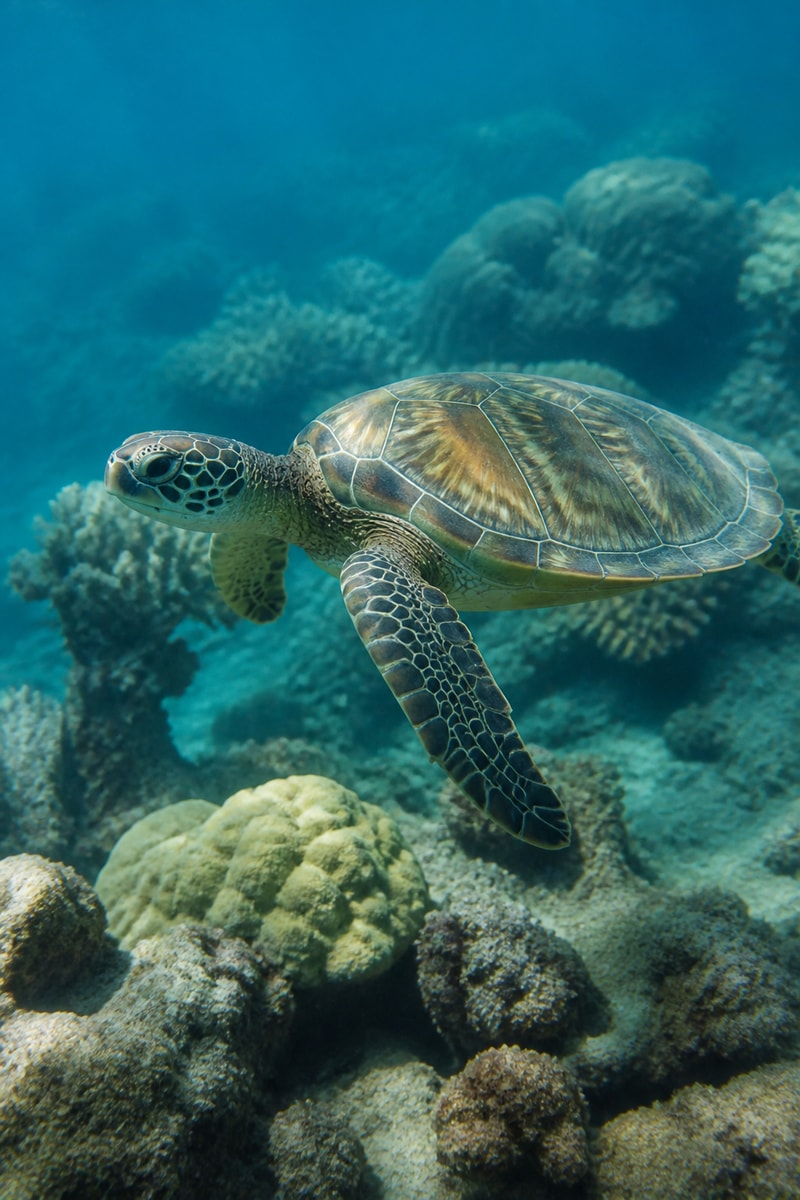
The green sea turtle is one of the world's most ancient and beloved marine reptiles, navigating by magnetic fields across thousands of kilometres of open ocean. Adults graze seagrass meadows and algae, shaping underwater landscapes that support fish and invertebrates.
Females haul ashore at night on tropical beaches, digging nests with their flippers and laying over 100 eggs before returning to sea. Hatchlings scramble to the surf by moonlight, a perilous journey where only a fraction survive to adulthood.
- Scientific nameChelonia mydas
- Length1.0–1.2 m carapace
- Weight110–190 kg
- LifespanAround 60–80 years in the wild
- DietHerbivore
- ConservationEndangered
- RegionCoastal Ocean
Habitat
- Seagrass meadows
- Coral reefs
- Tropical beaches
- Open ocean
Warm coastal waters, seagrass beds, and coral reefs worldwide hold green sea turtles. Nesting beaches span Florida, Indonesia, Kenya, and the Caribbean, females return to the same coastline where they themselves hatched.
Field notes
Field scale for the Sea Turtle: length around 1.0-1.2 m carapace; weight 110-190 kg. Typical lifespan: Around 60-80 years in the wild.
When you are scanning habitat, prioritise seagrass meadows, coral reefs, tropical beaches, and open ocean. Those settings are where a clean look and a usable photo are most likely.
Quick ID anchor: A streamlined hard shell, paddle-like flippers, and a blunt snout distinguish green turtles from other sea turtles. Confirm with behaviour and habitat before you log the discovery.
Where to see one
Indonesia
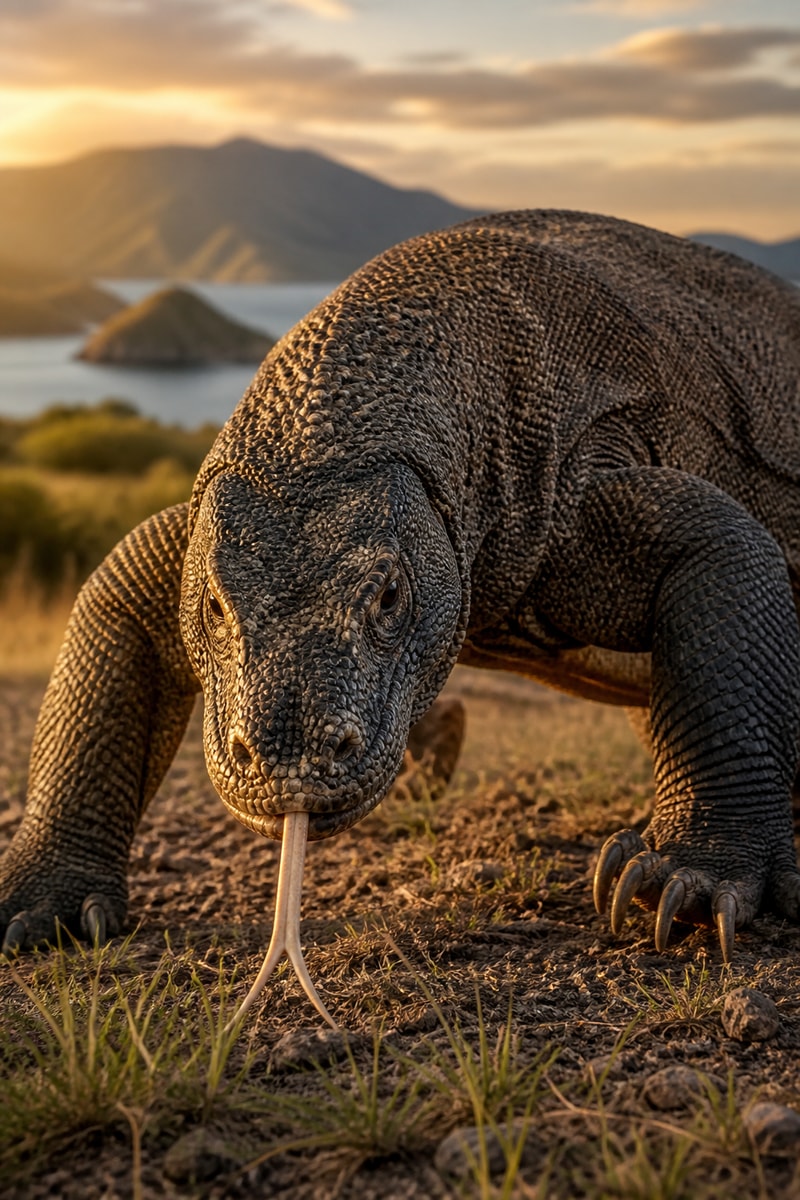
In Indonesia, start at Komodo National Park (East Nusa Tenggara). The only place on Earth to see wild Komodo dragons, patrolling savanna hillsides between pink-sand beaches and manta-filled reefs.
More context on this destination lives on the Indonesia expedition page.
Diet
Adult green turtles are mostly herbivorous, grazing seagrass meadows and algae on shallow reefs and lagoons.
Juveniles eat more animal prey, including jellyfish, sponges, and other invertebrates, before shifting toward plant matter.
Behaviour
They navigate long ocean migrations using Earth's magnetic field and often return to nest on the same beach where they hatched.
Females come ashore at night to dig nests and lay large clutches; hatchlings race to the sea under cover of darkness.
How to identify
A streamlined hard shell, paddle-like flippers, and a blunt snout distinguish green turtles from other sea turtles.
Adults often look olive to brown above; the name refers to green fat beneath the shell, not shell colour.
Interesting facts
- 01
Sea turtles return to the same beach where they hatched to lay their own eggs.
- 02
Green turtles can hold their breath for hours while sleeping underwater.
- 03
They navigate using Earth's magnetic field, an internal GPS.
Conservation status
Green sea turtles are Endangered, threatened by fishing nets, plastic pollution, coastal development, and egg poaching. Protected nesting beaches and turtle excluder devices on fishing nets have helped some populations recover.
Sources: IUCN Red List
Keep exploring
Where it lives
Related discoveries
Free on iOS
Catch the Sea Turtle
Spot one in the wild, then scan it in Catch'Um to log your rare discovery.