
Field guide · rare
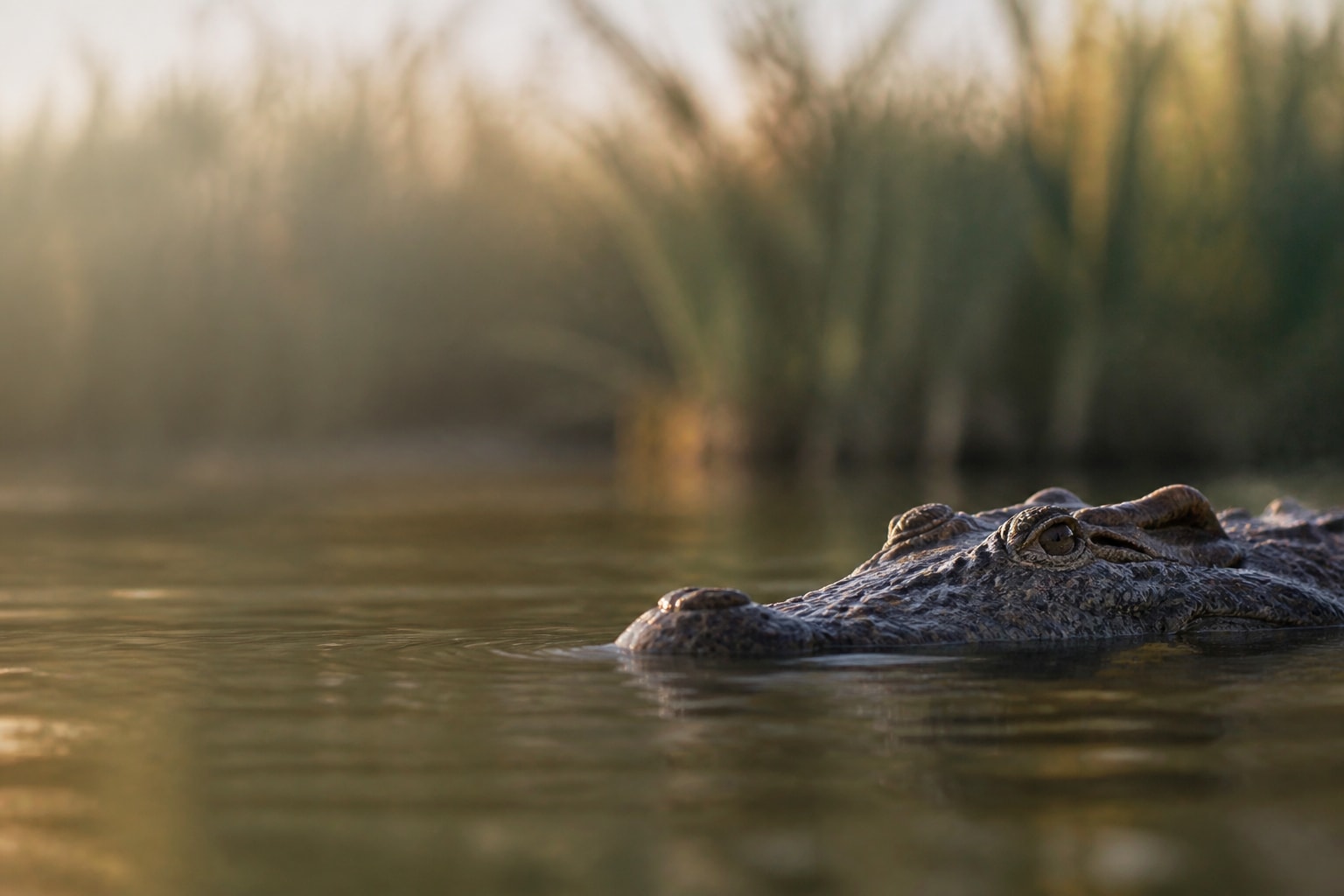
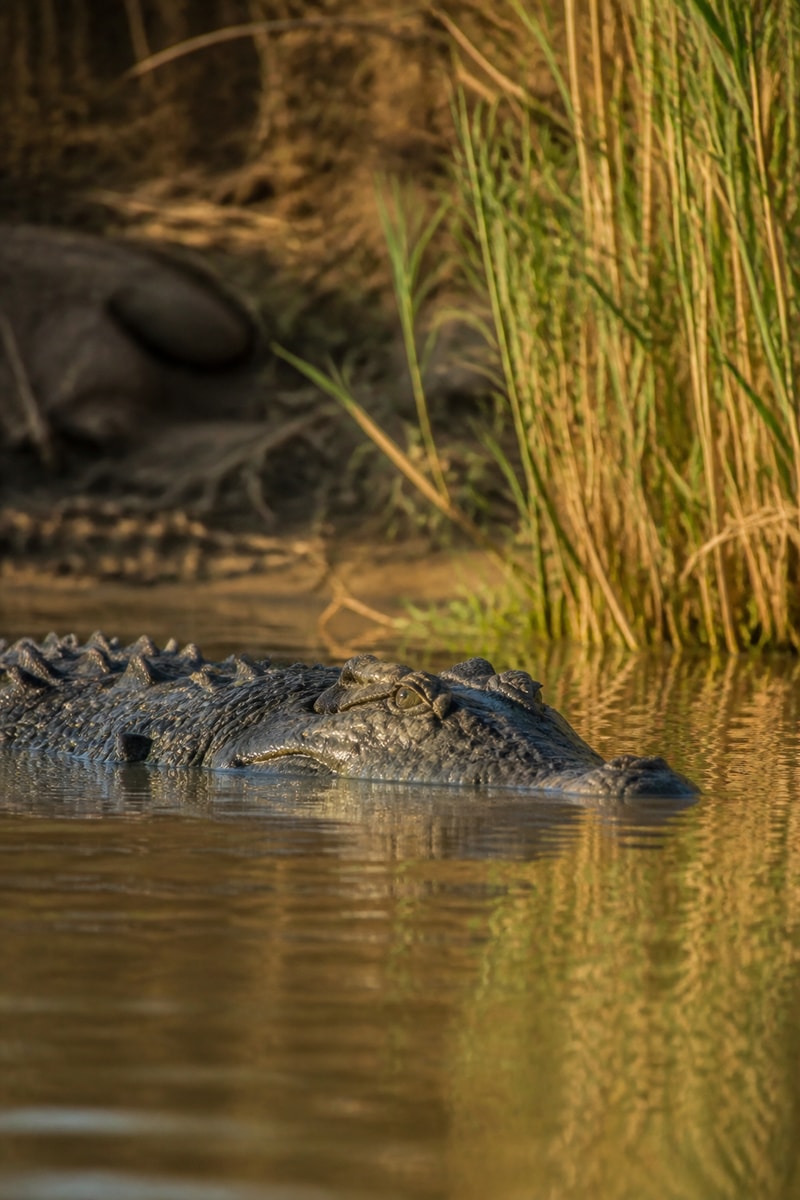
Nile Crocodile
Africa's classic ambush predator — ancient, immense, and waiting at the water's edge.
Least Concern
Crocodylus niloticus
Overview
Nile crocodiles are among Africa's most formidable reptiles, lurking in rivers and lakes from Egypt to South Africa. They ambush wildebeest, zebra, and other animals at water crossings, then drown prey with a spinning death roll.
Distinct from Australia's saltwater crocodile already in the catalogue, the Nile crocodile anchors Kenya's wetland and migration-river stories.
- Scientific nameCrocodylus niloticus
- Length3.5–5 m typical large adults
- Weight225–750 kg
- LifespanAround 70–100 years estimated
- DietAmbush predators of fish
- ConservationLeast Concern
- RegionRivers & Lakes
Where to see them
Habitat
- Rivers
- Lakes
- Marshes
- Estuaries
Nile crocodiles occupy rivers, lakes, marshes, and mangrove mouths across much of sub-Saharan Africa and the Nile system. Sunny banks for basking and deep pools for ambush are essential.
Field notes
Field scale for the Nile Crocodile: length around 3.5-5 m typical large adults; weight 225-750 kg. Typical lifespan: Around 70-100 years estimated.
When you are scanning habitat, prioritise rivers, lakes, marshes, and estuaries. Those settings are where a clean look and a usable photo are most likely.
Quick ID anchor: Large broad-snouted crocodile, olive to dark brown with blacker banding in younger animals. Confirm with behaviour and habitat before you log the discovery.
Diet
Ambush predators of fish, birds, and mammals that drink or cross water — including large ungulates.
Also scavenge carcasses along riverbanks.
Behaviour
Bask by day on banks; hunt most actively near dawn, dusk, and at night.
Females dig sandy nests and fiercely guard eggs and hatchlings.
How to identify
Large broad-snouted crocodile, olive to dark brown with blacker banding in younger animals.
Fourth tooth of the lower jaw visible when the mouth is closed — a true crocodile trait.
Interesting facts
- 01
Nile crocodiles can exceed 5 metres in exceptional individuals.
- 02
They use a death roll to dismember large prey.
- 03
Females guard nests and may carry hatchlings to water in their jaws.
- 04
They can stay submerged for long periods while waiting to ambush.
- 05
Migration river crossings put wildebeest within striking range.
- 06
Despite their reputation, they also eat fish and carrion.
Conservation status
Nile crocodiles are Least Concern overall after recovering from past overhunting, though local populations still face habitat loss and conflict with people along rivers and lakes.
Sources: IUCN Red List
Keep exploring
Where it lives
Free on iOS
Catch the Nile Crocodile
Spot one in the wild, then scan it in Catch'Um to log your rare discovery.