
Field guide · legendary
Indian Rhinoceros
One-horned armour of the Terai — folded skin plates and floodplain power.
Vulnerable
Rhinoceros unicornis
Overview
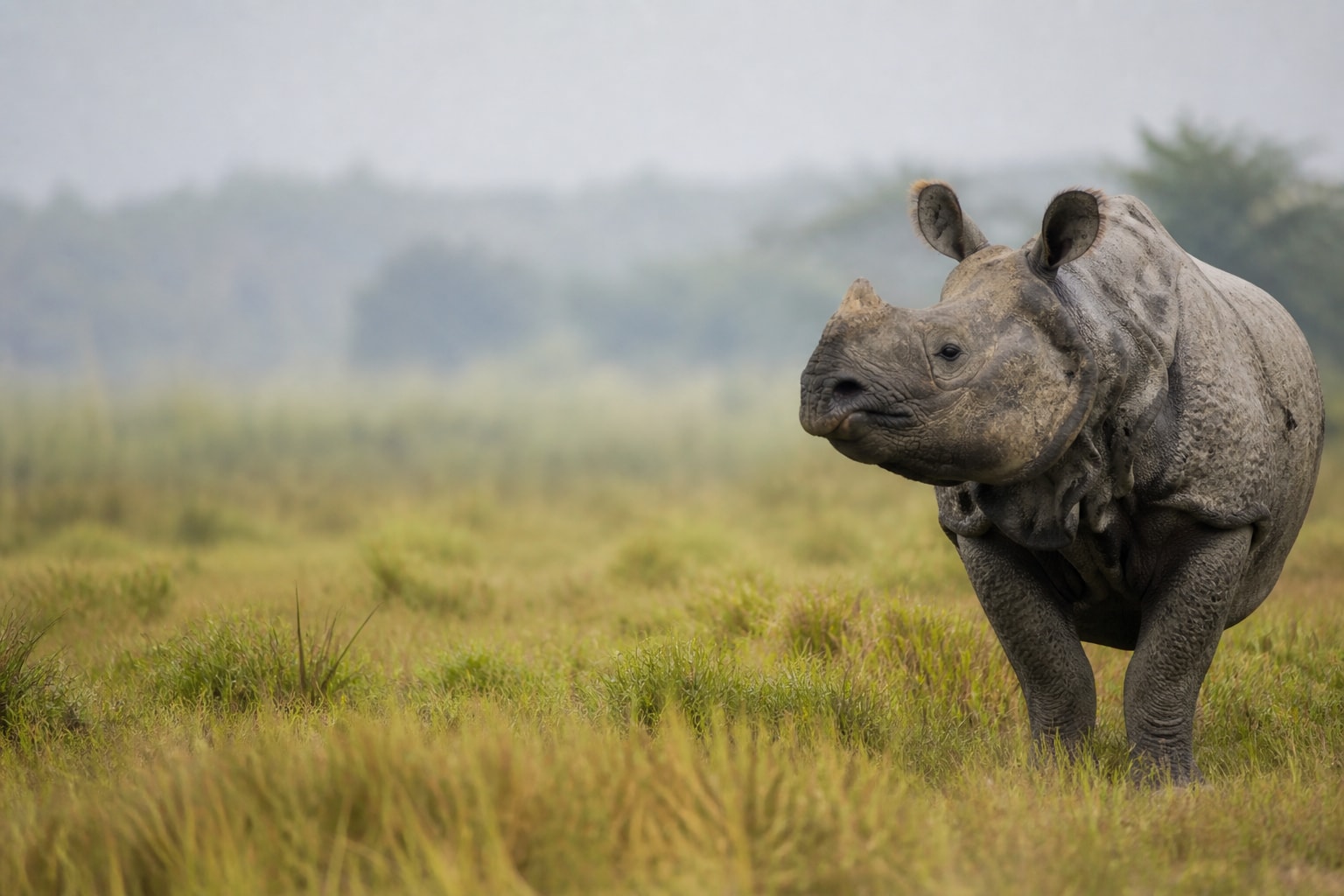
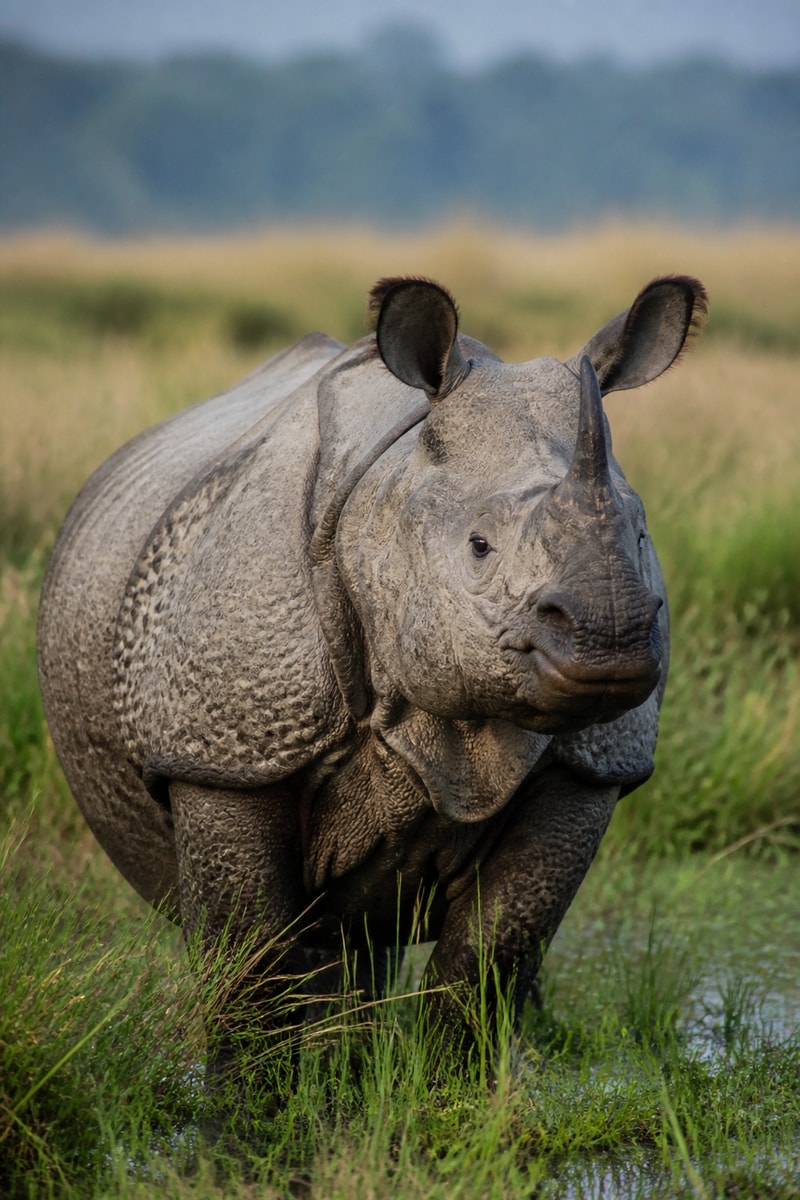
Indian rhinoceroses, or greater one-horned rhinos, carry a single horn and armour-like skin folds across tall grassland and riverine forest. Once nearly wiped out, protection in parks like Kaziranga has rebuilt key herds.
For India collectors, this rhino is a legendary floodplain icon — unique armour, single horn, and a hard-won recovery story.
- Scientific nameRhinoceros unicornis
- Length3.0–3.8 m body
- Height1.6–1.9 m at the shoulder
- Weight1,600–2,200 kg
- LifespanAround 35–45 years in the wild
- DietPrimarily grasses of…
- ConservationVulnerable
- RegionSouth Asian Floodplain
Where to see them
Habitat
- Alluvial grassland
- Riverine forest
- Marsh edge
Alluvial grasslands, marshes, and riverine forest of the Indian subcontinent’s northern floodplains, wallowing in mud and grazing tall grasses.
Field notes
Field scale for the Indian Rhinoceros: length around 3.0-3.8 m body; height 1.6-1.9 m at the shoulder; weight 1,600-2,200 kg. Typical lifespan: Around 35-45 years in the wild.
When you are scanning habitat, prioritise alluvial grassland, riverine forest, and marsh edge. Those settings are where a clean look and a usable photo are most likely.
Quick ID anchor: Massive grey-brown rhino with one horn and deep skin folds at neck and flanks. Confirm with behaviour and habitat before you log the discovery.
Diet
Primarily grasses of floodplain meadows, plus aquatic plants, fruits, and leaves.
Graze extensively and visit wallows to cool and deter parasites.
Behaviour
Mostly solitary adults; mothers with calves form the main social unit.
Active day and night with rest periods; communicate with snorts and scent.
How to identify
Massive grey-brown rhino with one horn and deep skin folds at neck and flanks.
Upper lip is semi-prehensile for grasping grasses — silhouette is unmistakable.
Interesting facts
- 01
Only one horn — unlike African rhinos’ two.
- 02
Thick skin folds look like natural armour plates.
- 03
Strong swimmers of floodplain rivers.
- 04
Diet is mostly tall grasses plus browse and fruit.
- 05
Kaziranga holds a large share of the global population.
- 06
Males can be territorial around wallows and feeding sites.
Conservation status
Indian rhinoceroses are Vulnerable. Numbers have risen under strict protection, but the species remains confined to few sites and threatened by poaching and habitat squeeze.
Sources: IUCN Red List
Keep exploring
Related discoveries
Free on iOS
Catch the Indian Rhinoceros
Spot one in the wild, then scan it in Catch'Um to log your legendary discovery.