

Field guide · rare
Snowy Owl
The ghost of the Arctic, a white hunter of the tundra that drifts south in irruption years and hunts lemmings by daylight.
Vulnerable
Bubo scandiacus
Overview
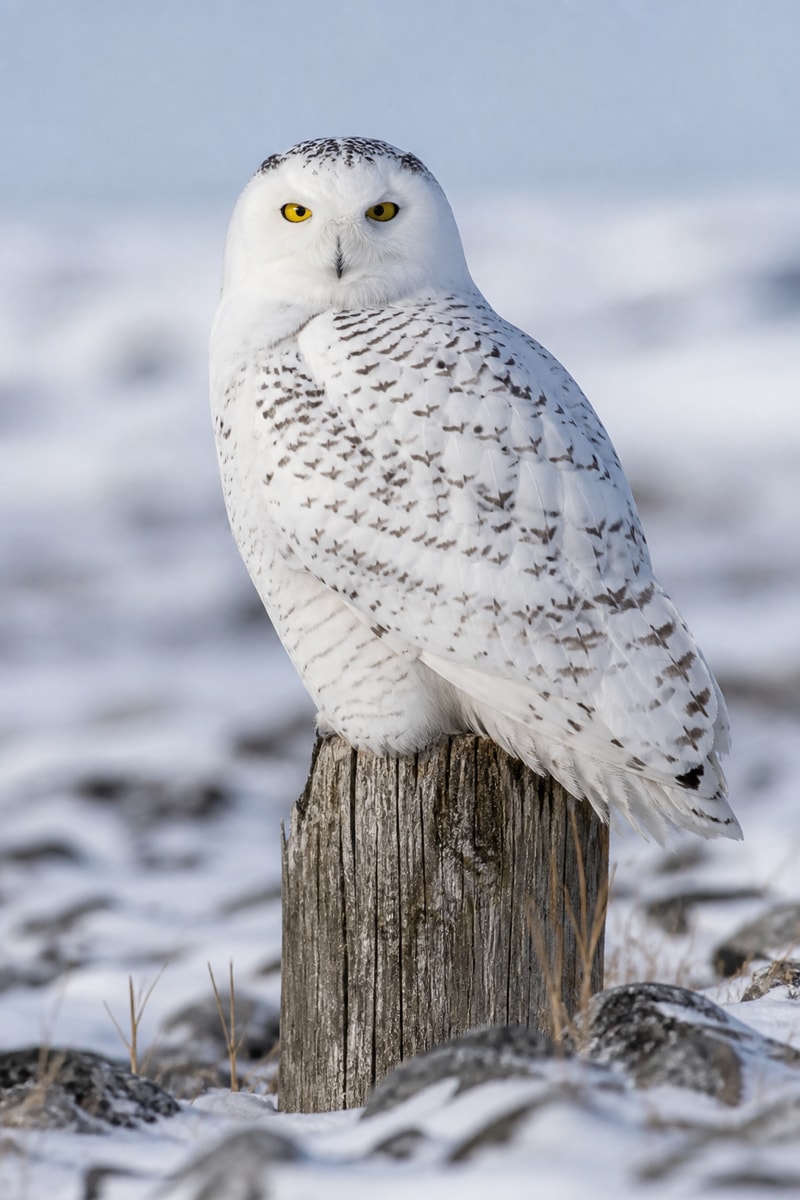
The snowy owl is one of the largest and most striking owls on Earth: pure white with black flecks in males, more barred in females, and bright yellow eyes that scan the tundra for lemmings. Unlike most owls, it hunts primarily by day, a adaptation to the Arctic summer when the sun barely sets.
Snowy owls nest on the ground in the Arctic tundra and occasionally irrupt south in winter, delighting birders across Canada and the northern US. A white shape on a fence post in a snowy field is a moment collectors remember for years.
- Scientific nameBubo scandiacus
- Length50–70 cm
- Weight1–3 kg
- LifespanAround 10 years in the wild; longer in captivity
- DietSpecialist hunter of…
- ConservationVulnerable
- RegionArctic Tundra
Habitat
- Arctic tundra
- Open coast
- Farmland
Arctic tundra across Canada, Alaska, and Eurasia holds breeding snowy owls. In winter they move south to open country, airports, farmland, and coastlines, following lemming cycles and food availability.
Countries found
Field notes
Field scale for the Snowy Owl: length around 50-70 cm; weight 1-3 kg. Typical lifespan: Around 10 years in the wild; longer in captivity.
When you are scanning habitat, prioritise arctic tundra, open coast, and farmland. Those settings are where a clean look and a usable photo are most likely.
Quick ID anchor: Large white owl with yellow eyes and a rounded head lacking ear tufts. Adult males are nearly pure white; females and young show heavier dark barring. Confirm with behaviour and habitat before you log the discovery.
Diet
Specialist hunter of lemmings and other small mammals on the tundra; also takes birds when rodents are scarce. Can consume large numbers of lemmings in a productive year.
Behaviour
Diurnal hunter of open country, perching on hummocks, posts, or ground. Breeds on Arctic tundra; in some winters irrupts south into farmland and coasts following prey cycles.
How to identify
Large white owl with yellow eyes and a rounded head lacking ear tufts. Adult males are nearly pure white; females and young show heavier dark barring.
Interesting facts
- 01
Snowy owls hunt in daylight, unlike most owls.
- 02
A single owl can eat over 1,600 lemmings in a year.
- 03
Harry Potter's owl Hedwig helped raise awareness of the species.
Conservation status
Snowy owls are Vulnerable, with populations linked to unpredictable lemming cycles and climate change affecting Arctic habitat. They face disturbance from increasing tourism and vehicle collisions.
Sources: IUCN Red List






Keep exploring
Where it lives
Related discoveries
- Bald Eaglelegendary • Lakes & Coasts
- Grizzly Bearlegendary • Mountains & Rivers
- Polar Bearlegendary • Arctic Ice
- Blue Whalelegendary • Open Ocean
- Mountain Lionlegendary • Mountains & Desert
- Great White Sharklegendary • Coastal Ocean
- Orcalegendary • Coastal Ocean
- California Condorlegendary • Canyons & Cliffs
Free on iOS
Catch the Snowy Owl
Spot one in the wild, then scan it in Catch'Um to log your rare discovery.