
Field guide · legendary
Polar Bear
Lord of the frozen edge, the world's largest land carnivore, patrolling sea ice and tundra in search of seals.
Vulnerable
Ursus maritimus
Overview
The polar bear is a marine mammal in all but name, spending much of its life on Arctic sea ice hunting ringed and bearded seals. Adults can weigh over 600 kilograms, with thick blubber, broad paws for swimming, and a keen sense of smell that detects a seal breathing hole from a kilometre away.
Polar bears are solitary hunters, except when mothers raise cubs for two to three years on the ice. Climate change is shortening the sea-ice season in many regions, forcing bears to spend more time ashore and increasing conflict with human communities.
- Scientific nameUrsus maritimus
- Length2.0–2.5 m
- Height1.2–1.6 m at shoulder
- WeightMales typically 350–700 kg; females smaller
- Lifespan15–25 years in the wild
- DietPrimarily seals
- ConservationVulnerable
- RegionArctic Ice
Habitat
- Sea ice
- Arctic coast
- Tundra
Circumpolar Arctic sea ice, coastal tundra, and frozen bays across Canada, Greenland, Norway, Russia, and Alaska. Bears follow the ice edge where seals congregate, and den in snow drifts on land during winter.
Countries found
Field notes
Field scale for the Polar Bear: length around 2.0-2.5 m; height 1.2-1.6 m at shoulder; weight Males typically 350-700 kg; females smaller. Typical lifespan: 15-25 years in the wild.
When you are scanning habitat, prioritise sea ice, arctic coast, and tundra. Those settings are where a clean look and a usable photo are most likely.
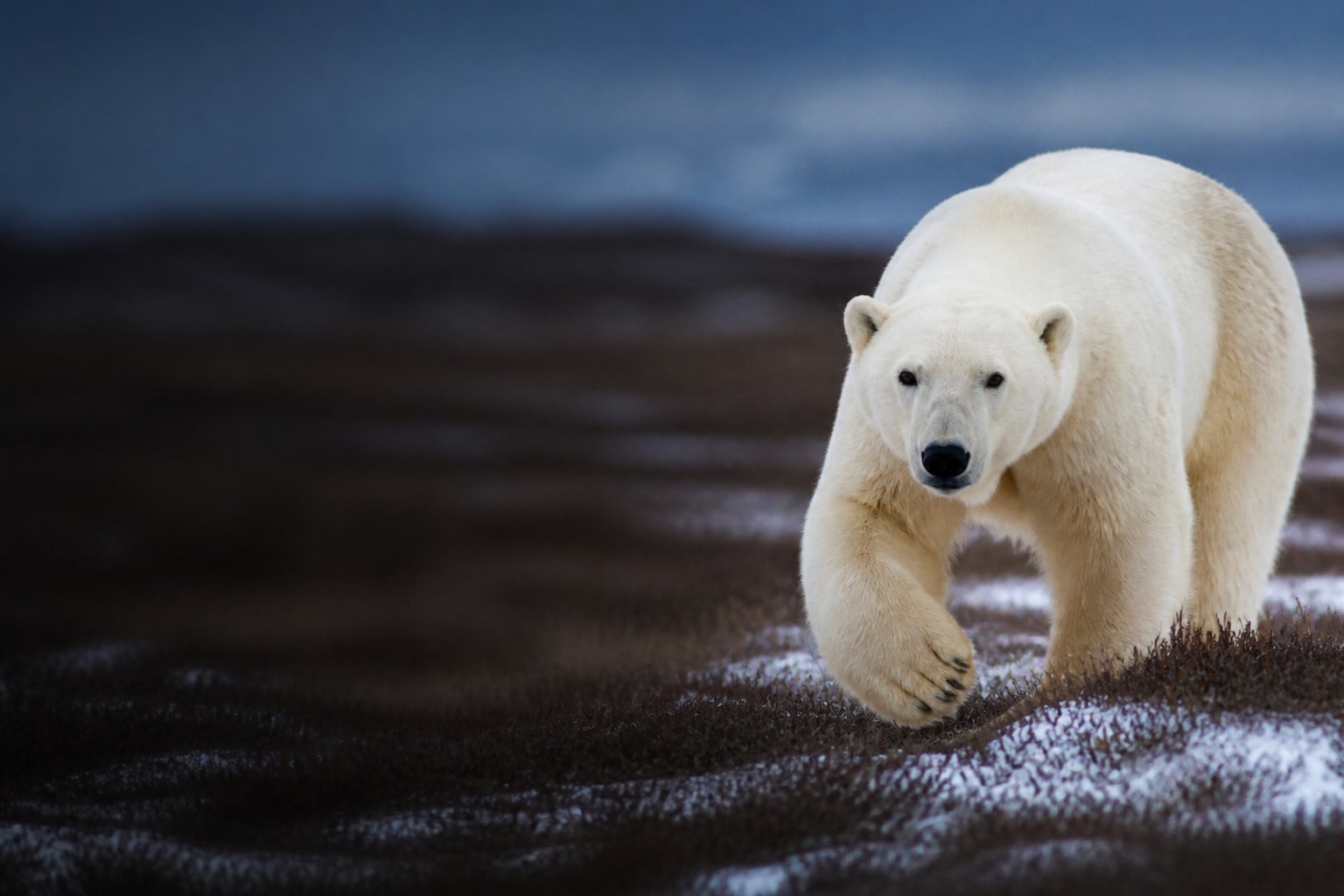
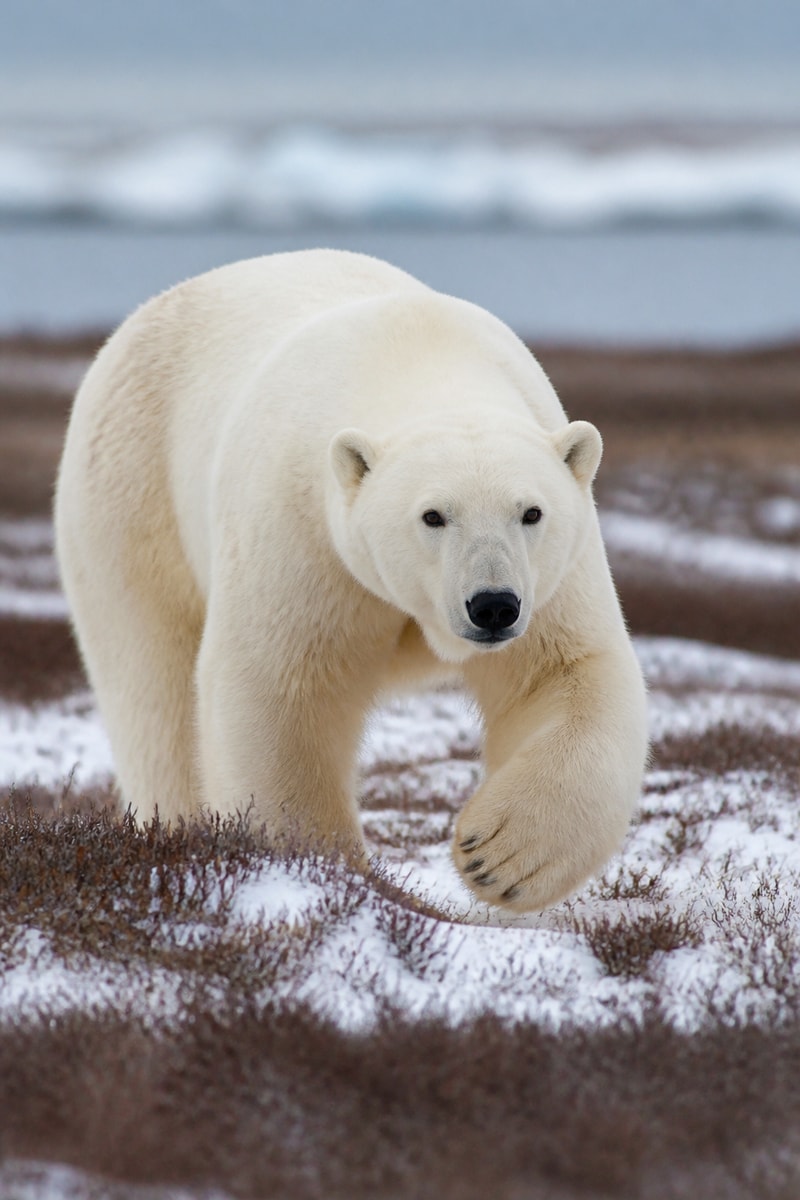
Quick ID anchor: Creamy-white fur over black skin, elongated neck, and massive forelimbs adapted for swimming. Lacks the shoulder hump of a brown bear; the black nose and eyes stand out on the pale face. Confirm with behaviour and habitat before you log the discovery.
Where to see one
Canada
In Canada, start at Churchill, Manitoba (Hudson Bay Coast). The polar bear capital of the world, where bears gather on the tundra each autumn waiting for Hudson Bay to freeze.
More context on this destination lives on the Canada expedition page.
Diet
Primarily seals—especially ringed and bearded seals—hunted from sea ice. Also scavenges whale carcasses and, when ice is poor, may take bird eggs or terrestrial foods opportunistically.
Behaviour
Mostly solitary hunter that travels vast distances on drifting ice. Pregnant females dig maternity dens in snowdrifts; cubs stay with the mother for about two and a half years.
How to identify
Creamy-white fur over black skin, elongated neck, and massive forelimbs adapted for swimming. Lacks the shoulder hump of a brown bear; the black nose and eyes stand out on the pale face.
Interesting facts
- 01
Polar bears have black skin under white fur to absorb heat from the sun.
- 02
They can detect a seal in the water from nearly a kilometre away.
- 03
A polar bear's stomach can hold the equivalent of 10% of its body weight.
Conservation status
Polar bears are Vulnerable, with populations projected to decline as Arctic sea ice shrinks. Canada holds roughly two-thirds of the world's polar bears, making Churchill, Manitoba one of the best places to see them.
Sources: IUCN Red List
Keep exploring
Where it lives
Free on iOS
Catch the Polar Bear
Spot one in the wild, then scan it in Catch'Um to log your legendary discovery.