
Field guide · rare
Bison
The thunder of the prairie, a shaggy-headed giant that once numbered in the tens of millions across North America.
Near Threatened
Bison bison
Overview
The American bison is the largest land mammal in North America, with bulls weighing over 900 kilograms and sporting massive heads covered in thick wool. They can run at 65 km/h and jump nearly two metres vertically, surprising agility for an animal that looks like a living boulder.
Bison shaped the Great Plains ecosystem for millennia, grazing grasslands and creating wallows that become mini-wetlands. Driven to the edge of extinction by the 1890s, they have recovered through conservation herds in Yellowstone, Badlands, and private ranches.
- Scientific nameBison bison
- Length2–3.5 m
- Height1.5–2 m at shoulder
- Weight400–1,000 kg
- LifespanAround 15–20 years in the wild
- DietGrazers of prairie…
- ConservationNear Threatened
- RegionGreat Plains
Habitat
- Prairie
- Grassland
- Open woodland
Grassland, prairie, and open woodland across the western US and Canada suit bison. Yellowstone National Park holds the only continuously wild population that has never been domesticated.
Countries found
Field notes
Field scale for the Bison: length around 2-3.5 m; height 1.5-2 m at shoulder; weight 400-1,000 kg. Typical lifespan: Around 15-20 years in the wild.
When you are scanning habitat, prioritise prairie, grassland, and open woodland. Those settings are where a clean look and a usable photo are most likely.
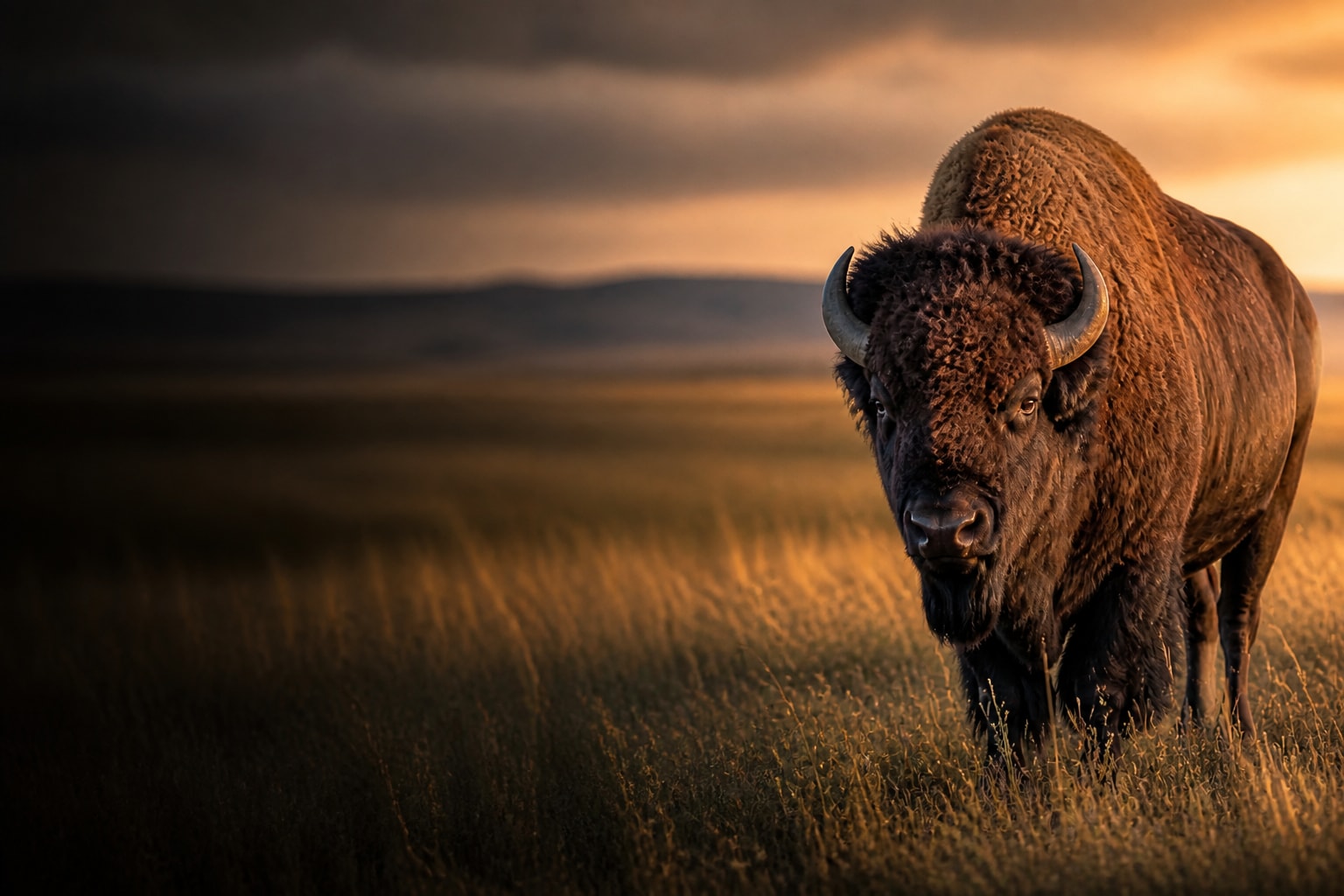
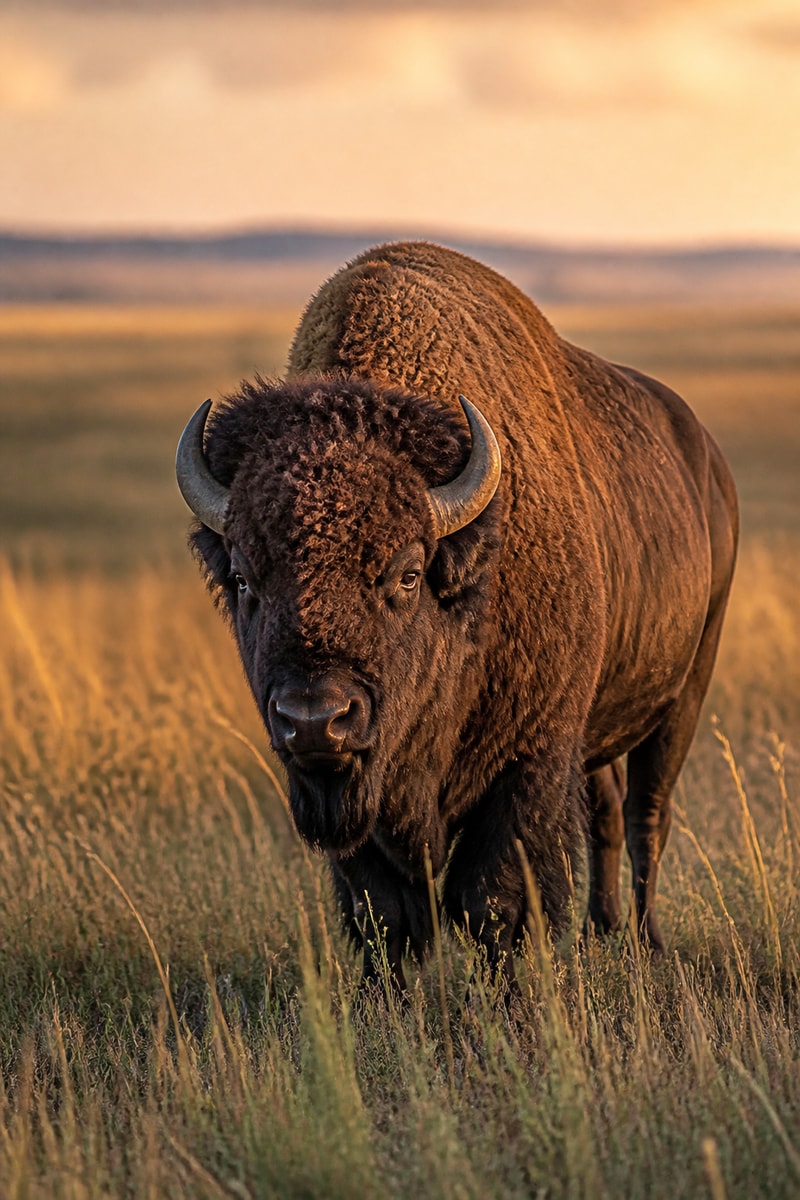
Quick ID anchor: Huge shaggy brown bovine with a massive shoulder hump, short curved horns, and a heavy bearded head. Front half is much bulkier and darker than the hindquarters. Confirm with behaviour and habitat before you log the discovery.
Diet
Grazers of prairie grasses and sedges, also browsing forbs seasonally. Use the massive head and neck to push snow aside in winter to reach forage.
Behaviour
Form herds that move across open grassland; bulls often separate outside the rut. Wallow in dust or mud, and can run surprisingly fast despite their bulk.
How to identify
Huge shaggy brown bovine with a massive shoulder hump, short curved horns, and a heavy bearded head. Front half is much bulkier and darker than the hindquarters.
Interesting facts
- 01
Bison can run at 65 km/h and jump 1.8 metres vertically from a standstill.
- 02
Their hump is muscle, not fat, used for ploughing through snow.
- 03
Bison were nearly extinct by 1890, fewer than 1,000 remained.
Conservation status
American bison are Near Threatened as a wild species, though large numbers exist in commercial herds. True wild genetics survive mainly in Yellowstone and a handful of other conservation herds.
Sources: IUCN Red List


Keep exploring
Where it lives
Related discoveries
- Bald Eaglelegendary • Lakes & Coasts
- Grizzly Bearlegendary • Mountains & Rivers
- Polar Bearlegendary • Arctic Ice
- Blue Whalelegendary • Open Ocean
- Mountain Lionlegendary • Mountains & Desert
- Great White Sharklegendary • Coastal Ocean
- Orcalegendary • Coastal Ocean
- California Condorlegendary • Canyons & Cliffs
Free on iOS
Catch the Bison
Spot one in the wild, then scan it in Catch'Um to log your rare discovery.