
Field guide · rare
Narwhal
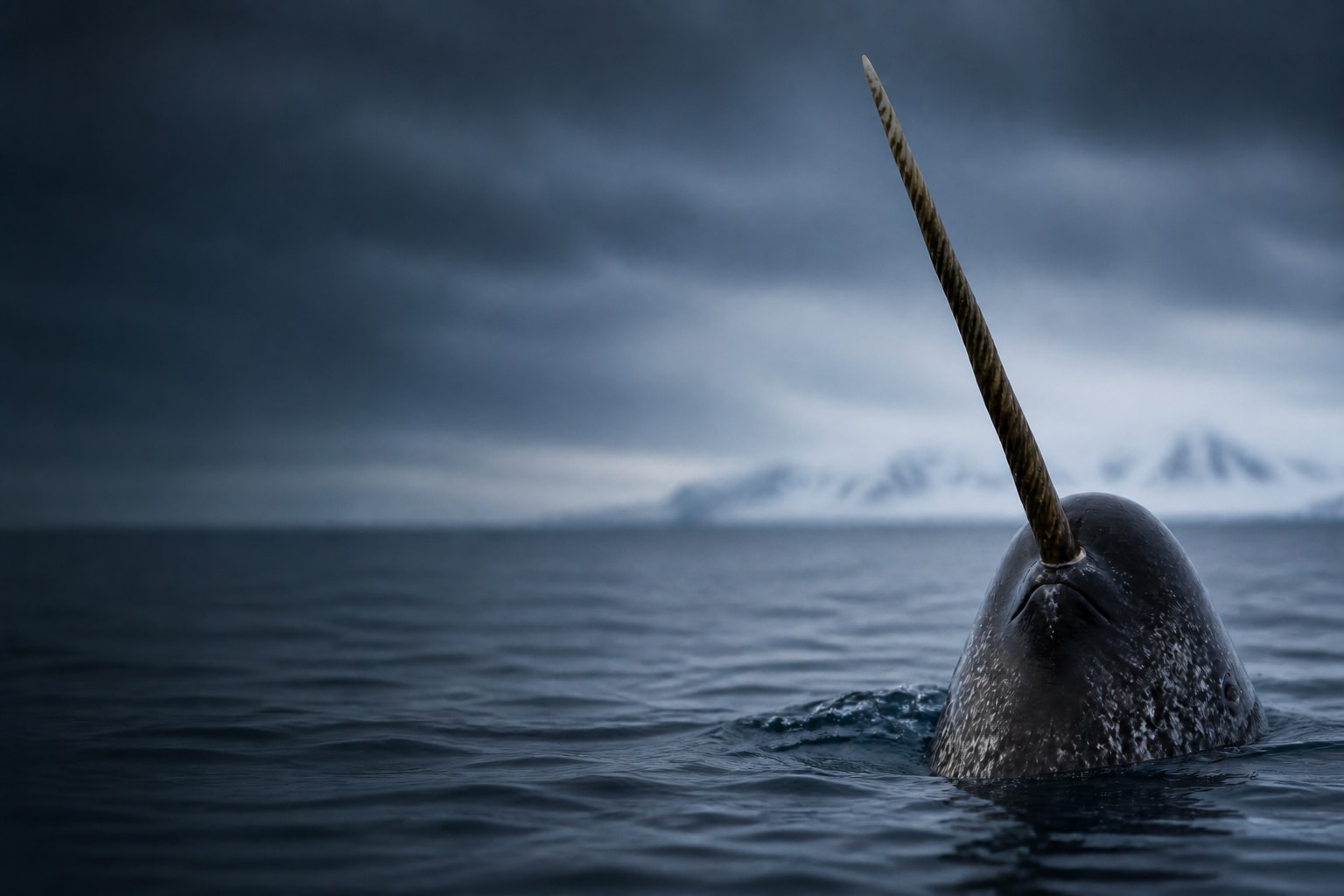
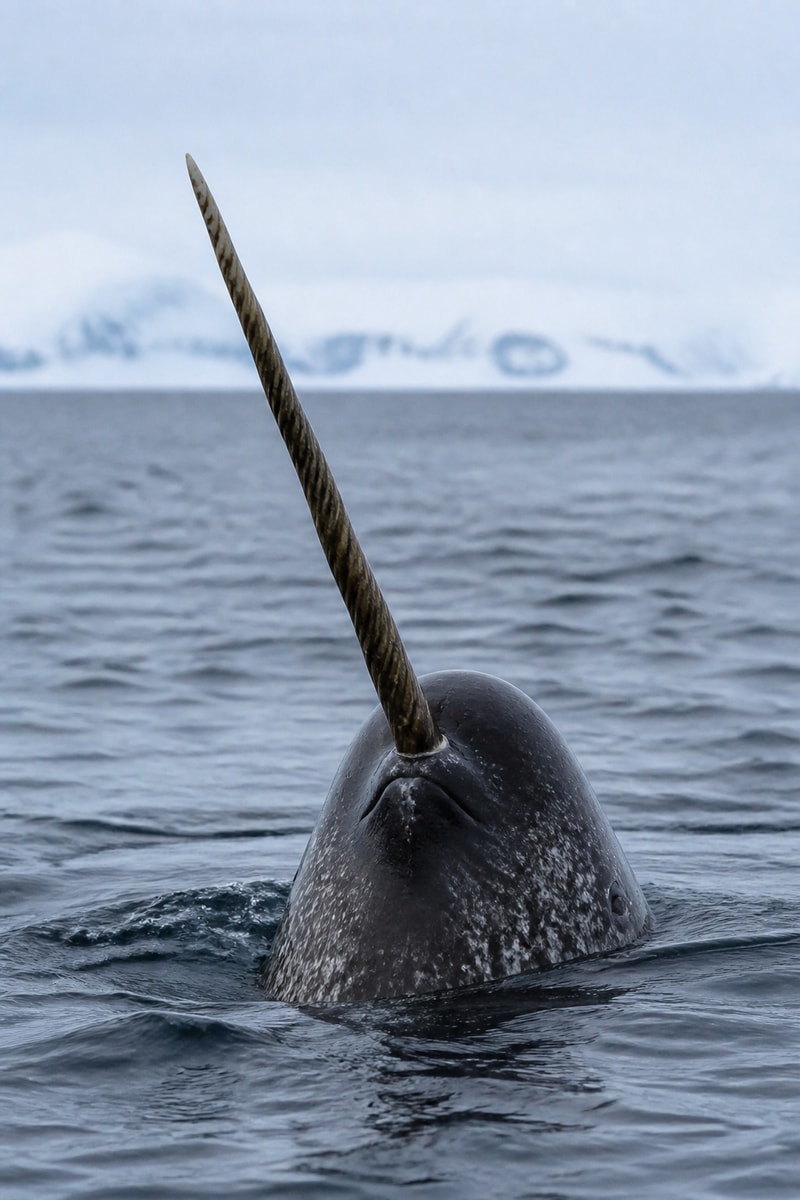
The unicorn of the sea, an Arctic whale whose spiralled tusk is actually a tooth that can grow three metres long.
Near Threatened
Monodon monoceros
Overview
The narwhal is one of the Arctic's most mysterious cetaceans, a mottled grey whale with a long spiralled tusk erupting from the upper lip of most males. The tusk is an elongated left canine tooth, packed with nerve endings, possibly used for sensing or communication.
Narwhals spend winters in dense pack ice and summers in ice-free fjords, diving to extraordinary depths, over 1,500 metres, to hunt Greenland halibut and squid. They are among the most northerly mammals on Earth.
- Scientific nameMonodon monoceros
- Length3.5–5.5 m body; tusk up to ~3 m
- Weight800–1,600 kg
- LifespanAround 25–50 years in the wild
- DietFeeds on Greenland halibut
- ConservationNear Threatened
- RegionArctic Ocean
Habitat
- Arctic ocean
- Sea ice edges
- Deep fjords
Arctic waters around Greenland, Canada, and Russia hold narwhals. They migrate seasonally between offshore winter ice and summering grounds in bays and fjords of the Canadian High Arctic and Baffin Bay.
Countries found
Field notes
Field scale for the Narwhal: length around 3.5-5.5 m body; tusk up to ~3 m; weight 800-1,600 kg. Typical lifespan: Around 25-50 years in the wild.
When you are scanning habitat, prioritise arctic ocean, sea ice edges, and deep fjords. Those settings are where a clean look and a usable photo are most likely.
Quick ID anchor: Mottled grey-white body without a dorsal fin; males usually bear a long spiralled left tusk. Confirm with behaviour and habitat before you log the discovery.
Diet
Feeds on Greenland halibut, Arctic cod, squid, and shrimp, often diving deep under sea ice.
Suction-feeding rather than chewing; the tusk is not used as a primary hunting spear.
Behaviour
Highly social Arctic whale forming pods; migrates with seasonal ice and spends winters in ice-covered waters.
Males often display and possibly sense with the spiralled tusk; deep divers adapted to polar seas.
How to identify
Mottled grey-white body without a dorsal fin; males usually bear a long spiralled left tusk.
Rounder head than belugas; adults whiten with age but keep dark mottling.
Interesting facts
- 01
The narwhal's tusk is actually an elongated tooth. It can grow up to 3 metres long.
- 02
Narwhals can dive deeper than 1,500 metres, among the deepest of any marine mammal.
- 03
They are called the 'corpse whale' in Old Norse for their mottled, corpse-like colour.
Conservation status
Narwhals are Near Threatened, vulnerable to climate change reducing sea ice, noise from shipping, and hunting in Greenland. Canadian Arctic populations remain the best studied.
Sources: IUCN Red List
Keep exploring
Where it lives
Free on iOS
Catch the Narwhal
Spot one in the wild, then scan it in Catch'Um to log your rare discovery.