
Field guide · rare
Serval
Long-legged rodent specialist — huge ears, vertical leaps, and pinpoint pounces in tall grass.
Least Concern
Leptailurus serval
Overview
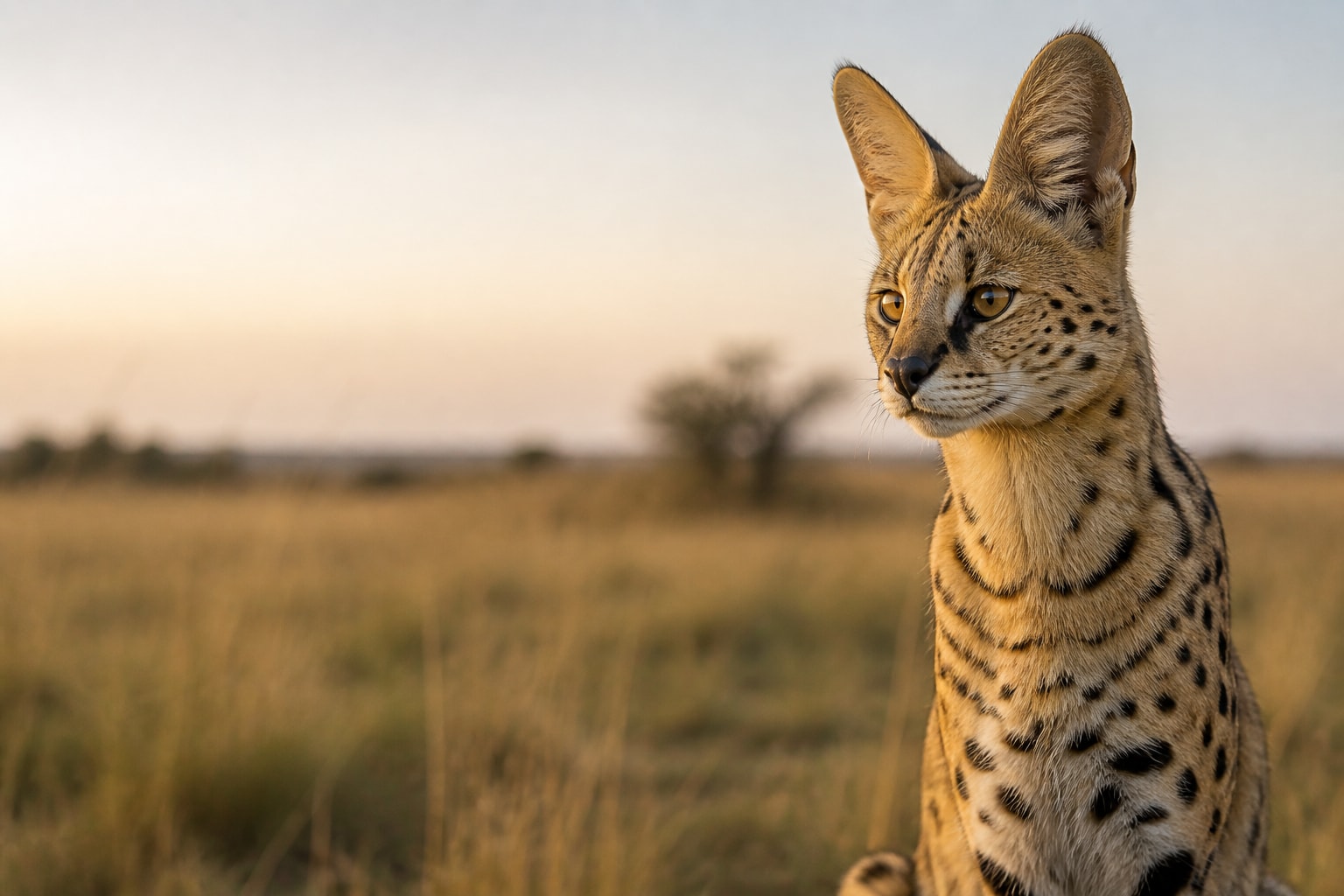
Servals are slender African wild cats built for hunting in tall grass and wetland edges. Oversized ears pinpoint rodents underground, and explosive vertical leaps snatch birds mid-air.
For Kenya and South Africa collectors, a serval stalking a marsh edge is a sleek safari specialty card.
- Scientific nameLeptailurus serval
- Length60–90 cm body; tail ~30–45 cm
- Height54–60 cm at shoulder
- Weight8–18 kg
- LifespanAround 10–12 years in the wild
- DietSpecialise on rodents
- ConservationLeast Concern
- RegionAfrican Wetland Edge
Where to see them
Habitat
- Moist savanna
- Reedbeds
- Tall grassland
Moist savanna, reedbeds, and grassland near water across sub-Saharan Africa, avoiding true desert and dense rainforest.
Field notes
Field scale for the Serval: length around 60-90 cm body; tail ~30-45 cm; height 54-60 cm at shoulder; weight 8-18 kg. Typical lifespan: Around 10-12 years in the wild.
When you are scanning habitat, prioritise moist savanna, reedbeds, and tall grassland. Those settings are where a clean look and a usable photo are most likely.
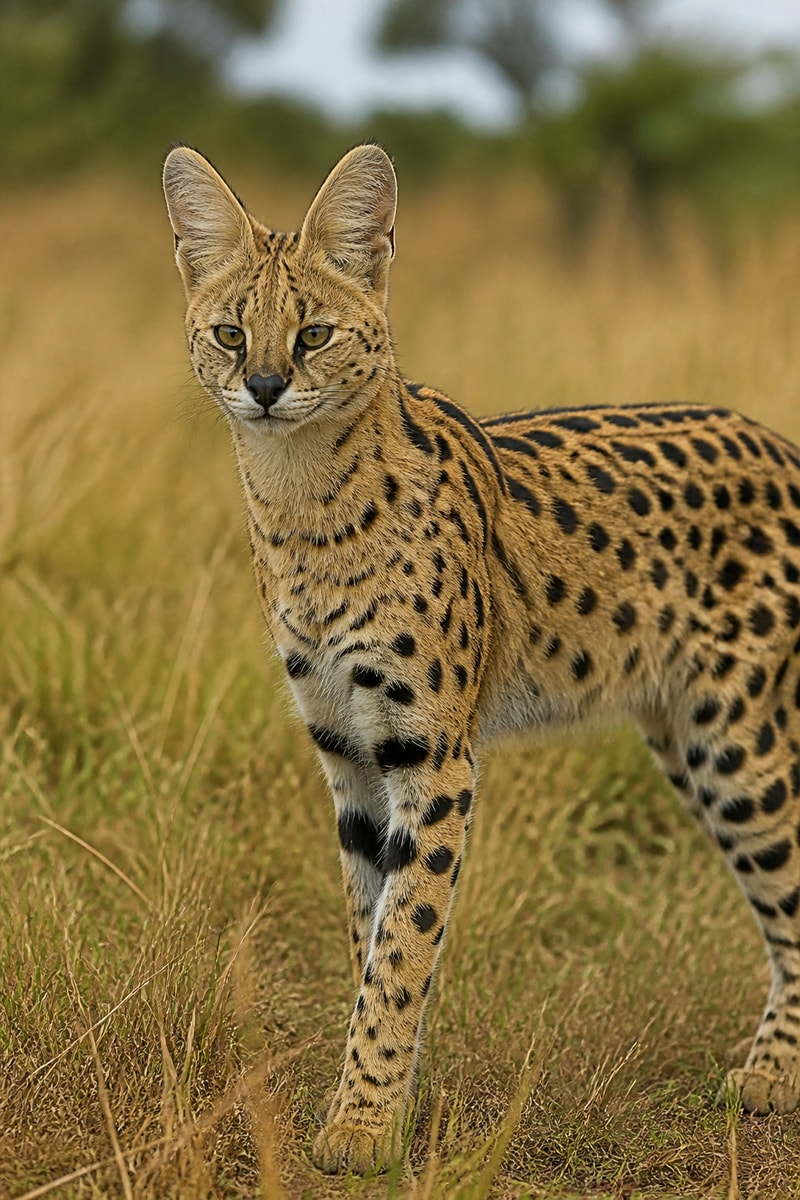
Quick ID anchor: Tall, slender build; very large oval ears; tawny coat with black spots and neck stripes. Confirm with behaviour and habitat before you log the discovery.
Where to see one
Kenya
In Kenya, start at Masai Mara National Reserve (Southwest Kenya). Open savanna where lion prides patrol the grassland and the Great Migration crosses the Mara River from July to October.
More context on this destination lives on the Kenya expedition page.
Diet
Specialise on rodents, plus birds, frogs, insects, and occasionally hares or young antelope.
Locate prey by sound, then pounce with a high-arched leap.
Behaviour
Solitary hunters, most active at twilight and night.
Mark territories with scent; rest in dense cover by day.
How to identify
Tall, slender build; very large oval ears; tawny coat with black spots and neck stripes.
Small head, long neck, and relatively short black-tipped tail.
Interesting facts
- 01
Ears are huge relative to head size for hunting by sound.
- 02
Can leap more than 2 m vertically to catch birds.
- 03
Diet is dominated by rodents and other small prey.
- 04
Long legs give a high vantage over tall grass.
- 05
Mostly solitary and active at dusk and night.
- 06
Coat is tawny with bold black spots and stripes.
Conservation status
Servals are Least Concern but lose wetland and grassland habitat to farming and drainage. Intact marshes and protected savannas in East and southern Africa support healthy numbers.
Sources: IUCN Red List

Keep exploring
Where it lives
Free on iOS
Catch the Serval
Spot one in the wild, then scan it in Catch'Um to log your rare discovery.