
Field guide · rare
Musk Ox
Ice Age survivor of the tundra — shaggy qiviut, curved horns, and a defensive circle.
Least Concern
Ovibos moschatus
Overview
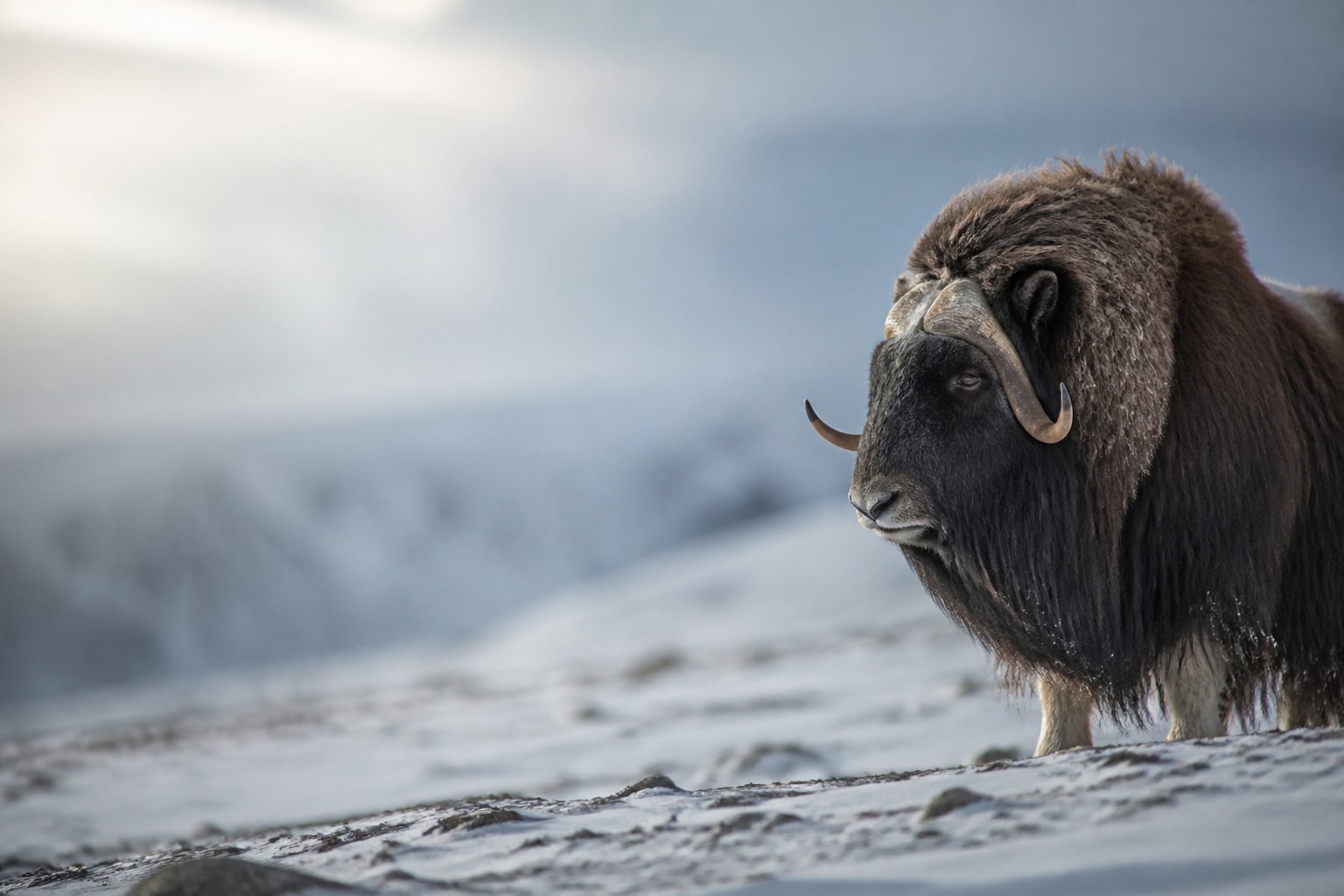
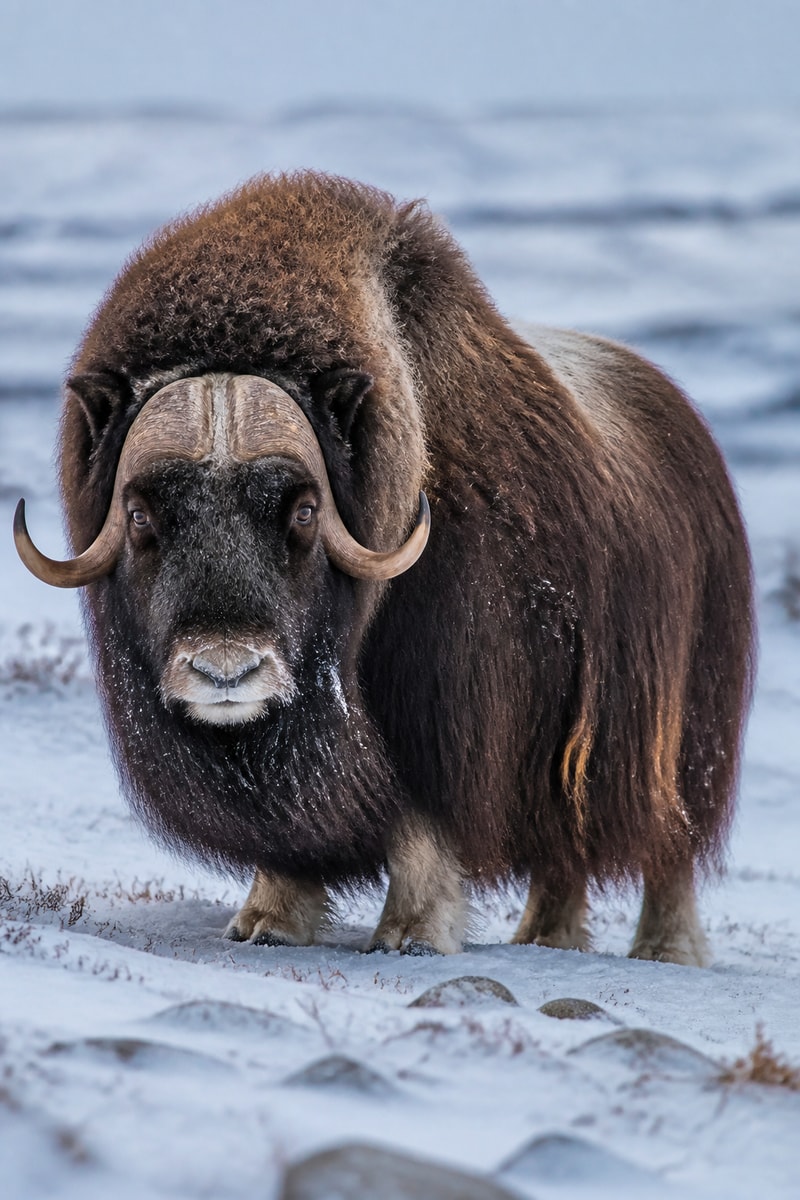
Musk oxen are stocky Arctic ungulates wrapped in dense underwool (qiviut) and long guard hairs. When threatened, herds form a defensive circle with calves inside and horns facing out.
For Canada collectors, a musk ox on the Barrens is a rare High Arctic card — prehistoric silhouette against the tundra.
- Scientific nameOvibos moschatus
- Length190–230 cm
- Height120–150 cm at shoulder
- Weight200–400 kg
- LifespanAround 12–20 years in the wild
- DietGraze and browse sedges
- ConservationLeast Concern
- RegionArctic Tundra
Where to see them
Habitat
- Arctic tundra
- Polar desert
- Coastal plains
Arctic tundra and polar deserts of northern Canada and Greenland, grazing sedges, grasses, and willows on windswept plains.
Field notes
Field scale for the Musk Ox: length around 190-230 cm; height 120-150 cm at shoulder; weight 200-400 kg. Typical lifespan: Around 12-20 years in the wild.
When you are scanning habitat, prioritise arctic tundra, polar desert, and coastal plains. Those settings are where a clean look and a usable photo are most likely.
Quick ID anchor: Massive shaggy brown coat, short legs, and curved horns with a broad boss in adults. Confirm with behaviour and habitat before you log the discovery.
Diet
Graze and browse sedges, grasses, willow, and other tundra plants year-round.
Use horns and hooves to clear snow from winter feeding sites.
Behaviour
Live in herds; form outward-facing circles when predators approach.
Bulls clash in rut with head-on charges; calves stay close to cows.
How to identify
Massive shaggy brown coat, short legs, and curved horns with a broad boss in adults.
Stocky body and low-slung profile built for Arctic wind.
Interesting facts
- 01
Qiviut underwool is among the warmest natural fibres.
- 02
Herds form defensive circles against wolves and bears.
- 03
Both sexes carry curved horns meeting at a forehead boss.
- 04
Survived the last Ice Age when many megafauna vanished.
- 05
Name comes from a musky odour from males in rut.
- 06
Can dig through snow to reach winter forage.
Conservation status
Musk oxen are Least Concern after recoveries and reintroductions, though local herds face icing events and hunting pressure. Canadian Arctic populations are a global stronghold.
Sources: IUCN Red List

Keep exploring
Where it lives
Free on iOS
Catch the Musk Ox
Spot one in the wild, then scan it in Catch'Um to log your rare discovery.