
Field guide · common
Indian Peafowl
India's national bird — the peacock whose shimmering train turns a forest clearing into theatre.
Least Concern
Pavo cristatus
Overview
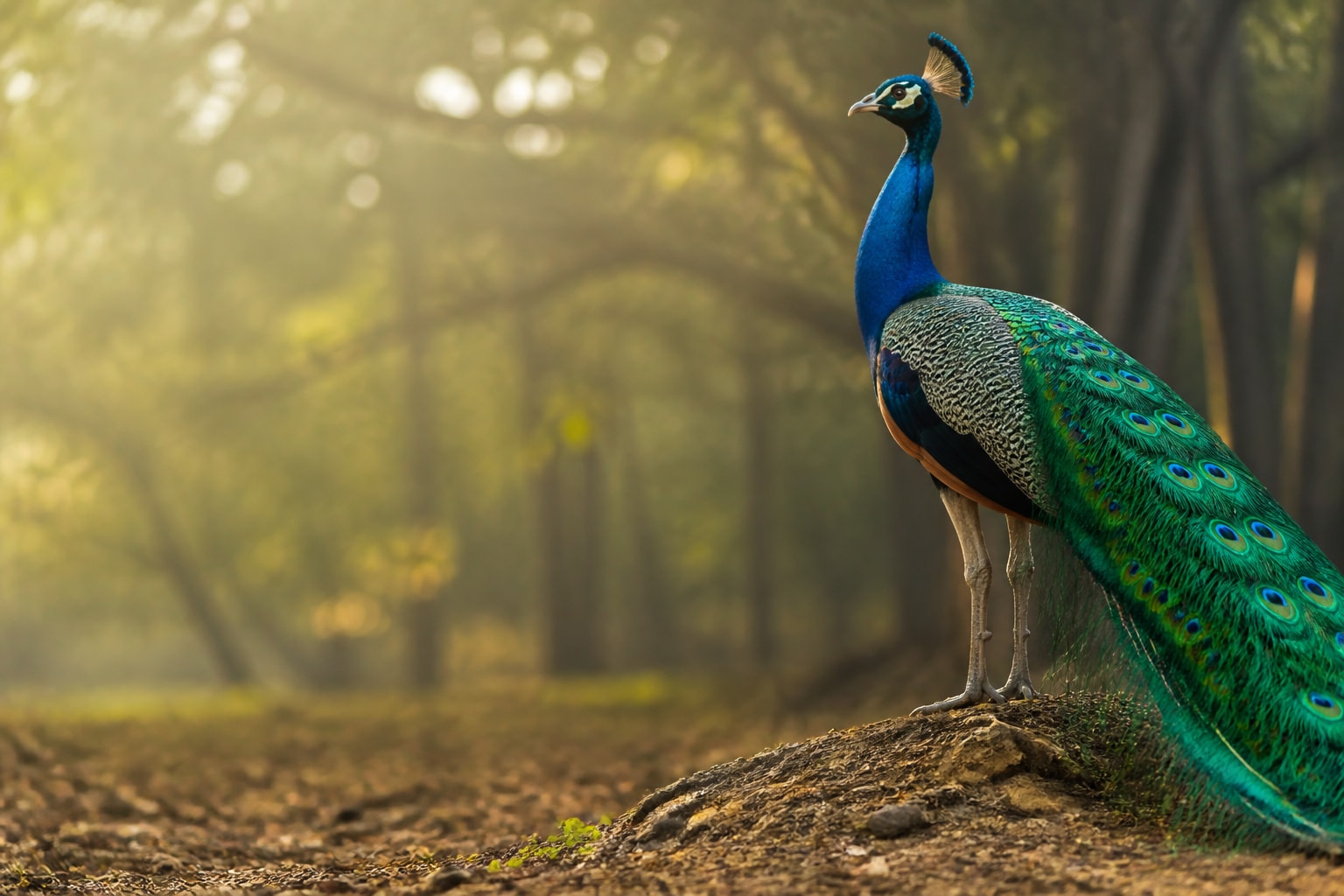
The Indian peafowl is one of the most recognisable birds on Earth. Males unfurl a vast iridescent train of eyed feathers in a trembling fan that has inspired art, myth, and countless search queries for 'peacock'.
Despite the spectacle, peafowl are hardy birds of forest edge, farmland, and village outskirts across the Indian subcontinent. For Catch'Um collectors in India, a wild peacock calling from a mango grove is both everyday and unforgettable.
- Scientific namePavo cristatus
- LengthMales 2–2.3 m including train; females ~1 m
- Weight2.7–6 kg
- LifespanAround 10–25 years in the wild
- DietOmnivore
- ConservationLeast Concern
- RegionForest & Farmland
Where to see them
Habitat
- Deciduous forest
- Scrub
- Farmland
- Village edge
Indian peafowl favour deciduous forest, scrub jungle, and cultivated land near water across India and neighbouring countries. They roost in tall trees at night and forage on the ground by day in clearings and field edges.
Field notes
Field scale for the Indian Peafowl: length around Males 2-2.3 m including train; females ~1 m; weight 2.7-6 kg. Typical lifespan: Around 10-25 years in the wild.
When you are scanning habitat, prioritise deciduous forest, scrub, farmland, and village edge. Those settings are where a clean look and a usable photo are most likely.
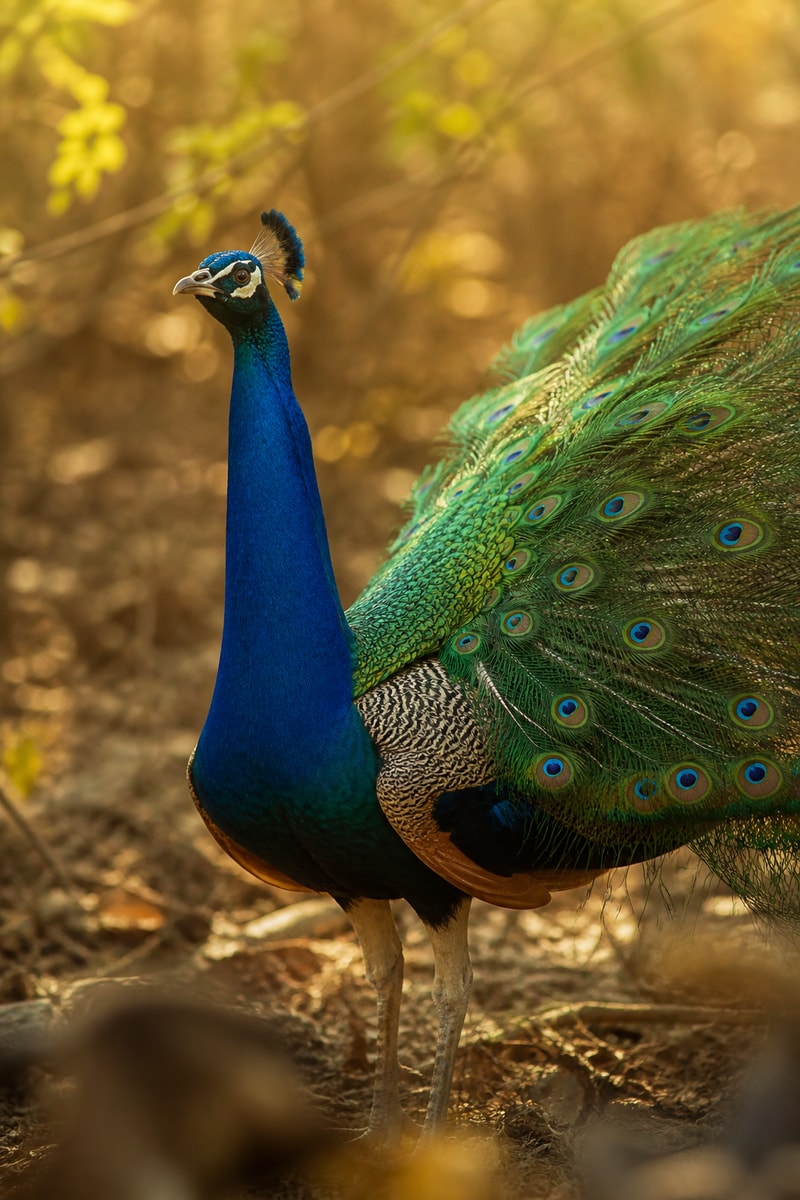
Quick ID anchor: Males: metallic blue neck and breast, towering green train with eye-spots; crest of fan-like feathers on the crown. Confirm with behaviour and habitat before you log the discovery.
Where to see one
India
In India, start at Ranthambore National Park (Rajasthan). Dry deciduous forest and ruined fortresses where tigers patrol ancient trails, one of India's most reliable tiger-spotting reserves.
More context on this destination lives on the India expedition page.
Diet
Omnivorous ground foragers taking seeds, grain, berries, insects, small reptiles, and garden scraps near villages.
Chicks rely heavily on protein-rich insects in the first weeks.
Behaviour
Males display the train in a shimmering fan during the breeding season, vibrating feathers to catch light.
Roost communally in tall trees; forage in loose groups on the forest floor and field edges.
How to identify
Males: metallic blue neck and breast, towering green train with eye-spots; crest of fan-like feathers on the crown.
Females (peahens): mottled brown with a shorter crest and no train — still elegant, far less showy.
Interesting facts
- 01
The Indian peafowl is the national bird of India.
- 02
A peacock's train can make up more than 60% of its total length.
- 03
The 'eyes' on the train are used in courtship displays, not for seeing.
- 04
Peahens choose mates partly by the quality and symmetry of the train.
- 05
Their loud, cat-like call carries far across farmland at dawn and dusk.
- 06
Despite the showy train, peacocks can fly strongly into trees to roost.
Conservation status
Indian peafowl are Least Concern and remain widespread across much of India, aided by cultural protection. Local declines can still occur where hunting pressure or intensive agriculture removes roost trees and foraging habitat.
Sources: IUCN Red List
Keep exploring
Where it lives
Related discoveries
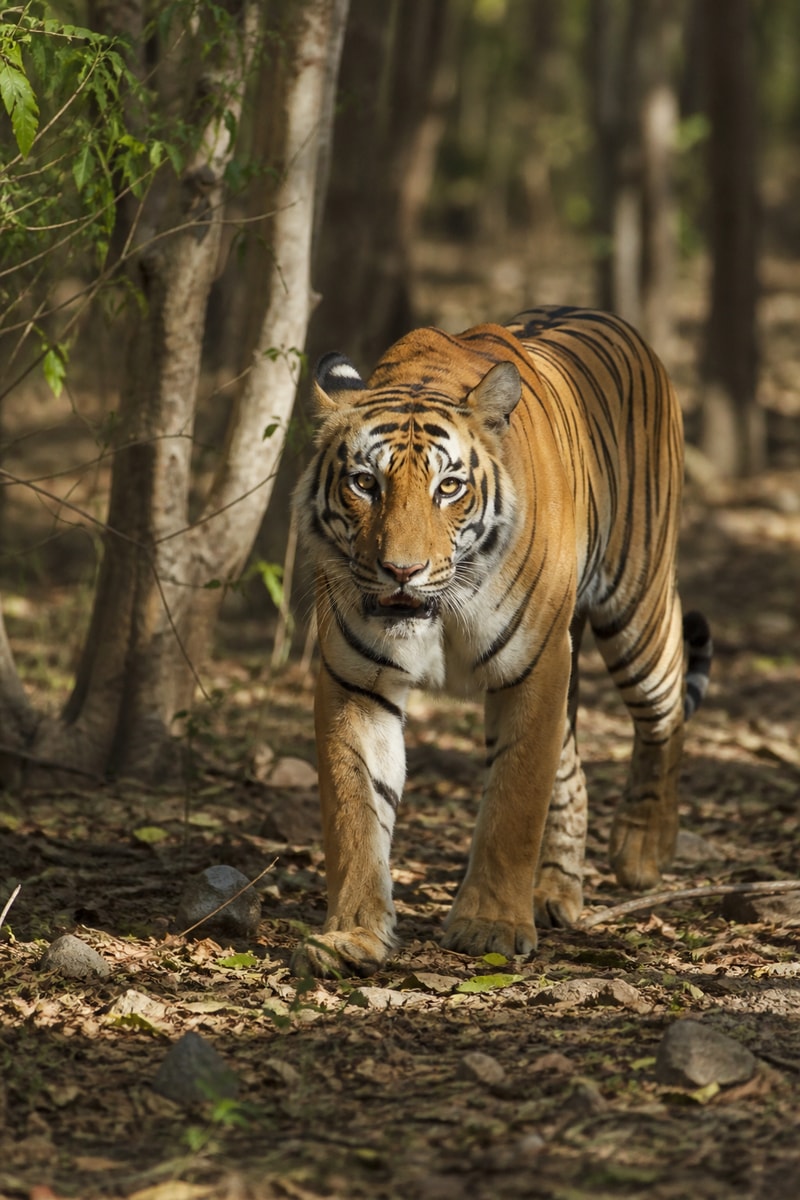
- Tigerlegendary • Jungle & Grassland
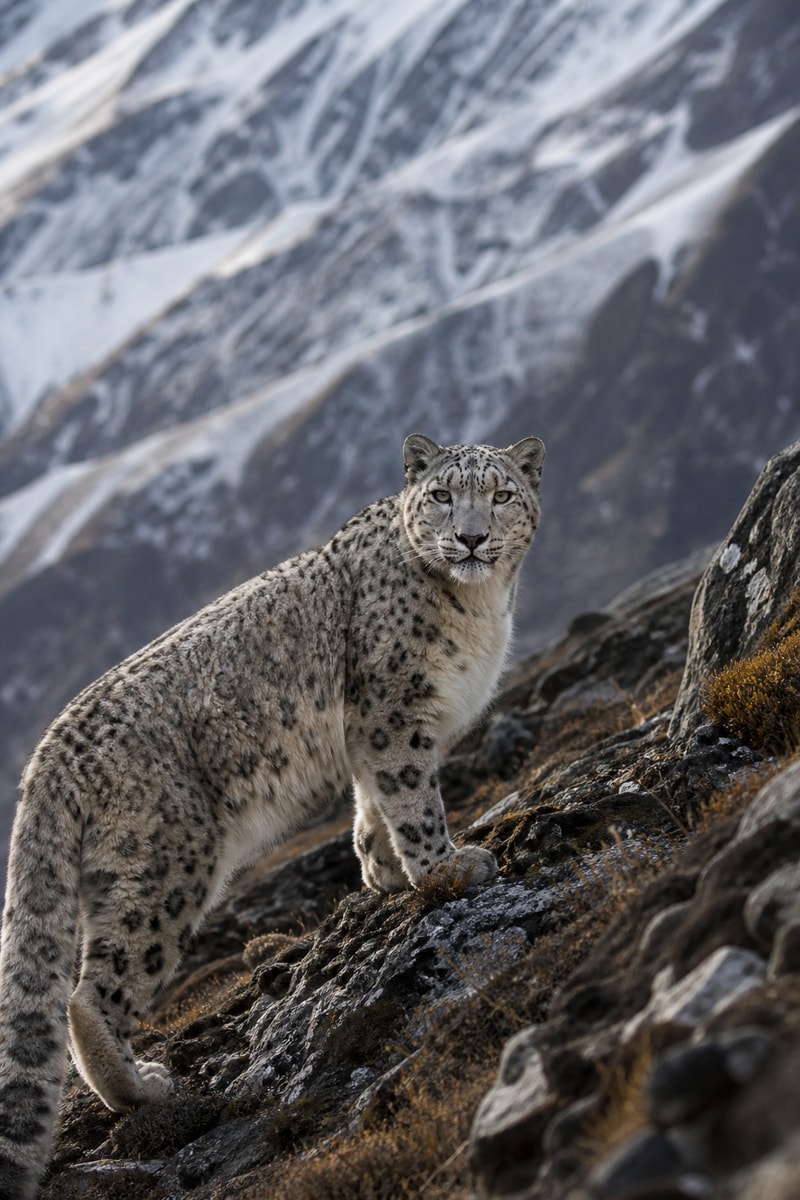
- Snow Leopardlegendary • High Mountains
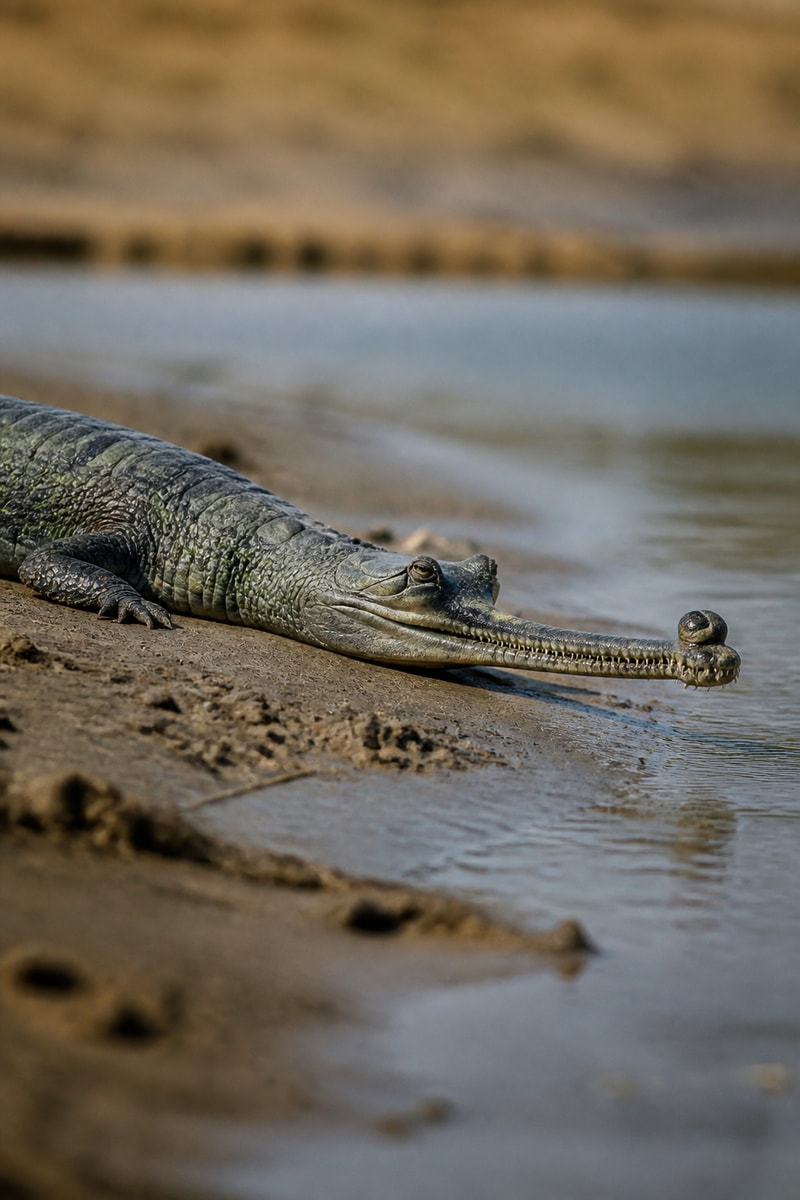
- Ghariallegendary • Riverine Sandbanks
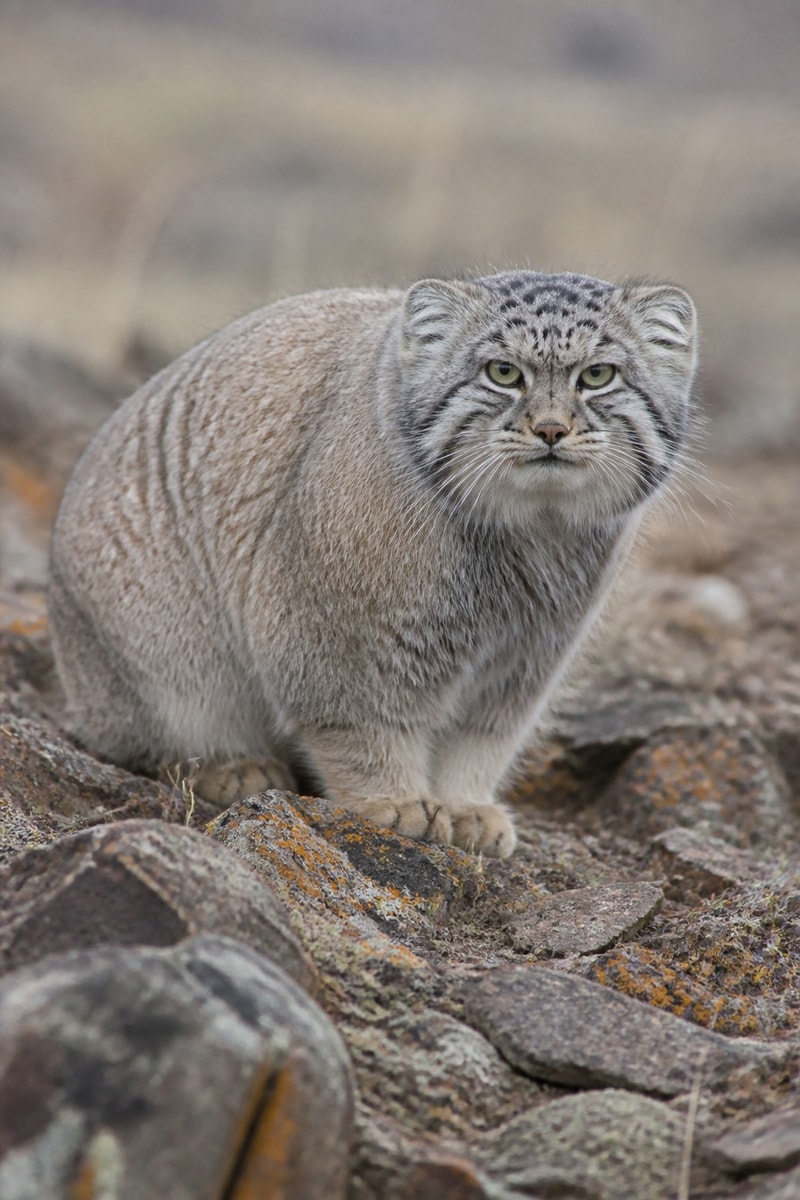
- Pallas's Catlegendary • Central Asian Steppe
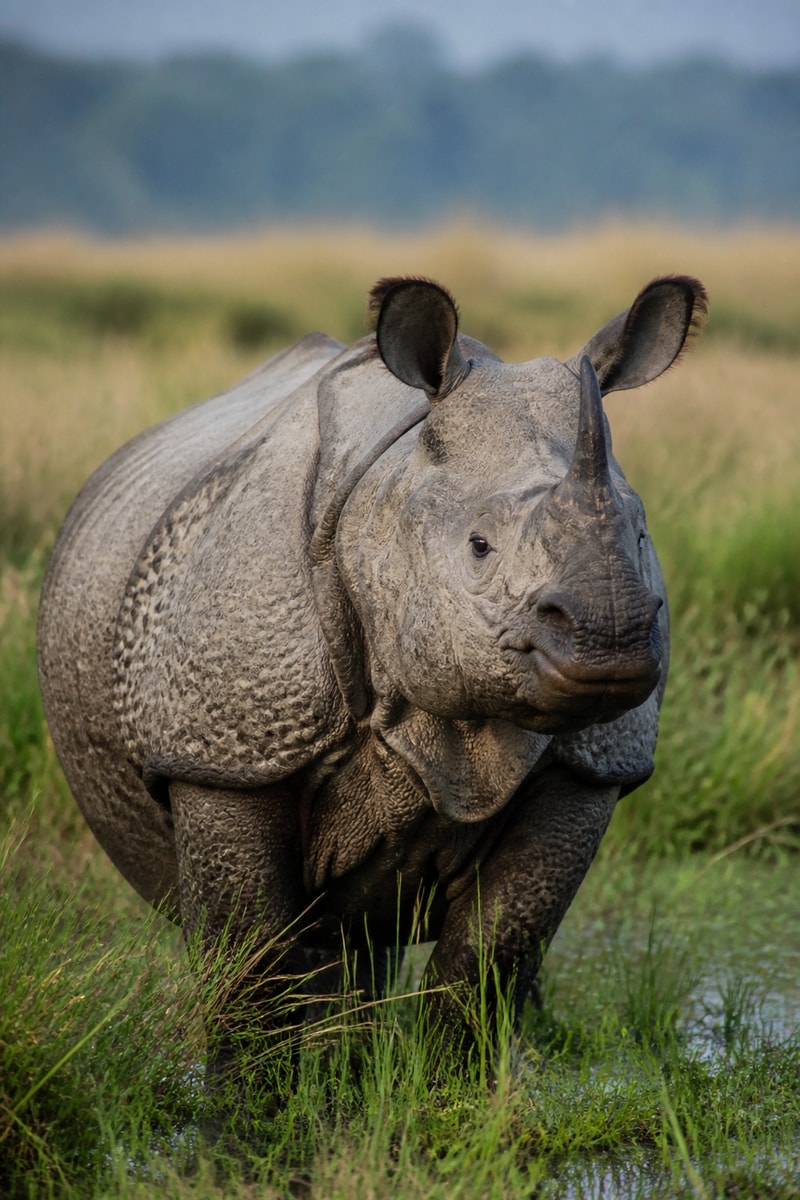
- Indian Rhinoceroslegendary • South Asian Floodplain
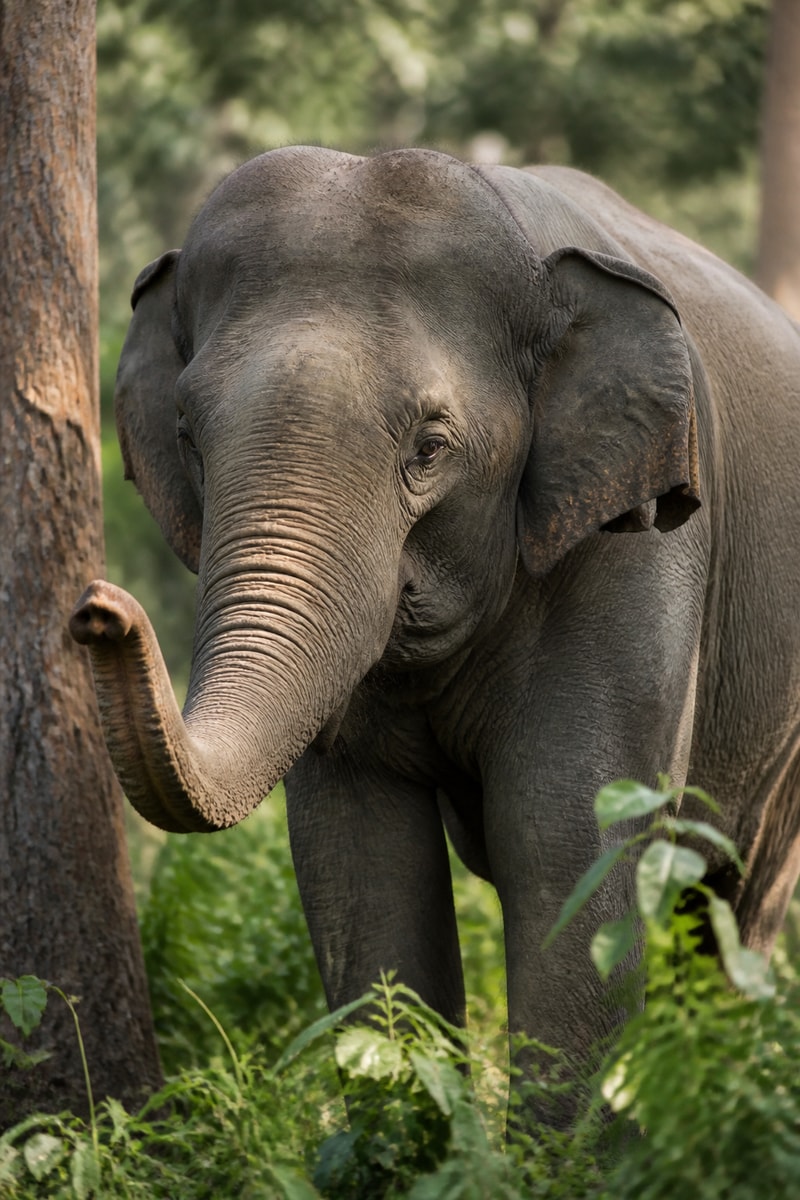
- Asian Elephantrare • Forest & Grassland
- King Cobrarare • Forest
- Great Hornbillrare • Forest Canopy
Free on iOS
Catch the Indian Peafowl
Spot one in the wild, then scan it in Catch'Um to log your common discovery.