
Field guide · rare
Black Mamba
Africa's fastest snake — olive-grey speed, ink-black mouth, and a reputation that travels.
Least Concern
Dendroaspis polylepis
Overview
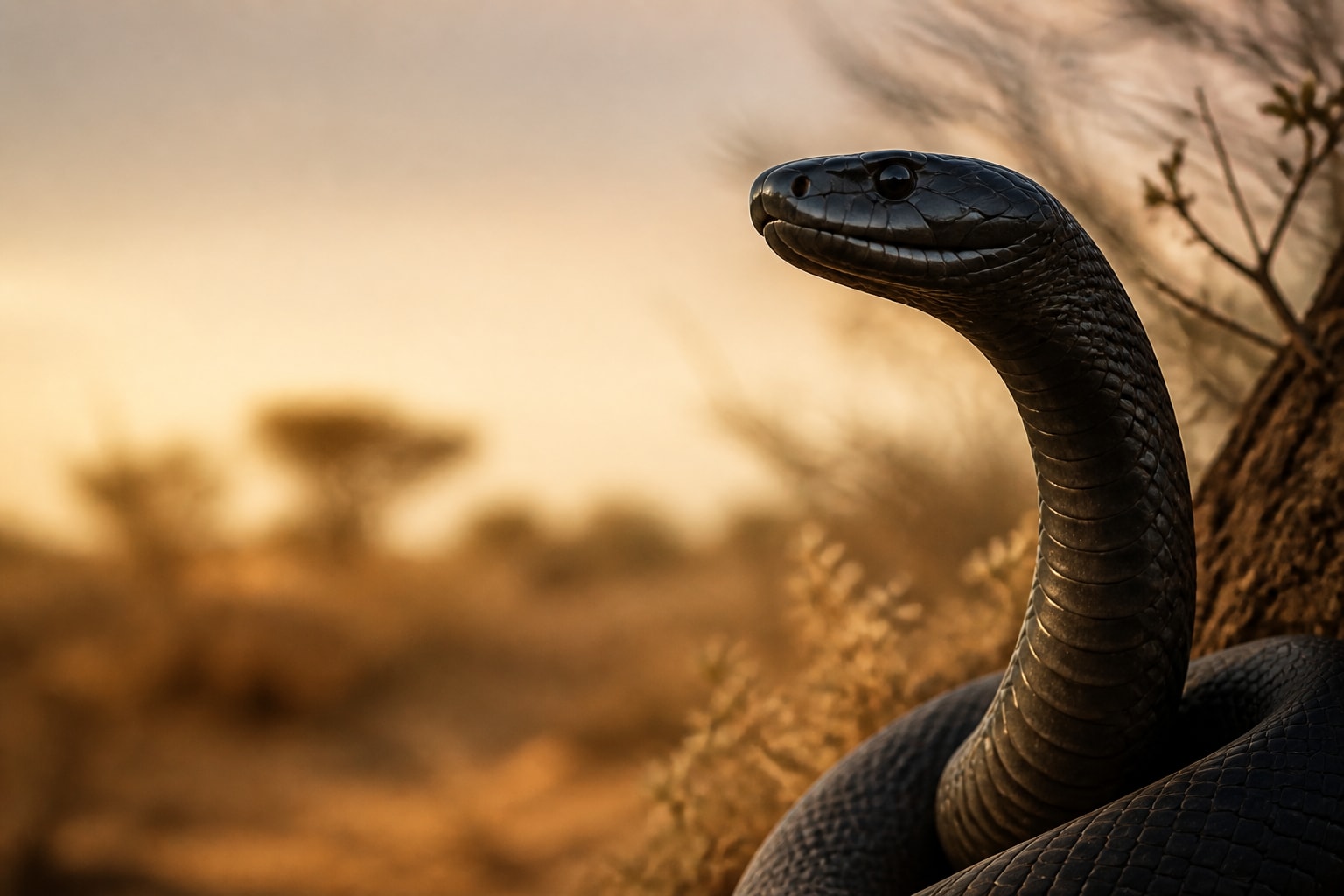
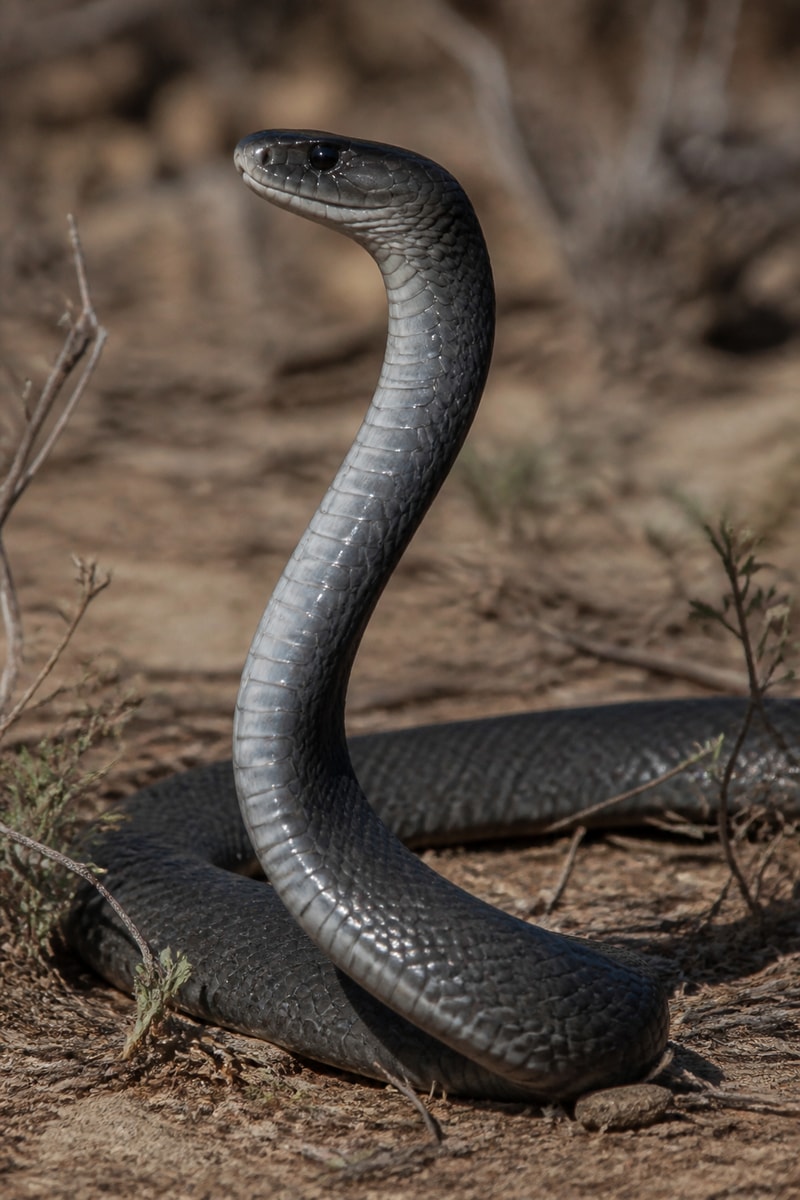
Black mambas are large, highly venomous elapids of sub-Saharan Africa. Despite the name, the body is usually olive, grey, or brown; the inside of the mouth is inky black when the snake gapes in threat.
For Kenya, South Africa, and Botswana collectors, a mamba card is a rare high-adrenaline African serpent — fast, alert, and legendary in lore.
- Scientific nameDendroaspis polylepis
- Length2–3 m typically; rarely over 4 m
- WeightAround 1–2 kg
- LifespanAround 10–12 years in the wild
- DietHunt birds
- ConservationLeast Concern
- RegionAfrican Savanna
Habitat
- Savanna
- Woodland
- Rocky bushveld
Savanna, woodland, rocky hills, and bushveld across much of sub-Saharan Africa, often near termite mounds, hollow trees, and rock crevices used as lairs.
Field notes
Field scale for the Black Mamba: length around 2-3 m typically; rarely over 4 m; weight Around 1-2 kg. Typical lifespan: Around 10-12 years in the wild.
When you are scanning habitat, prioritise savanna, woodland, and rocky bushveld. Those settings are where a clean look and a usable photo are most likely.
Quick ID anchor: Long, slender olive to gunmetal body with a coffin-shaped head and smooth scales. Confirm with behaviour and habitat before you log the discovery.
Where to see one
Kenya
In Kenya, start at Masai Mara National Reserve (Southwest Kenya). Open savanna where lion prides patrol the grassland and the Great Migration crosses the Mara River from July to October.
More context on this destination lives on the Kenya expedition page.
Diet
Hunt birds, rodents, bats, and other small mammals with rapid strikes.
May climb trees or raid nests; swallow prey whole after venom takes effect.
Behaviour
Diurnal and alert; often bask near a known retreat.
Threat display includes rearing, hissing, and gaping to show the black mouth.
How to identify
Long, slender olive to gunmetal body with a coffin-shaped head and smooth scales.
Interior of mouth distinctly black; eyes large with round pupils.
Interesting facts
- 01
Named for the black interior of the mouth, not the body colour.
- 02
Among the fastest snakes — can move over 15 km/h in short bursts.
- 03
Adults commonly reach 2–3 m; exceptional individuals longer.
- 04
Neurotoxic venom affects nerves and breathing.
- 05
Often shelters in termite mounds or hollow trees.
- 06
Prefers to flee but will gape and strike if cornered.
Conservation status
Black mambas are Least Concern across a wide African range. Local persecution and habitat change occur, but the species remains widespread in savanna and woodland.
Sources: IUCN Red List
Keep exploring
Where it lives
Free on iOS
Catch the Black Mamba
Spot one in the wild, then scan it in Catch'Um to log your rare discovery.