
Field guide · rare
Bat-eared Fox
Radar ears for termites — the insect-hunting fox of Africa’s open plains.
Least Concern
Otocyon megalotis
Overview
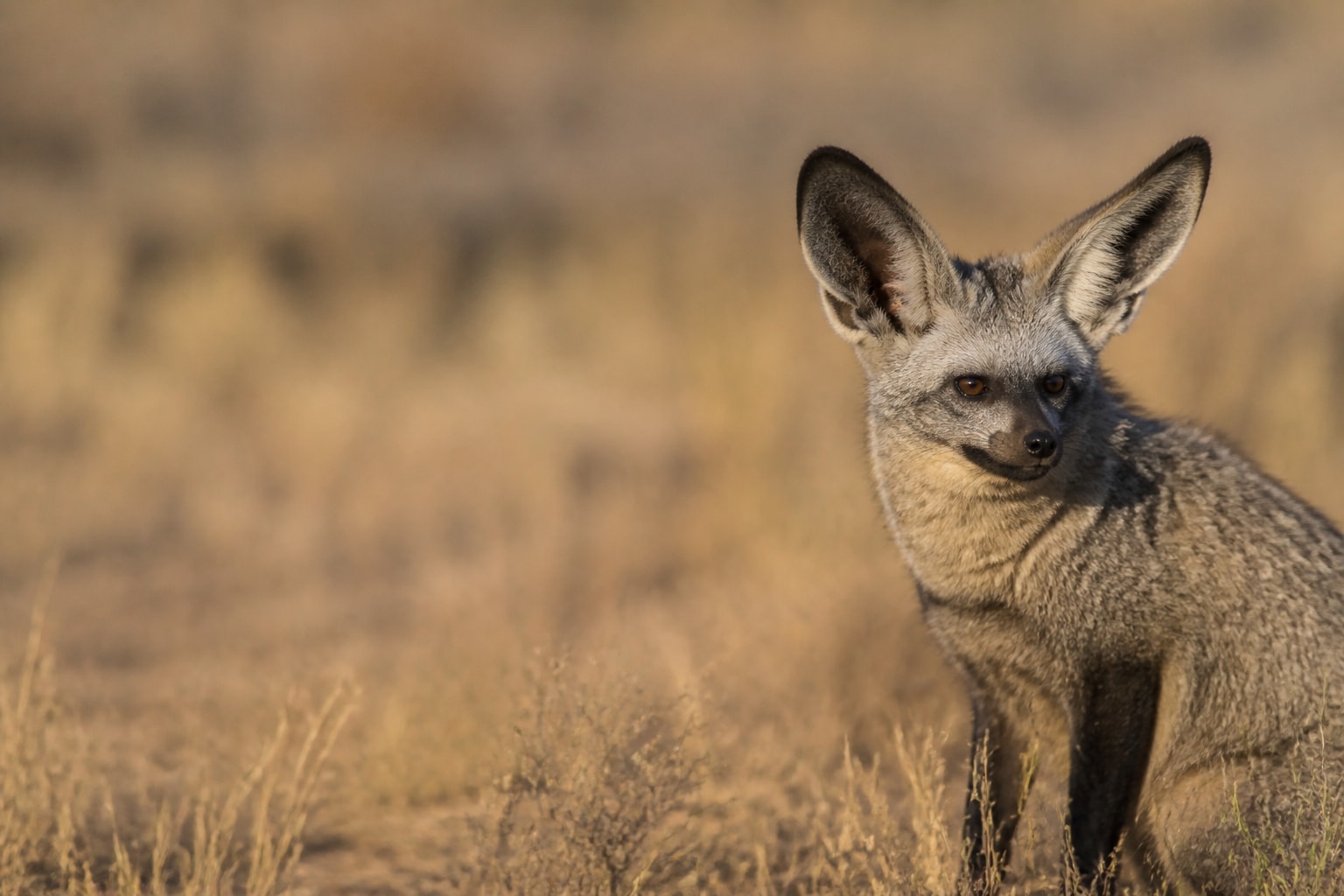
Bat-eared foxes are small, huge-eared canids specialised for hearing and digging insects, especially termites and beetles. They live in pairs or family groups on short-grass plains where prey is abundant.
For Botswana, Kenya, and South Africa collectors, this fox is a rare arid-plains oddity — oversized ears, night foraging, and a diet built on insects.
- Scientific nameOtocyon megalotis
- Length46–66 cm body; tail ~23–34 cm
- Weight3–5.5 kg
- LifespanAround 6–10 years in the wild
- DietPrimarily harvester…
- ConservationLeast Concern
- RegionAfrican Dry Grassland
Habitat
- Short-grass plain
- Arid savanna
- Open scrub
Short-grass plains, arid savanna, and open scrub with termite mounds across eastern and southern Africa.
Field notes
Field scale for the Bat-eared Fox: length around 46-66 cm body; tail ~23-34 cm; weight 3-5.5 kg. Typical lifespan: Around 6-10 years in the wild.
When you are scanning habitat, prioritise short-grass plain, arid savanna, and open scrub. Those settings are where a clean look and a usable photo are most likely.
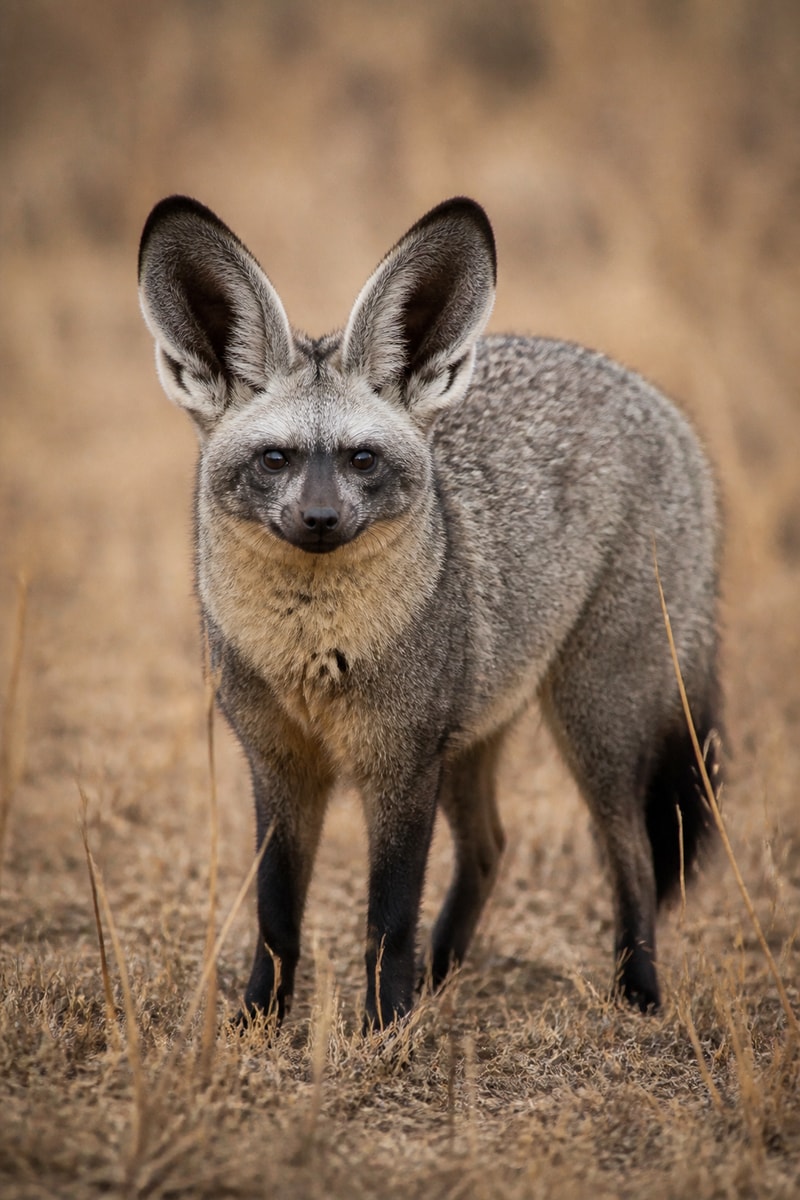
Quick ID anchor: Small pale fox with enormous bat-like ears, black facial mask, and bushy black-tipped tail. Confirm with behaviour and habitat before you log the discovery.
Where to see one
Botswana
In Botswana, start at Kalahari Desert (Central Botswana). Red sand and sparse scrub, home to meerkat mobs, gemsbok, and brown hyenas at burrow entrances at dawn.
More context on this destination lives on the Botswana expedition page.
Kenya
In Kenya, start at Masai Mara National Reserve (Southwest Kenya). Open savanna where lion prides patrol the grassland and the Great Migration crosses the Mara River from July to October.
More context on this destination lives on the Kenya expedition page.
Diet
Primarily harvester termites and dung beetles, plus other insects, occasional small vertebrates, and fruit.
Listen for subterranean insects, then dig rapidly with forepaws.
Behaviour
Live in pairs or small family groups sharing dens.
Highly social within the family; groom and rest near the den by day.
How to identify
Small pale fox with enormous bat-like ears, black facial mask, and bushy black-tipped tail.
Legs dark; body yellowish-grey — unmistakable ear silhouette on open plains.
Interesting facts
- 01
Ears can exceed 10 cm — among the largest relative to body size in canids.
- 02
Termites and beetles dominate the diet.
- 03
Extra cheek teeth help grind hard insect prey.
- 04
Usually monogamous; both parents help raise pups.
- 05
Often forage at night or in cool daylight hours.
- 06
Dig dens in sandy soil for shelter and breeding.
Conservation status
Bat-eared foxes are Least Concern. They remain widespread on suitable grasslands, though disease, persecution, and habitat conversion can hit local groups.
Sources: IUCN Red List




Keep exploring
Where it lives
Free on iOS
Catch the Bat-eared Fox
Spot one in the wild, then scan it in Catch'Um to log your rare discovery.