
Field guide · common
Zebra
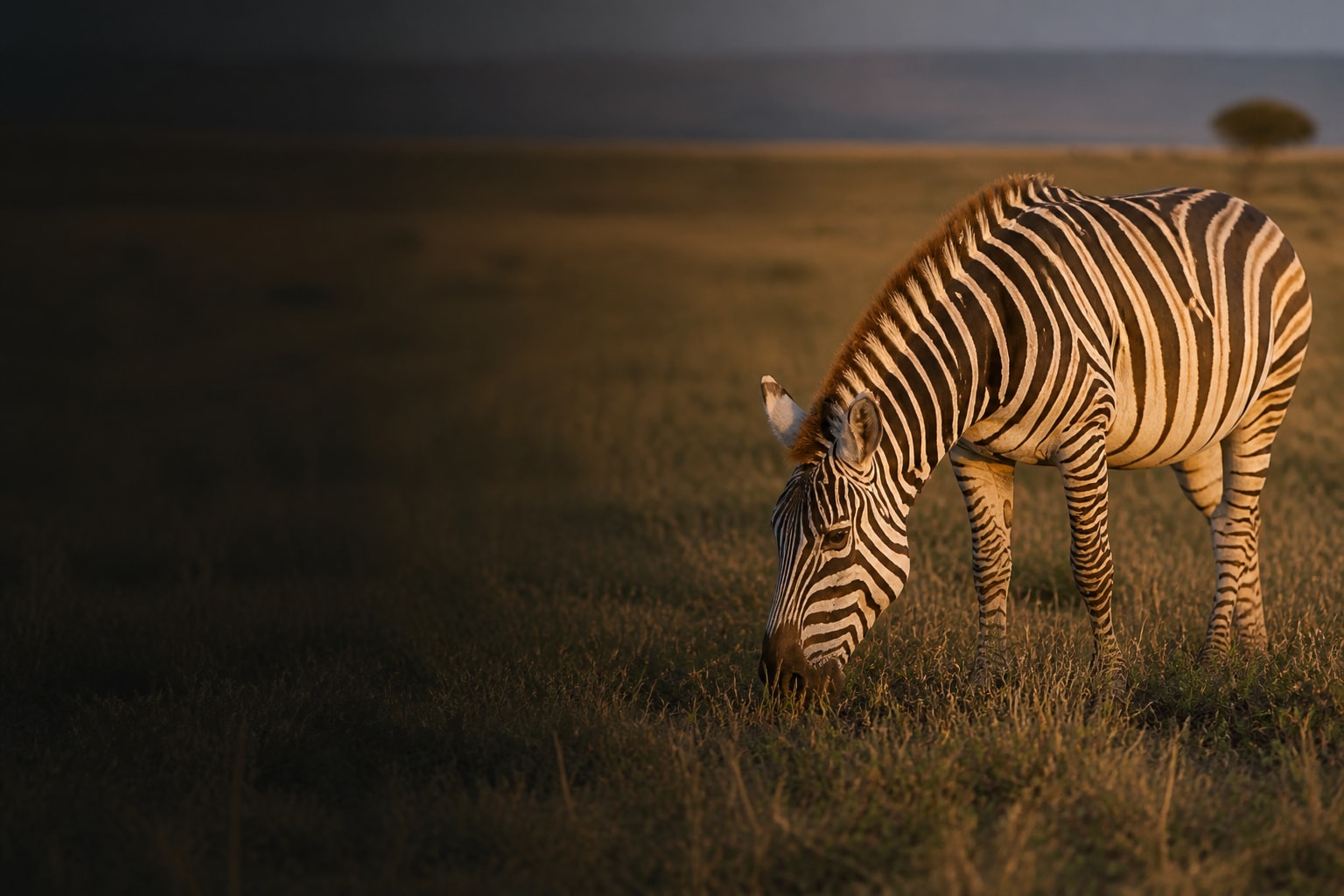
Stripes in the grass, a herd animal whose black-and-white pattern may confuse predators and dazzle every camera on the Mara.
Near Threatened
Equus quagga
Overview
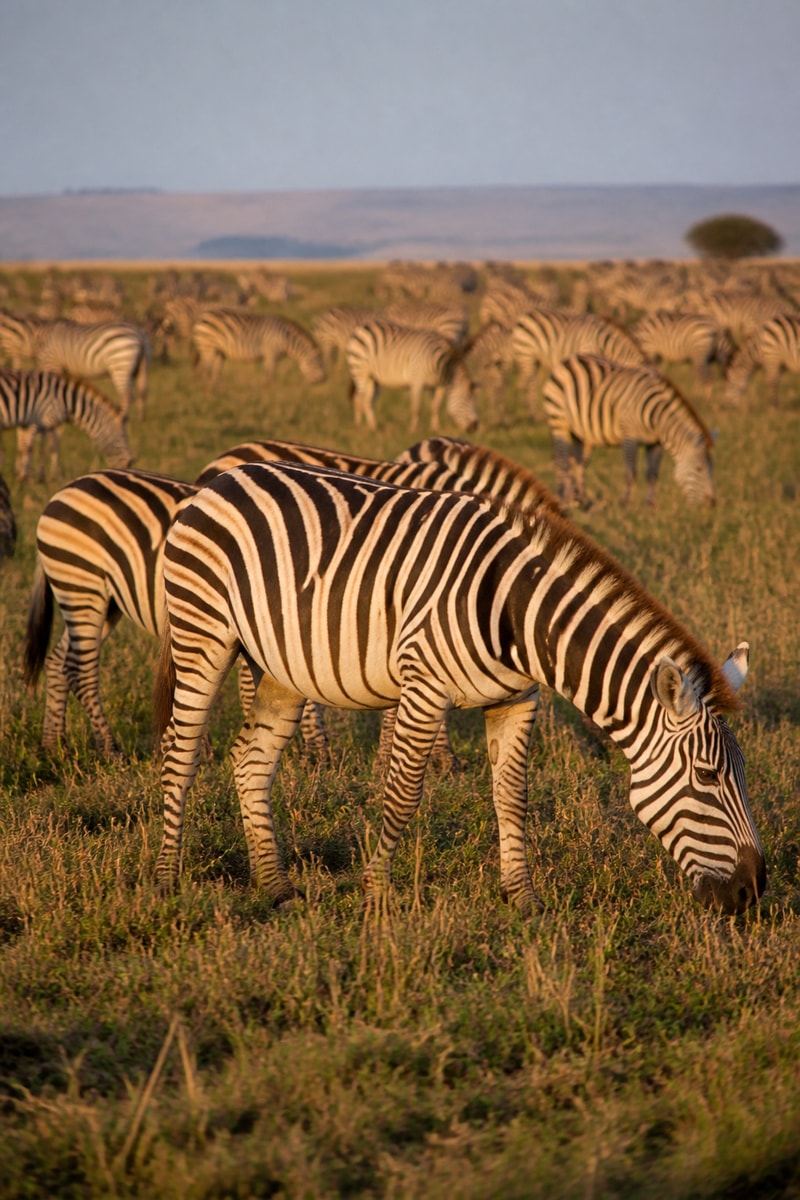
The plains zebra is the most common and widespread zebra, grazing in tight herds across East African grassland. Every individual's stripe pattern is unique, like a fingerprint, and foals imprint on their mother's pattern within days of birth.
Zebras are constantly alert: heads up, ears swivelling, ready to bolt at the first lion sighting. Their stripes may help confuse predators during a chase, regulate body temperature, or repel biting flies, scientists still debate the exact reason.
- Scientific nameEquus quagga
- Length2.2–2.5 m body
- Height1.1–1.5 m at shoulder
- Weight175–385 kg
- LifespanAround 20–30 years in the wild
- DietPlains zebras are…
- ConservationNear Threatened
- RegionGrassland
Habitat
- Grassland
- Savanna
- Open woodland
Open grassland and savanna in Kenya, Tanzania, and much of eastern and southern Africa suit plains zebras. They often graze alongside wildebeest and gazelles, and gather at waterholes where predators wait.
Countries found
Field notes
Field scale for the Zebra: length around 2.2-2.5 m body; height 1.1-1.5 m at shoulder; weight 175-385 kg. Typical lifespan: Around 20-30 years in the wild.
When you are scanning habitat, prioritise grassland, savanna, and open woodland. Those settings are where a clean look and a usable photo are most likely.
Quick ID anchor: Bold black-and-white stripes cover the body; stripe pattern is unique to each individual. Plains zebras have a shadow of brownish 'shadow stripes' on the flanks and a short upright mane. Confirm with behaviour and habitat before you log the discovery.
Diet
Plains zebras are grazers that feed mainly on short grasses, sometimes taking herbs and browse when grass is scarce. They need regular access to water and often drink daily.
Behaviour
Live in family harems of a stallion with mares and foals, which join larger herds on open plains. Highly alert, they sleep in short bouts with herd lookouts and flee in tight groups when predators approach.
How to identify
Bold black-and-white stripes cover the body; stripe pattern is unique to each individual. Plains zebras have a shadow of brownish 'shadow stripes' on the flanks and a short upright mane.
Interesting facts
- 01
Every zebra's stripe pattern is unique, no two are alike.
- 02
Foals can stand and run within an hour of birth.
- 03
Zebras sleep standing up and take turns as herd lookouts.
Conservation status
Plains zebras are Near Threatened, with populations declining in some regions due to hunting and habitat loss. They remain abundant in protected areas like the Masai Mara and Serengeti.
Sources: IUCN Red List

Keep exploring
Where it lives
Free on iOS
Catch the Zebra
Spot one in the wild, then scan it in Catch'Um to log your common discovery.