
Field guide · common
Wren
Small bird, big voice, a tiny brown acrobat whose explosive trill carries further than birds ten times its size.
Least Concern
Troglodytes troglodytes
Overview
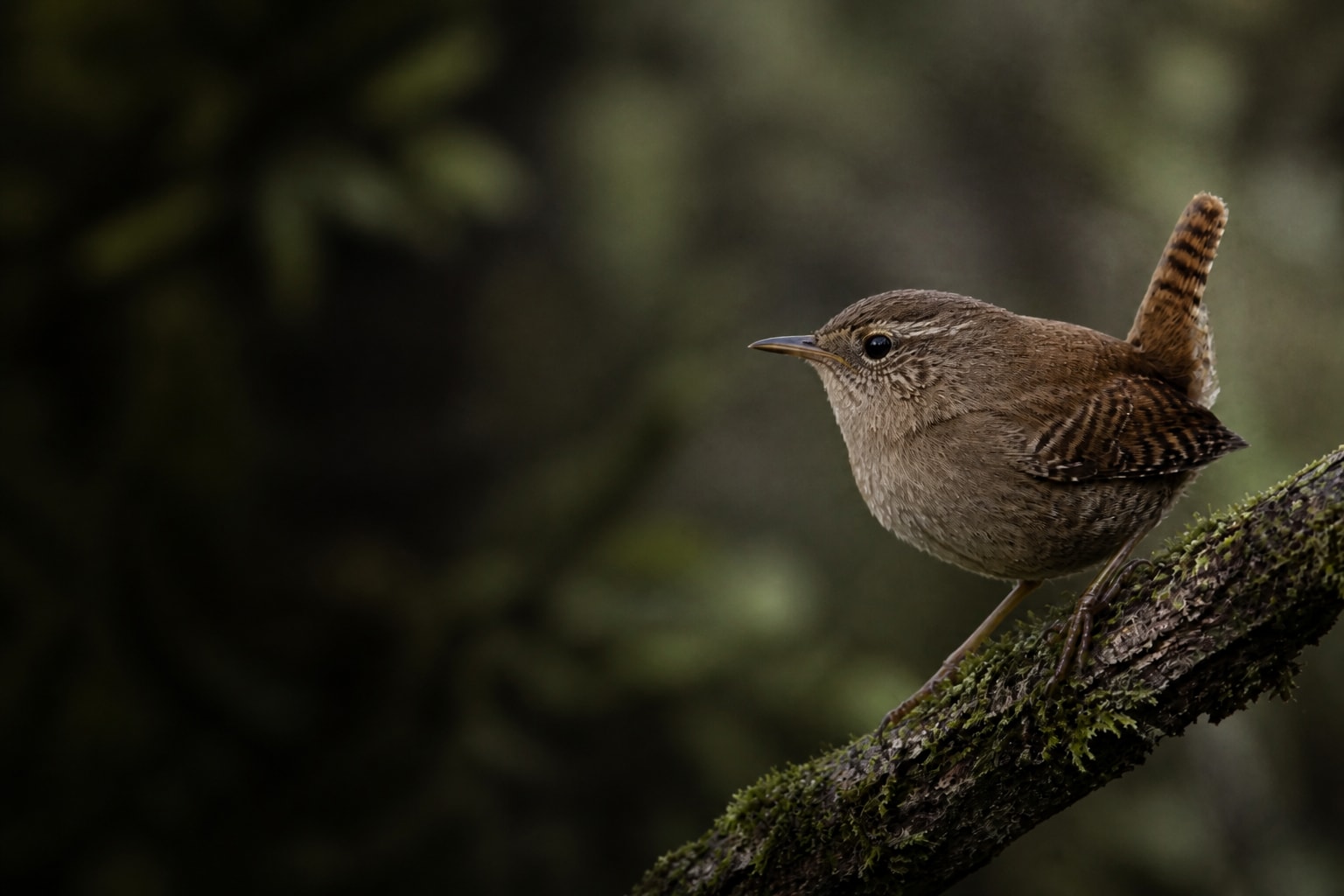
The wren is Britain's most common breeding bird and one of its smallest, a plump brown ball of energy with an upright tail and a song that belies its size. Males sing from exposed perches, their rapid, rattling trill ringing through woodland and gardens alike.
Wrens hunt insects in tangles of ivy, log piles, and dense shrubbery, building domed nests in cavities, nest boxes, and even old coat pockets left in sheds. In cold winters, communal roosting helps them survive nights that would kill a lone bird.
- Scientific nameTroglodytes troglodytes
- Length9–10 cm
- Weight8–12 g
- Lifespan2–3 years in the wild
- DietTiny insects
- ConservationLeast Concern
- RegionGardens & Woodland
Habitat
- Woodland
- Gardens
- Hedgerows
- Rocky coasts
Almost any habitat with cover suits wrens, gardens, woodland, hedgerows, reedbeds, and coastal scrub across the UK. They need dense vegetation for nesting and foraging and are rarely far from undergrowth.
Countries found
Field notes
Field scale for the Wren: length around 9-10 cm; weight 8-12 g. Typical lifespan: 2-3 years in the wild.
When you are scanning habitat, prioritise woodland, gardens, hedgerows, and rocky coasts. Those settings are where a clean look and a usable photo are most likely.
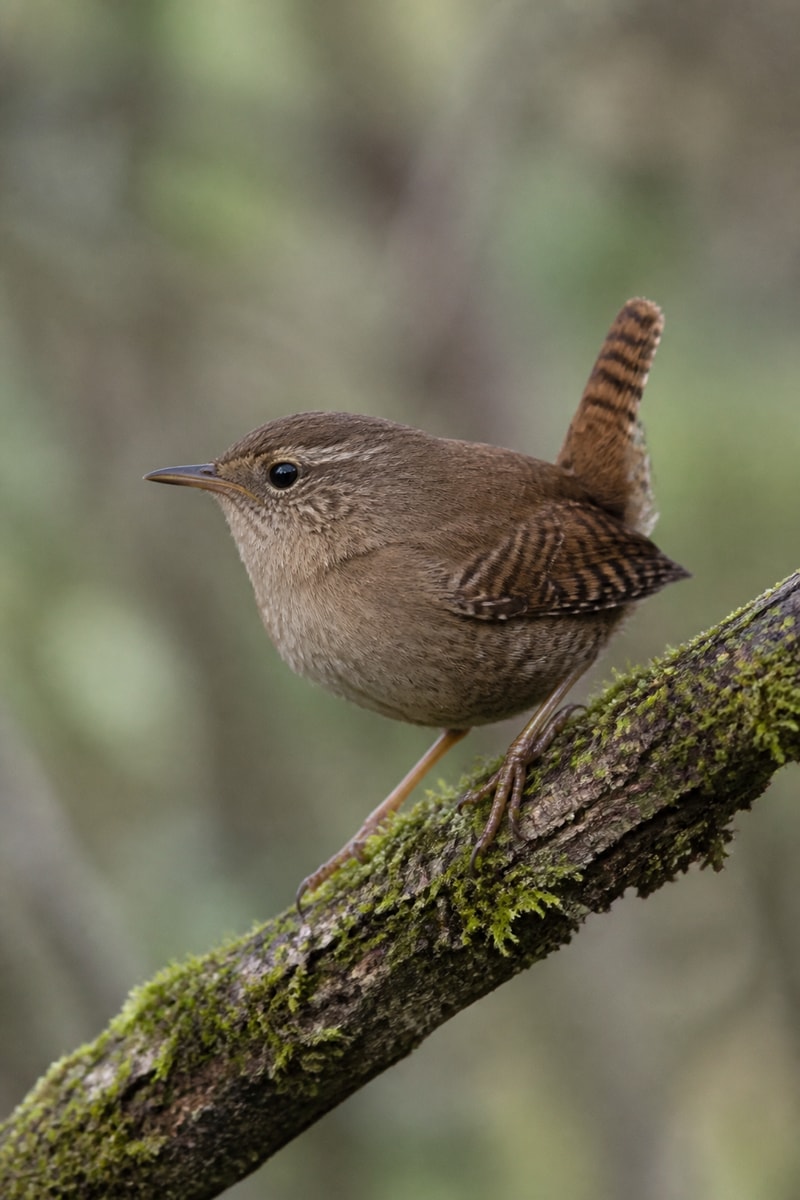
Quick ID anchor: Minute warm-brown bird with fine barring on wings and tail, a pale supercilium, and a habitually cocked tail. Europe’s smallest common bird by mass in many regions. Confirm with behaviour and habitat before you log the discovery.
Where to see one
United Kingdom
In United Kingdom, start at Cotswolds Farmland (Gloucestershire & Oxfordshire). Hedgerows, pasture, and village edges, classic fox country where russet coats show clearly against green fields at last light.
More context on this destination lives on the United Kingdom expedition page.
Diet
Tiny insects, spiders, and other invertebrates gleaned from crevices in bark, stone, and dense vegetation. Rarely takes seeds.
Behaviour
Restless creeper through low cover that often holds its short tail cocked upright. Despite its size, it delivers an extraordinarily loud, rapid song from hidden perches.
How to identify
Minute warm-brown bird with fine barring on wings and tail, a pale supercilium, and a habitually cocked tail. Europe’s smallest common bird by mass in many regions.
Interesting facts
- 01
The wren is one of the UK's smallest birds but has one of the loudest songs.
- 02
Male wrens build several nest structures and let females choose.
- 03
They roost communally in winter, dozens may cram into a single nest box.
Conservation status
Wrens are Least Concern and abundant across the UK. Severe winters can cause local population crashes, but numbers recover quickly.
Sources: IUCN Red List





Keep exploring
Free on iOS
Catch the Wren
Spot one in the wild, then scan it in Catch'Um to log your common discovery.