
Field guide · rare
Wildcat
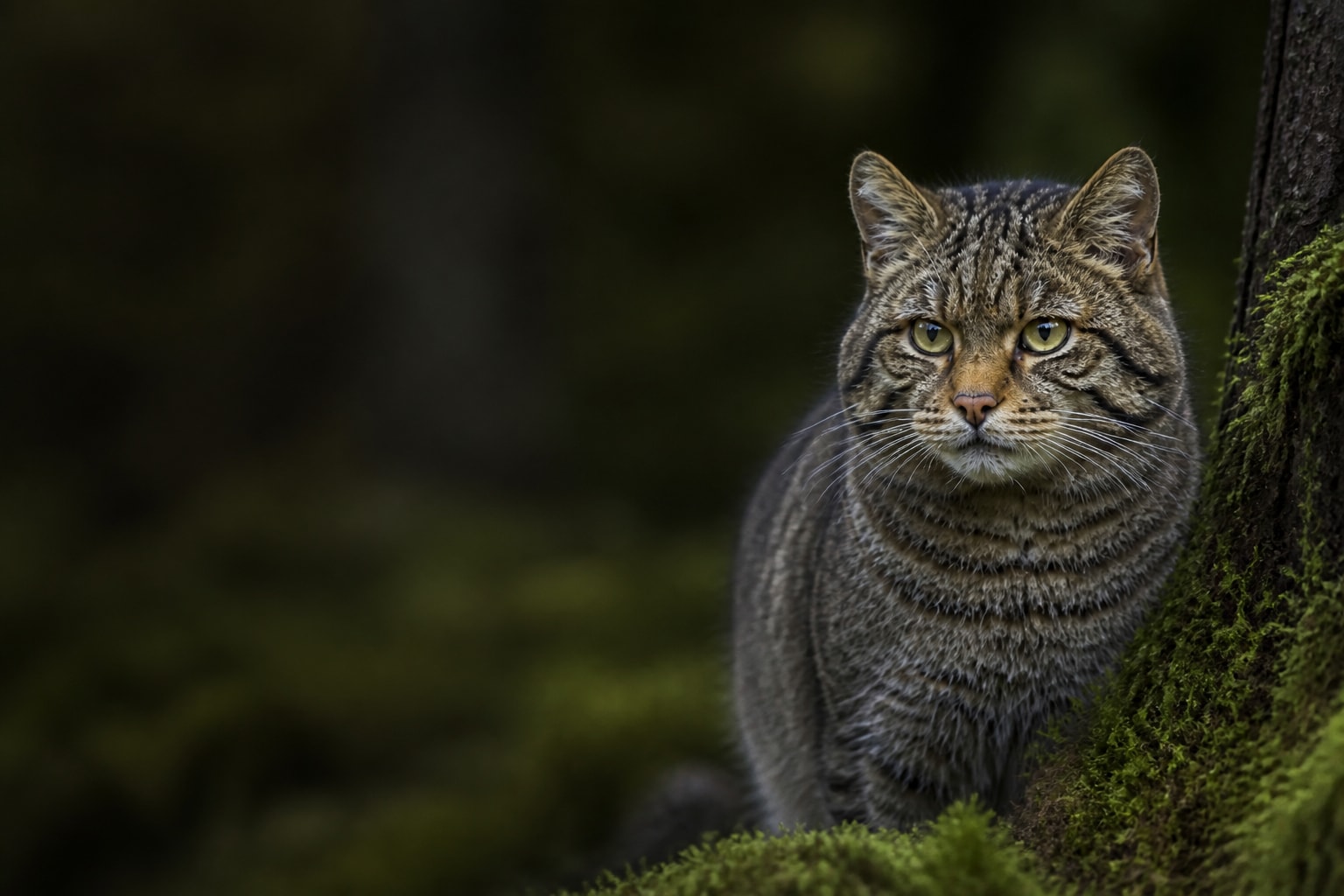
Britain's last wild cat, a striped Highland ghost so rare it is rarer globally than the tiger.
Critically Endangered
Felis silvestris
Overview
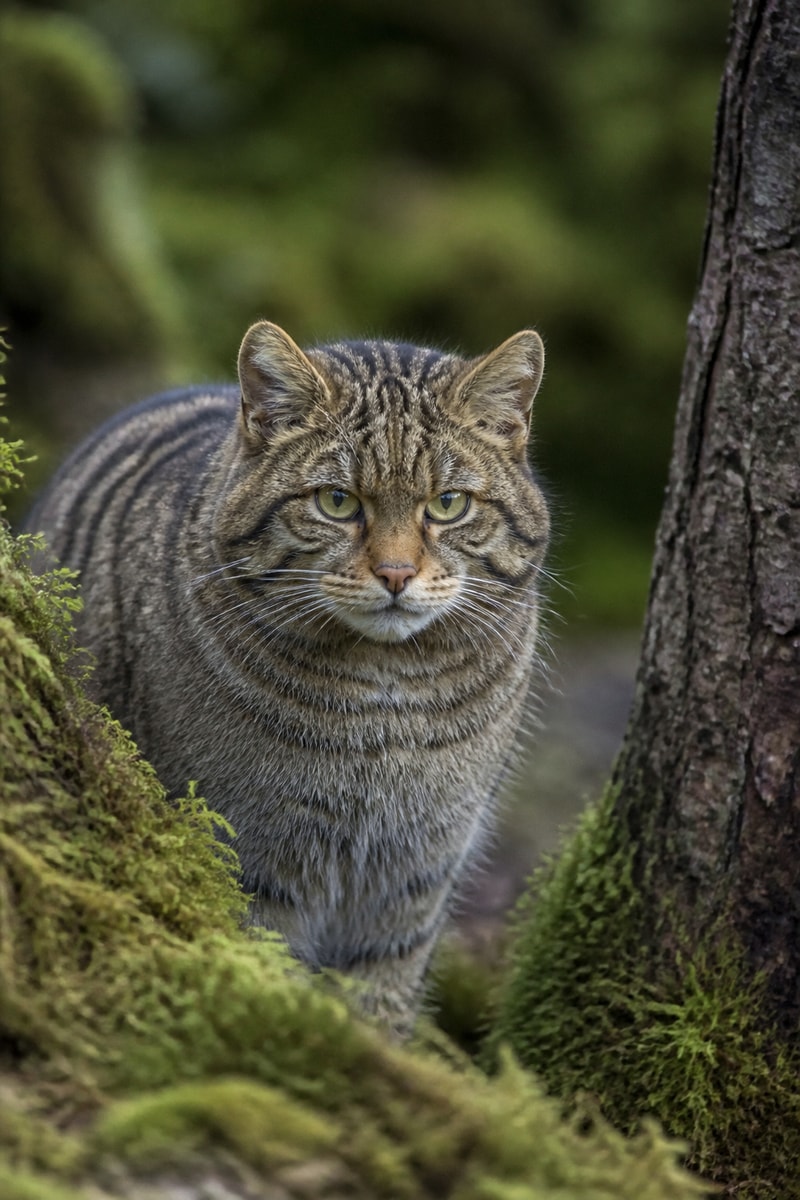
The Scottish wildcat is Britain's only native cat, thick-set, striped, and fiercely independent, it has prowled Highland forest since the Ice Age. Larger and heavier than a domestic tabby, with a blunt tail banded in black, it is virtually impossible to tell from a feral cat except by experts.
Hybridisation with domestic cats has pushed the wildcat to the edge of extinction. Fewer than a handful of pure wildcats may remain in the wild, making Scotland's captive breeding and release programme one of Britain's most urgent conservation projects.
- Scientific nameFelis silvestris
- Length48–64 cm body; tail 26–37 cm
- Weight3–8 kg
- LifespanAround 10–12 years in the wild
- DietPrimarily small mammals
- ConservationCritically Endangered
- RegionHighland Forest
Habitat
- Highland forest
- Moorland edge
- Mixed woodland
Remote Highland forest and moorland in Scotland once held wildcats across the country. Today they cling on in the Cairngorms, Ardnamurchan, and Morvern, rugged country where forest meets open ground.
Countries found
Field notes
Field scale for the Wildcat: length around 48-64 cm body; tail 26-37 cm; weight 3-8 kg. Typical lifespan: Around 10-12 years in the wild.
When you are scanning habitat, prioritise highland forest, moorland edge, and mixed woodland. Those settings are where a clean look and a usable photo are most likely.
Quick ID anchor: Thick-set tabby with a blunt, black-banded bushy tip to the tail and no white paws or white chin blaze. Confirm with behaviour and habitat before you log the discovery.
Diet
Primarily small mammals, especially rabbits and rodents, with birds and occasional invertebrates.
Hunts alone, mostly at dawn, dusk, and night.
Behaviour
Solitary and elusive, keeping to dense cover and avoiding human settlements more than feral cats.
Scottish remnant populations are now extremely rare; hybridisation with domestic cats is the main threat.
How to identify
Thick-set tabby with a blunt, black-banded bushy tip to the tail and no white paws or white chin blaze.
Larger head and heavier build than a typical domestic tabby; pure individuals are hard to confirm without genetics.
Interesting facts
- 01
Scottish wildcats are Britain's last native cat, rarer than the tiger globally.
- 02
They cannot be tamed, even kittens taken young remain wild.
- 03
Hybridisation with feral domestic cats is the greatest threat to their survival.
Conservation status
Scottish wildcats are Critically Endangered, functionally extinct in the wild as a pure species. The Saving Wildcats breeding programme aims to release cats into the Cairngorms National Park.
Sources: IUCN Red List
Keep exploring
Free on iOS
Catch the Wildcat
Spot one in the wild, then scan it in Catch'Um to log your rare discovery.