
Field guide · rare
Red Kite
A forked-tail recovery story — once nearly lost in Britain, now wheeling over Welsh and English skies again.
Least Concern
Milvus milvus
Overview
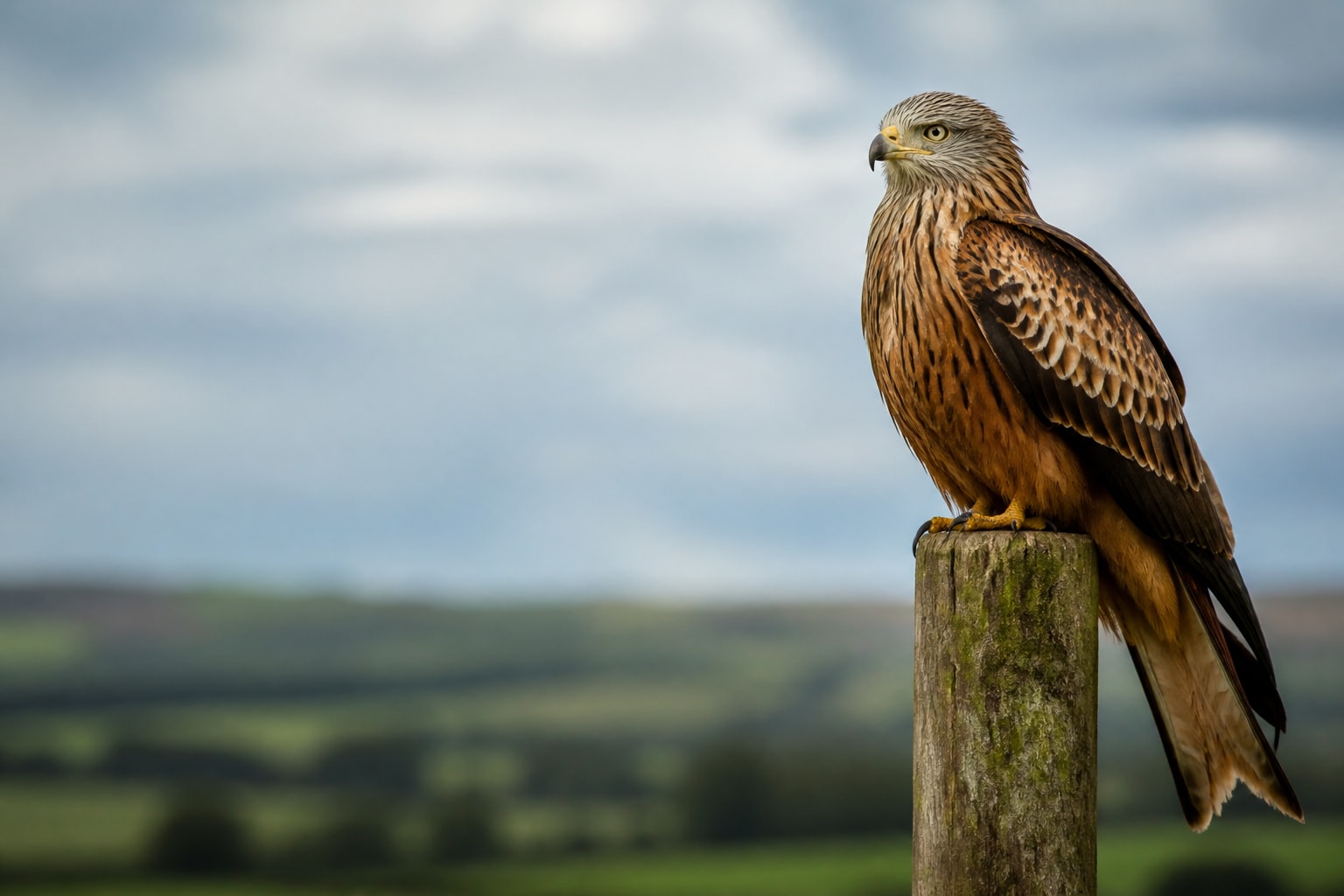
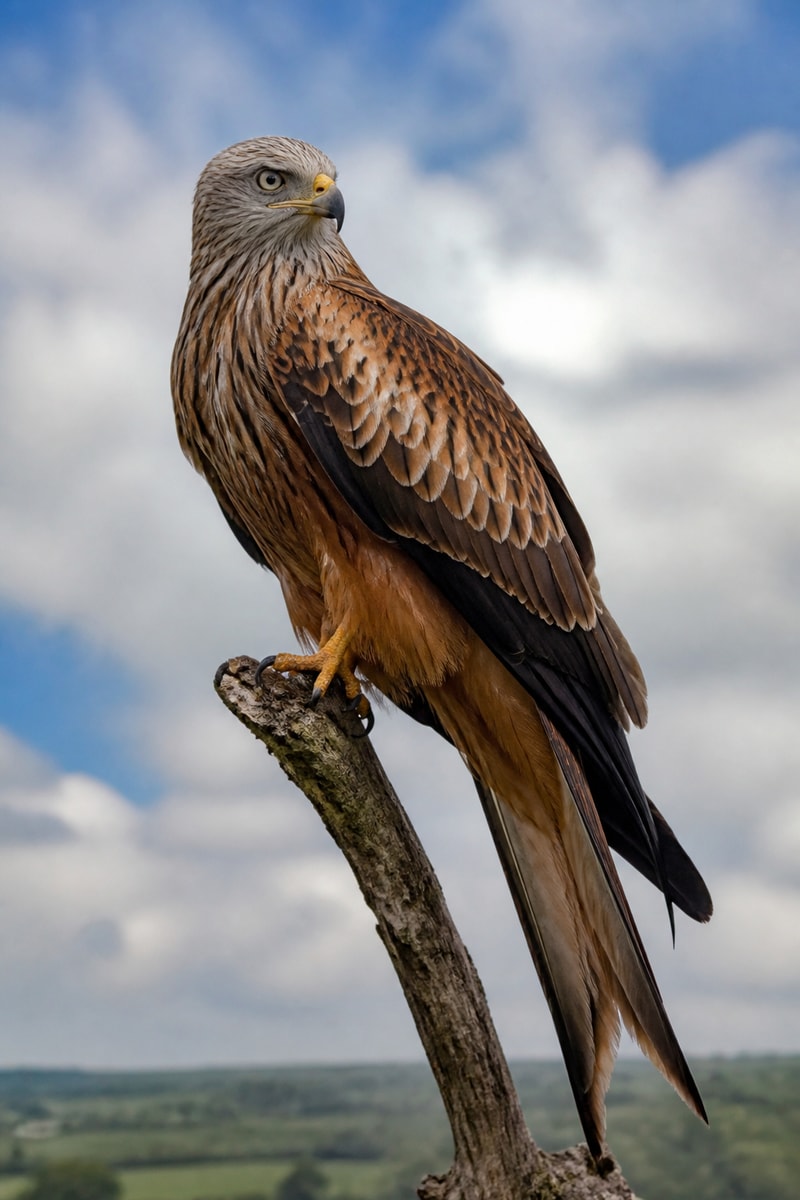
Red kites are elegant raptors with chestnut plumage, pale heads, and a deeply forked tail that twists like a rudder in flight. Driven to the brink in the UK, reintroductions have made them a conservation success visible from motorways to market towns.
For UK collectors, a kite's whistling call overhead is a rare-feeling everyday miracle.
- Scientific nameMilvus milvus
- Length60–70 cm
- HeightWingspan 175–195 cm
- Weight0.8–1.3 kg
- LifespanAround 10–15 years in the wild
- DietCarrion
- ConservationLeast Concern
- RegionFarmland & Hills
Where to see them
Habitat
- Farmland
- Wooded hills
- Mixed countryside
Open farmland, wooded hills, and mixed countryside across Wales, central England, Scotland, and beyond, scavenging and hunting over fields and roadsides.
Field notes
Field scale for the Red Kite: length around 60-70 cm; height Wingspan 175-195 cm; weight 0.8-1.3 kg. Typical lifespan: Around 10-15 years in the wild.
When you are scanning habitat, prioritise farmland, wooded hills, and mixed countryside. Those settings are where a clean look and a usable photo are most likely.
Quick ID anchor: Rusty-red body, pale streaked head, and a deeply forked tail. Confirm with behaviour and habitat before you log the discovery.
Diet
Carrion, earthworms, small mammals, birds, and roadkill scavenged opportunistically.
Often search along roads and fields while soaring.
Behaviour
Graceful soarers that twist the forked tail constantly.
Social at rich food sources and winter roosts.
How to identify
Rusty-red body, pale streaked head, and a deeply forked tail.
Long angled wings with pale patches undersides.
Interesting facts
- 01
The deeply forked tail is the best ID mark in flight.
- 02
UK populations recovered through protection and reintroduction.
- 03
They eat carrion, worms, and small animals — opportunistic feeders.
- 04
Often gather in large winter roosts.
- 05
Distinctive high-pitched whistling mew calls.
- 06
Wings show pale 'windows' patches in flight.
Conservation status
Red kites are Least Concern in the UK after a dramatic recovery, though illegal persecution and poisoning still occur locally. Continued protection keeps the comeback secure.
Sources: IUCN Red List
Keep exploring
Free on iOS
Catch the Red Kite
Spot one in the wild, then scan it in Catch'Um to log your rare discovery.