
Field guide · rare
Barn Owl
The ghost of the barn, a heart-faced hunter that locates prey in total darkness by sound alone.
Least Concern
Tyto alba
Overview
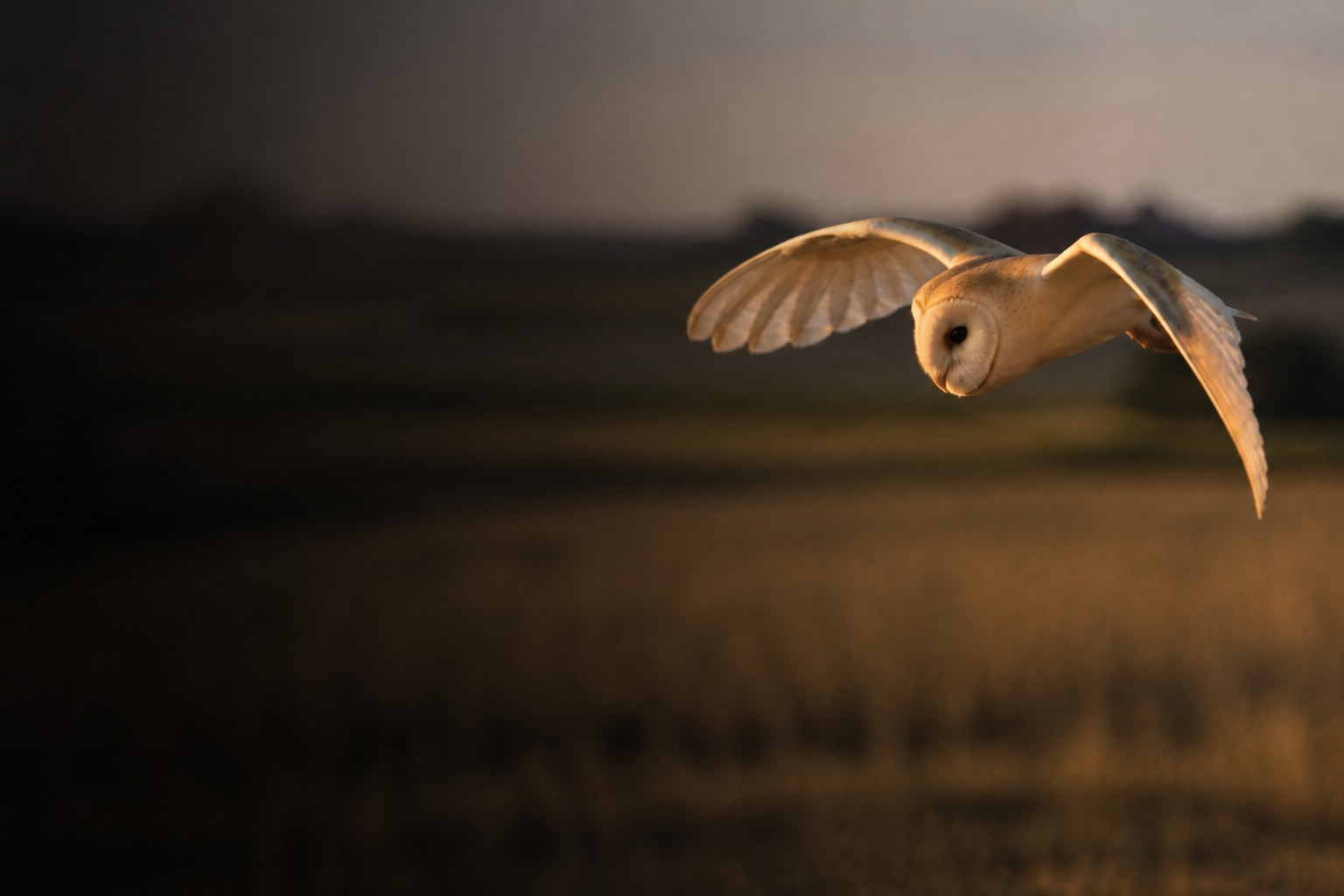
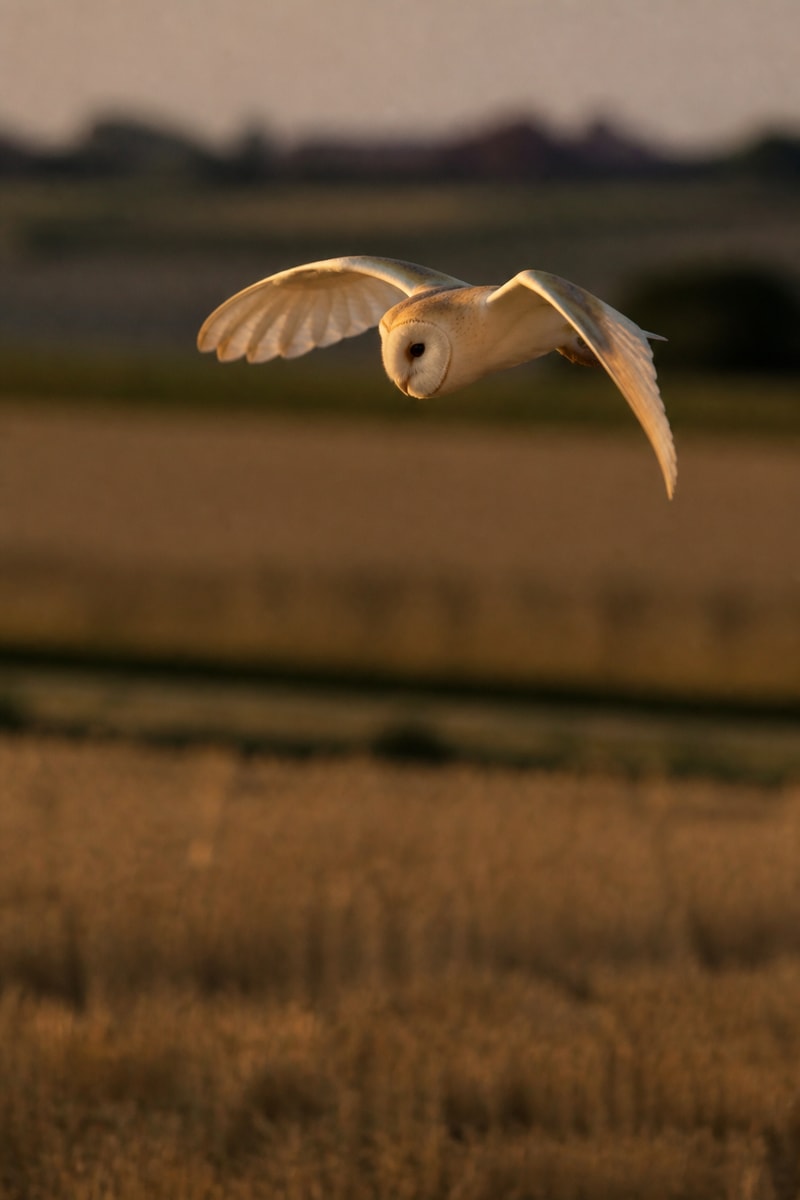
The barn owl is one of Britain's most ethereal night hunters, pale, silent, and unmistakable with its heart-shaped facial disc and dark eyes. It floats over rough grassland and farmland on wings that barely whisper, listening for the rustle of a vole or mouse in the grass below.
That facial disc isn't just for show. It funnels sound to asymmetrically placed ears, allowing the owl to pinpoint prey in complete darkness with staggering accuracy. A barn owl sighting at dusk, pale against a darkening sky, is a rare discovery worth waiting for.
- Scientific nameTyto alba
- Length33–39 cm
- HeightWingspan 80–95 cm
- Weight250–450 g
- Lifespan4–5 years in the wild typical; some reach 10–15 years
- DietSpecialist rodent hunters
- ConservationLeast Concern
- RegionFarmland & Barns
Habitat
- Farmland
- Grassland
- Marshes
- Barns
Barn owls are found across England, Wales, and lowland Scotland in farmland, rough grassland, and marsh edge. They nest in barns, hollow trees, and nest boxes on farmland, hunting over fields, hedgerows, and motorway verges where rough grass supports vole populations.
Countries found
Field notes
Field scale for the Barn Owl: length around 33-39 cm; height Wingspan 80-95 cm; weight 250-450 g. Typical lifespan: 4-5 years in the wild typical; some reach 10-15 years.
When you are scanning habitat, prioritise farmland, grassland, marshes, and barns. Those settings are where a clean look and a usable photo are most likely.
Quick ID anchor: Heart-shaped white face, pure white underparts (in European birds), and golden-buff upperparts finely speckled. Long legs and a buoyant flight over open fields are distinctive at dusk. Confirm with behaviour and habitat before you log the discovery.
Where to see one
United Kingdom
In United Kingdom, start at Cotswolds Farmland (Gloucestershire & Oxfordshire). Hedgerows, pasture, and village edges, classic fox country where russet coats show clearly against green fields at last light.
More context on this destination lives on the United Kingdom expedition page.
Diet
Specialist rodent hunters—mainly voles, mice, and shrews—swallowed whole. Pellets cast later reveal the undigested bones and fur.
Behaviour
Mostly nocturnal, hunting low over rough grassland with a buoyant, moth-like flight. Nest in barns, church towers, and tree hollows; silent flight helps them surprise prey.
How to identify
Heart-shaped white face, pure white underparts (in European birds), and golden-buff upperparts finely speckled. Long legs and a buoyant flight over open fields are distinctive at dusk.
Interesting facts
- 01
A barn owl's heart-shaped face funnels sound to its ears for pinpoint hunting in total darkness.
- 02
Their wings have soft fringes that muffle flight. They are almost silent in the air.
- 03
Barn owls swallow prey whole and regurgitate pellets of fur and bone.
- 04
A single owl can eat over 1,000 rodents in a year, natural pest control for farmers.
- 05
They nest in barns, church towers, and specially installed nest boxes.
- 06
Juvenile dispersal can take young owls dozens of kilometres from where they hatched.
Conservation status
Barn owls are Least Concern globally but vulnerable to habitat loss in the UK, intensively farmed land with few rough grass margins reduces vole numbers. Nest box schemes and field margin stewardship have helped local recoveries.
Sources: IUCN Red List

Keep exploring
Free on iOS
Catch the Barn Owl
Spot one in the wild, then scan it in Catch'Um to log your rare discovery.