
Field guide · rare
Badger
Britain's striped night wanderer, a sett-dwelling digger whose underground homes pass down through generations.
Least Concern
Meles meles
Overview
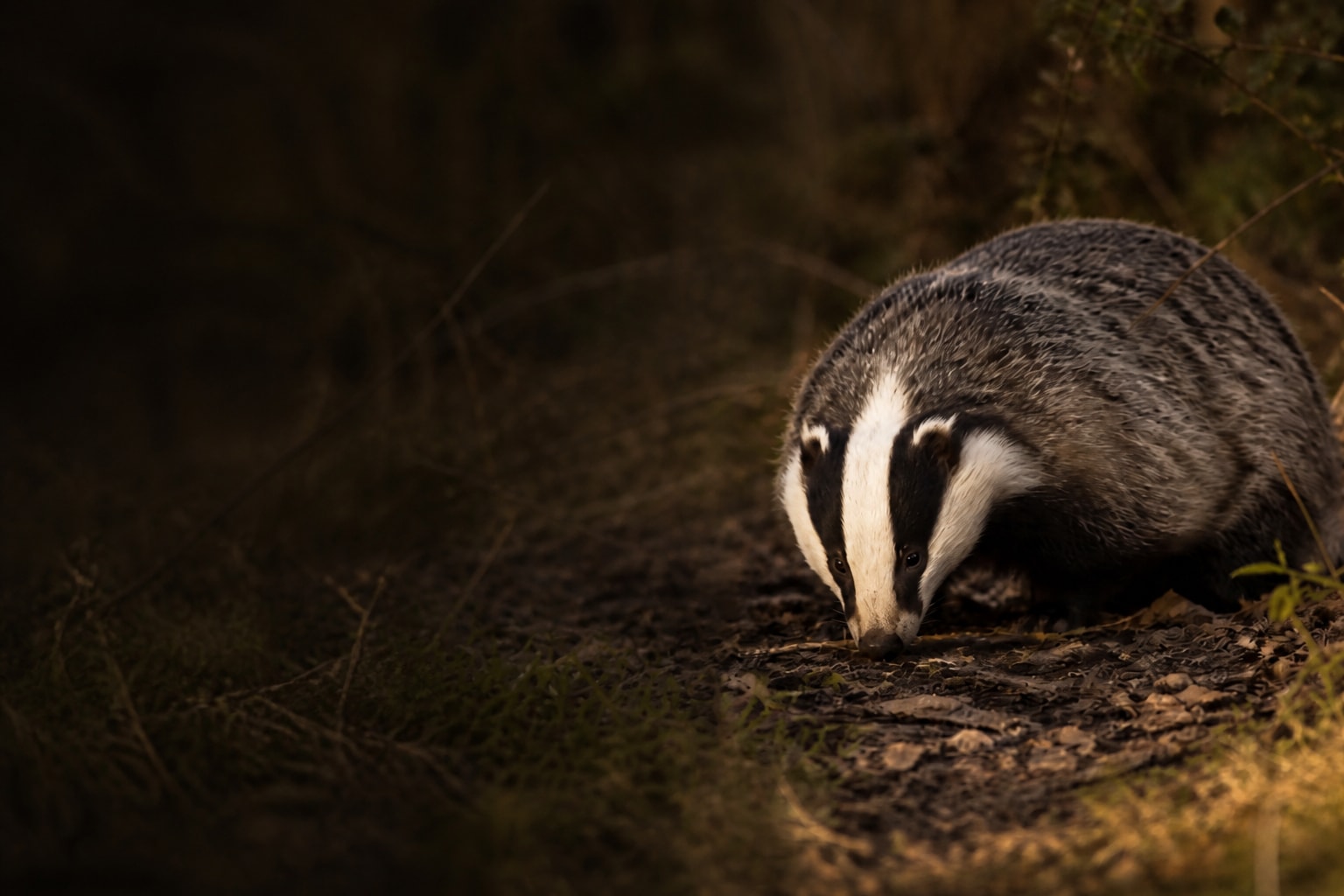
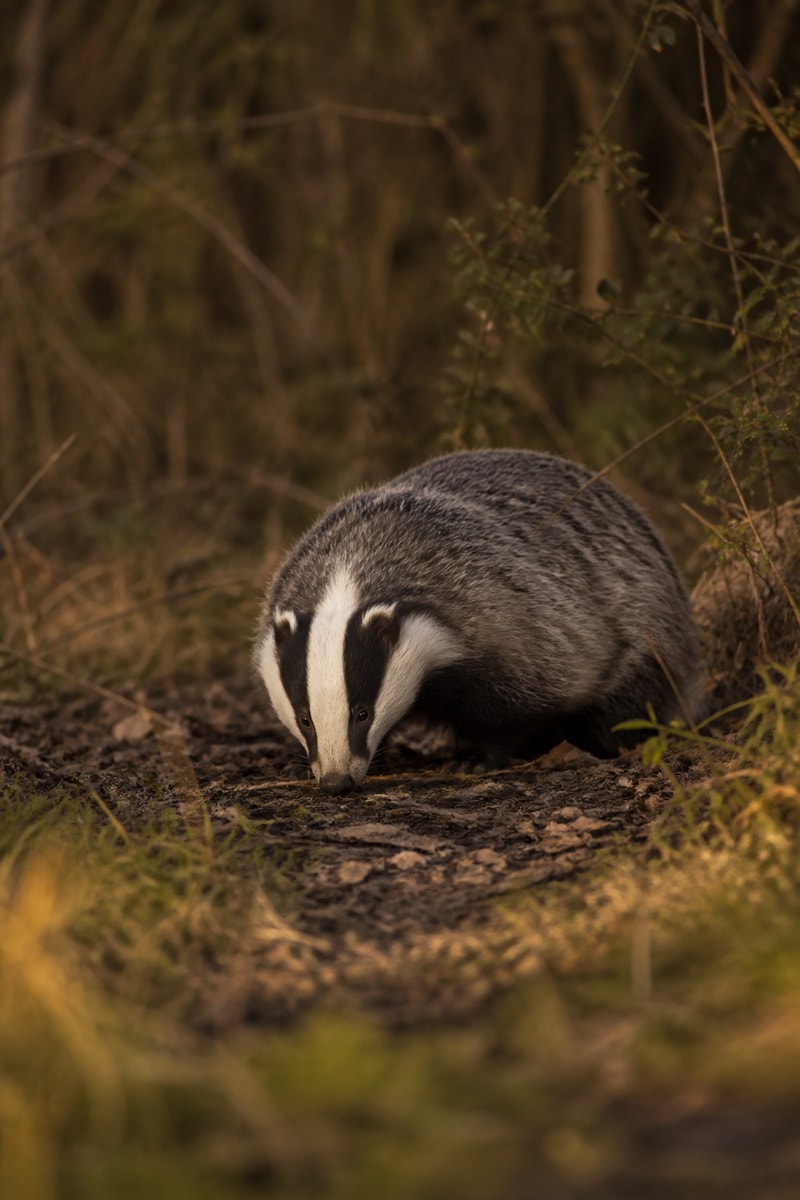
The European badger is one of the UK's most distinctive mammals: broad, low-slung, with a bold black-and-white striped face that looks painted on. They are creatures of dusk and dark, emerging from ancient woodland setts to snuffle through leaf litter for earthworms, their primary food.
Badgers live in underground tunnel systems called setts, some occupied for decades and expanded by generations of the same clan. Spotting one is a rare treat: a ghost of stripes at a woodland edge, or a careful observer waiting quietly near a known sett entrance as light fades.
- Scientific nameMeles meles
- Length60–90 cm body; tail 12–20 cm
- Weight8–12 kg typical (heavier in autumn)
- Lifespan5–8 years in the wild typical; some reach 14 years
- DietEarthworms are a staple…
- ConservationLeast Concern
- RegionWoodland & Farmland
Habitat
- Woodland
- Farmland
- Hedgerows
- Pasture
Badgers are found across England, Scotland, and Wales in woodland, farmland, and scrub, wherever soil is diggable and earthworms abundant. Setts are dug into banks, under tree roots, and on hedgerow edges; territories can span several hundred hectares patrolled by a social group.
Countries found
Field notes
Field scale for the Badger: length around 60-90 cm body; tail 12-20 cm; weight 8-12 kg typical (heavier in autumn). Typical lifespan: 5-8 years in the wild typical; some reach 14 years.
When you are scanning habitat, prioritise woodland, farmland, hedgerows, and pasture. Those settings are where a clean look and a usable photo are most likely.
Quick ID anchor: Stocky, low-slung mammal with a distinctive black-and-white striped face, grey grizzled body, short legs, and a stubby tail. Broad head and powerful digging claws are clear at close range. Confirm with behaviour and habitat before you log the discovery.
Where to see one
United Kingdom
In United Kingdom, strong options include The New Forest and Cotswolds Farmland. Open heath and oak woodland where foxes, deer, ponies, and woodland birds share a landscape that feels surprisingly wild for southern England.
Open the United Kingdom spotting guide for every park note tied to the badger.
Diet
Earthworms are a staple on damp nights, plus beetles, wasps' nests, small mammals, roots, cereals, and fallen fruit. Highly opportunistic foragers.
Behaviour
Nocturnal social mustelids living in clan setts with multiple entrances. They emerge at dusk to forage along well-worn paths and leave distinctive latrine pits near territory edges.
How to identify
Stocky, low-slung mammal with a distinctive black-and-white striped face, grey grizzled body, short legs, and a stubby tail. Broad head and powerful digging claws are clear at close range.
Interesting facts
- 01
Badgers live in underground setts passed down through generations for decades.
- 02
A single sett can have dozens of entrances and chambers several metres underground.
- 03
They are fastidiously clean, badgers change bedding regularly and maintain latrine pits outside the sett.
- 04
An adult badger can eat several hundred earthworms in a single night.
- 05
They are largely nocturnal but cubs may play outside the sett in daylight during summer.
- 06
Badger clans are social groups, usually of four to eight adults, sharing a territory.
Conservation status
European badgers are Least Concern globally and legally protected in the UK. Local populations face pressure from road traffic, habitat loss, and culling programmes in some areas, making a wild sighting a genuinely rare discovery.
Sources: IUCN Red List



Keep exploring
Free on iOS
Catch the Badger
Spot one in the wild, then scan it in Catch'Um to log your rare discovery.