
Field guide · rare
Grey Seal
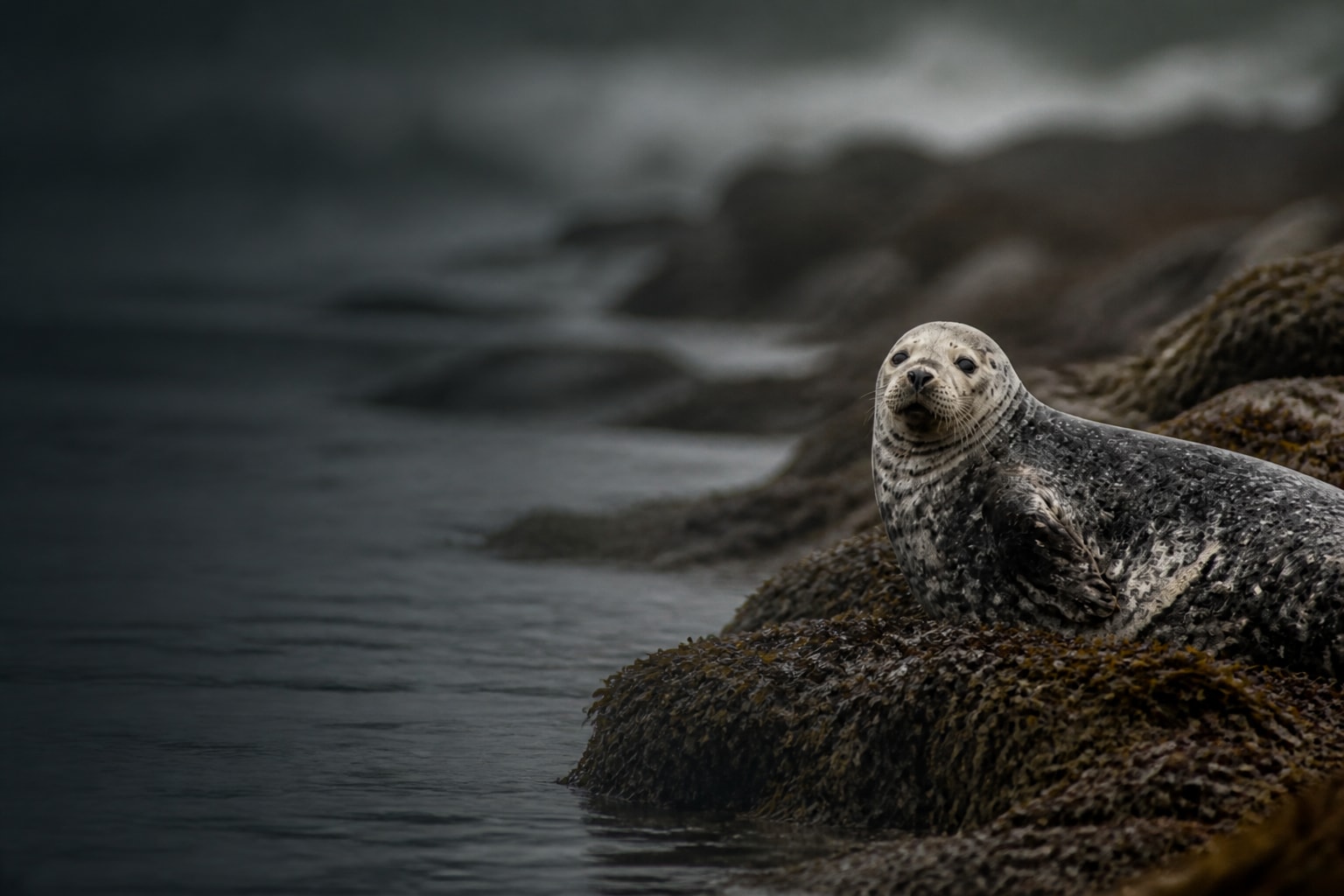
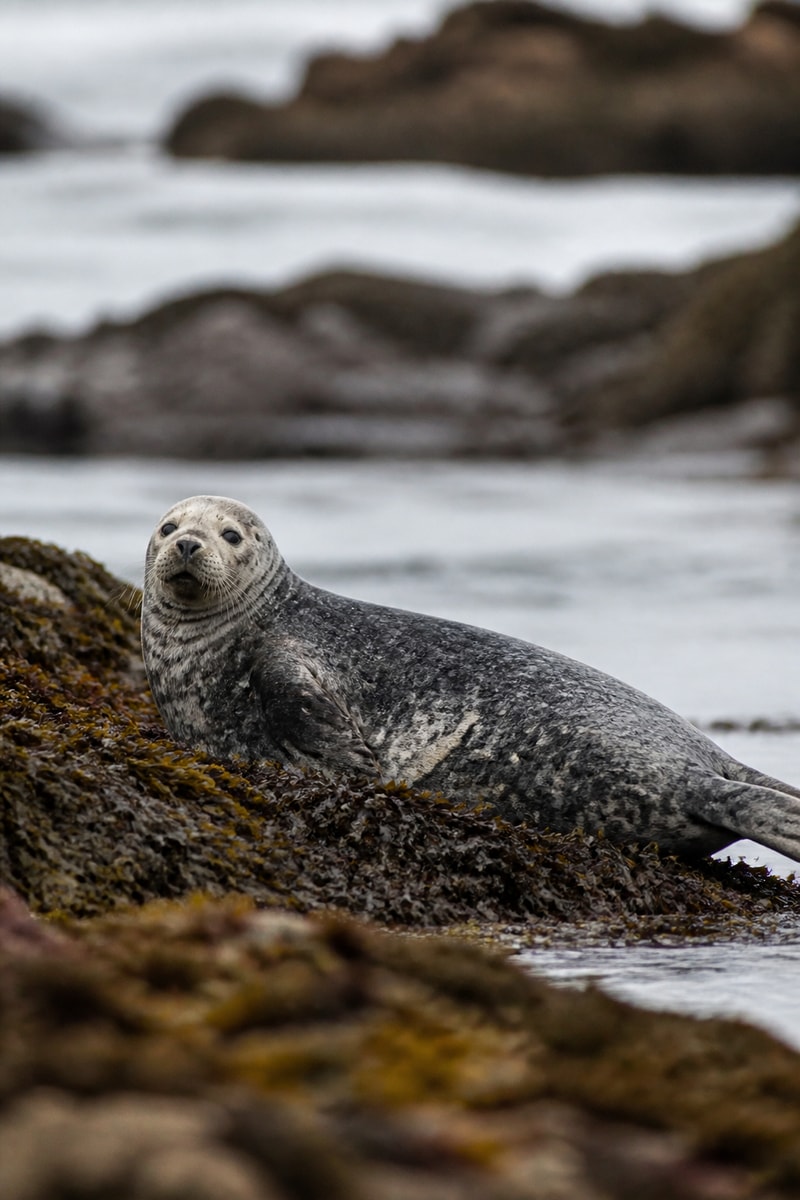
Britain's big-eyed coastal giant, a curious seal whose pupping beaches draw one of Europe's largest breeding colonies.
Least Concern
Halichoerus grypus
Overview
The grey seal is Britain's larger seal species, with males reaching over two metres and cows nursing pups on remote beaches each autumn. Pups are born with white lanugo coats and triple their weight in three weeks on exceptionally rich milk before moulting to grey.
Grey seals are inquisitive and often follow boats or watch walkers from the surf. Bulls develop distinctive Roman noses with age, the profile that separates them from the smaller, dog-faced common seal.
- Scientific nameHalichoerus grypus
- Length1.8–2.5 m (males larger)
- WeightMales ~170–310 kg; females ~100–180 kg
- Lifespan25–35 years in the wild
- DietFish such as sand eels
- ConservationLeast Concern
- RegionCoastal Colonies
Habitat
- Rocky coasts
- Sandy beaches
- Continental shelf
Rocky coastlines, offshore islands, and sand beaches in Scotland, Norfolk, Lincolnshire, and Wales hold major grey seal colonies. They forage widely at sea on fish and squid, hauling out on beaches to rest and breed.
Countries found
Field notes
Field scale for the Grey Seal: length around 1.8-2.5 m (males larger); weight Males ~170-310 kg; females ~100-180 kg. Typical lifespan: 25-35 years in the wild.
When you are scanning habitat, prioritise rocky coasts, sandy beaches, and continental shelf. Those settings are where a clean look and a usable photo are most likely.
Quick ID anchor: Large seal with a long 'Roman-nose' snout, especially in males, and irregular dark blotches on a grey coat. Nostrils are nearly parallel (closer together than in harbour seals). Confirm with behaviour and habitat before you log the discovery.
Diet
Fish such as sand eels, cod, herring, and flatfish, plus squid and octopus. Hunts in coastal and offshore waters, often returning to traditional haul-out sites.
Behaviour
Hauls out on beaches, sandbanks, and rocky shores to rest and moult; breeds in autumn colonies where bulls defend groups of cows. Pups are born with white lanugo coats.
How to identify
Large seal with a long 'Roman-nose' snout—especially in males—and irregular dark blotches on a grey coat. Nostrils are nearly parallel (closer together than in harbour seals).
Interesting facts
- 01
Grey seal pups triple their weight in three weeks on rich mothers' milk.
- 02
The UK hosts nearly 40% of the world's grey seal population.
- 03
Bulls can weigh over 300 kilograms, cows are much smaller.
Conservation status
Grey seals are Least Concern globally, and UK populations have recovered strongly since hunting was banned. Disturbance on pupping beaches remains the main local threat.
Sources: IUCN Red List
Keep exploring
Free on iOS
Catch the Grey Seal
Spot one in the wild, then scan it in Catch'Um to log your rare discovery.