
Field guide · common
Wood Pigeon
Britain's largest pigeon, a heavy clap of wings on take-off and a cooing soundtrack to farmland and parks.
Least Concern
Columba palumbus
Overview
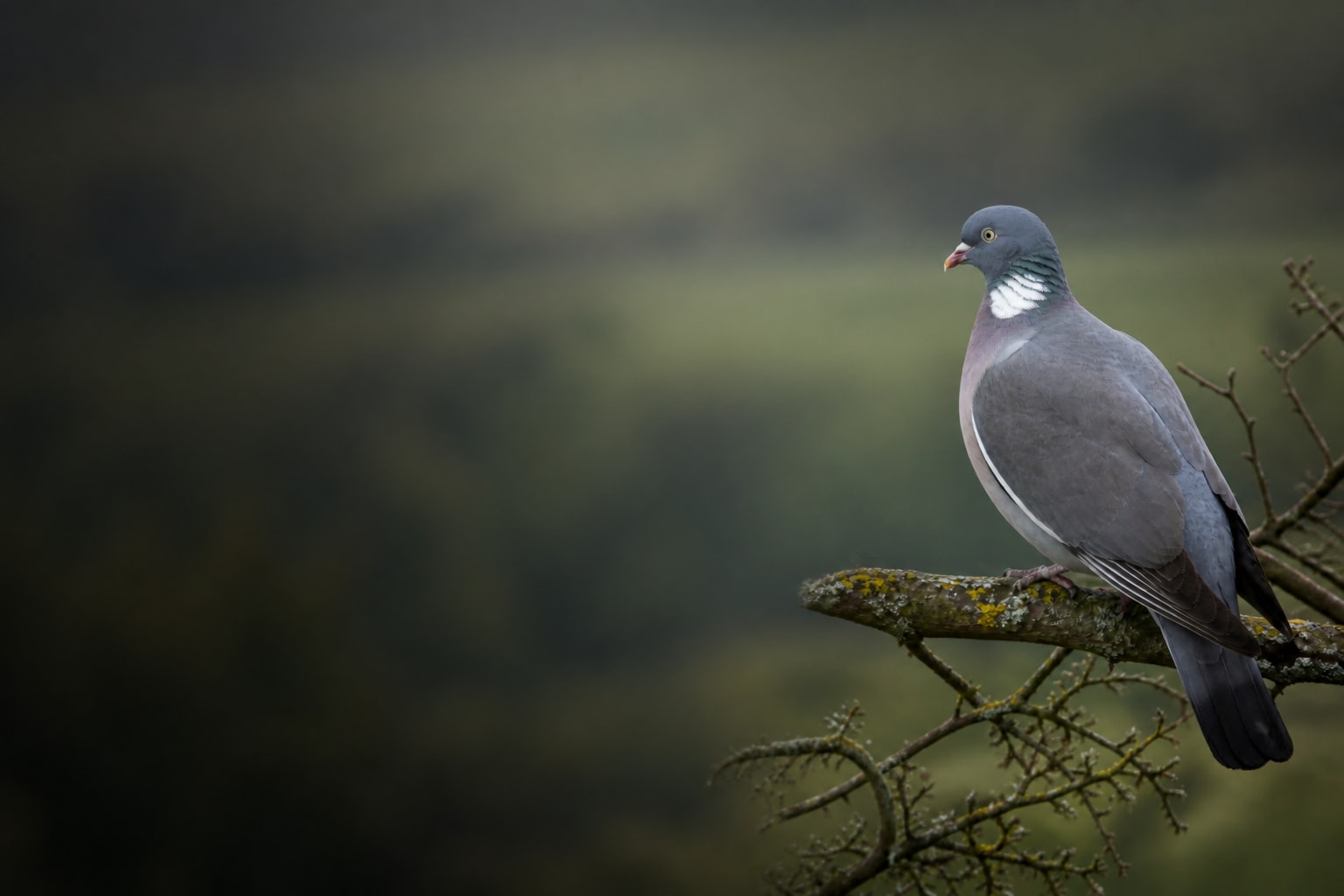
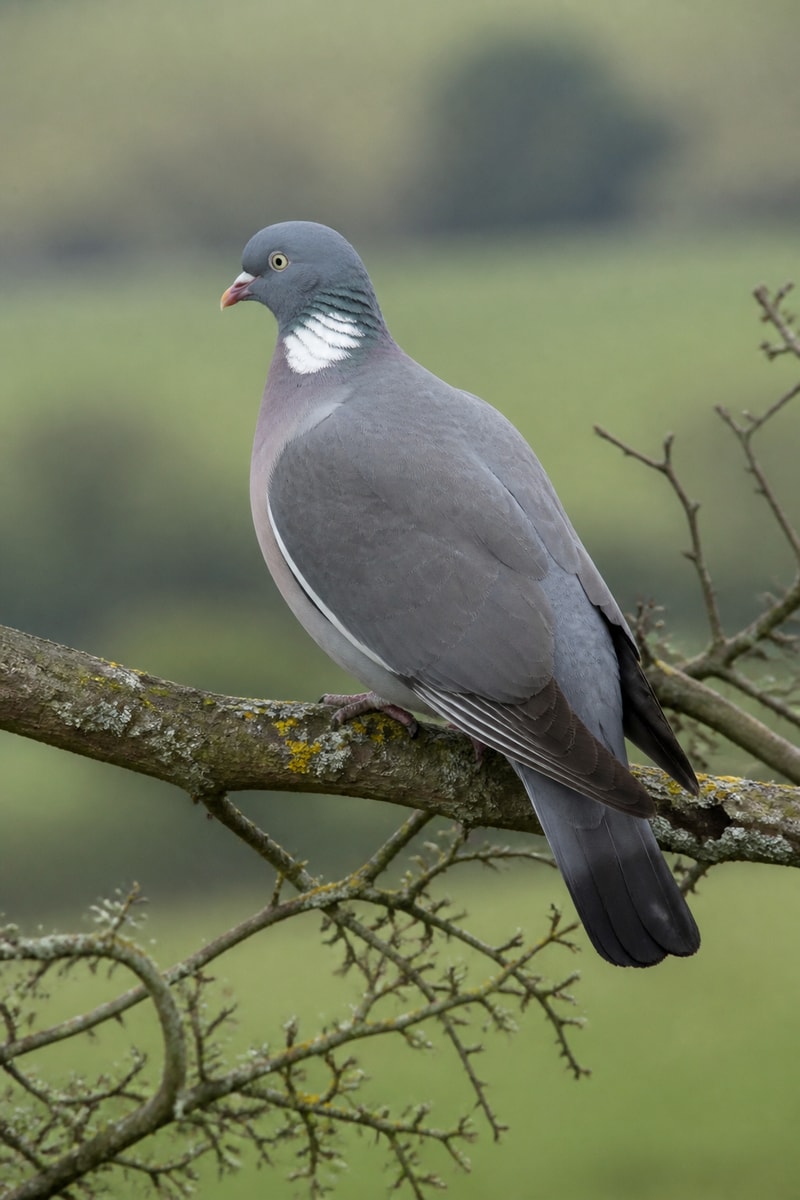
The wood pigeon is Britain's biggest and commonest wild pigeon, plump, grey, with a white neck patch and white wing bars visible in flight. That loud clapping sound when a flock erupts from a field? That's wood pigeons, their wings slapping the air deliberately to warn others of danger.
They feed heavily on crops, brassicas, grain, and young shoots, which makes them unpopular with farmers, but for collectors they are an easy common: perched on a telephone wire, strutting through a park, or cooing from a tree line on a lazy afternoon.
- Scientific nameColumba palumbus
- Length40–42 cm
- Weight450–550 g
- Lifespan3–5 years in the wild typical; some reach 10–15 years
- DietSeeds
- ConservationLeast Concern
- RegionFarmland & Parks
Habitat
- Woodland
- Farmland
- Parks
- Gardens
Wood pigeons are found across the entire United Kingdom in farmland, woodland, parks, and gardens. They nest in trees and hedges, often fairly low, and gather in large flocks to feed on fields, lawn clover, and bird tables.
Countries found
Field notes
Field scale for the Wood Pigeon: length around 40-42 cm; weight 450-550 g. Typical lifespan: 3-5 years in the wild typical; some reach 10-15 years.
When you are scanning habitat, prioritise woodland, farmland, parks, and gardens. Those settings are where a clean look and a usable photo are most likely.
Quick ID anchor: Large grey pigeon with a pinkish breast, white neck patch (adults), and bold white wing bars obvious in flight. Bigger and paler than the stock dove or feral pigeon. Confirm with behaviour and habitat before you log the discovery.
Where to see one
United Kingdom
In United Kingdom, start at The New Forest (Hampshire). Open heath and oak woodland where foxes, deer, ponies, and woodland birds share a landscape that feels surprisingly wild for southern England.
More context on this destination lives on the United Kingdom expedition page.
Diet
Seeds, grain, clover, buds, and berries form most of the diet. Large flocks raid oilseed rape and cereal fields; also take acorns and beech mast in woodland.
Behaviour
Often gather in big winter flocks on farmland. Display flight includes a steep clap of the wings; the soft cooing song is a familiar countryside sound.
How to identify
Large grey pigeon with a pinkish breast, white neck patch (adults), and bold white wing bars obvious in flight. Bigger and paler than the stock dove or feral pigeon.
Interesting facts
- 01
Wood pigeons clap their wings loudly on take-off to warn others of danger.
- 02
They are the largest pigeon species in Britain, noticeably bigger than feral town pigeons.
- 03
Their five-note coo, 'take two cows, Taffy', is one of Britain's most familiar bird sounds.
- 04
Wood pigeons can drink without tipping their head back. They suck water like a straw.
- 05
They breed almost year-round when food is plentiful, sometimes raising multiple broods.
- 06
Crop feeding makes them one of the most common causes of farmer-bird conflict in the UK.
Conservation status
Wood pigeons are Least Concern and abundant across Europe. UK populations have increased significantly since the 1970s, adapting well to modern farmland and urban green space.
Sources: IUCN Red List
Keep exploring
Free on iOS
Catch the Wood Pigeon
Spot one in the wild, then scan it in Catch'Um to log your common discovery.