
Field guide · common
Tawny Owl
Classic ‘tu-whit tu-whoo’ of British nights — round face, dark eyes, woodland ghost.
Least Concern
Strix aluco
Overview
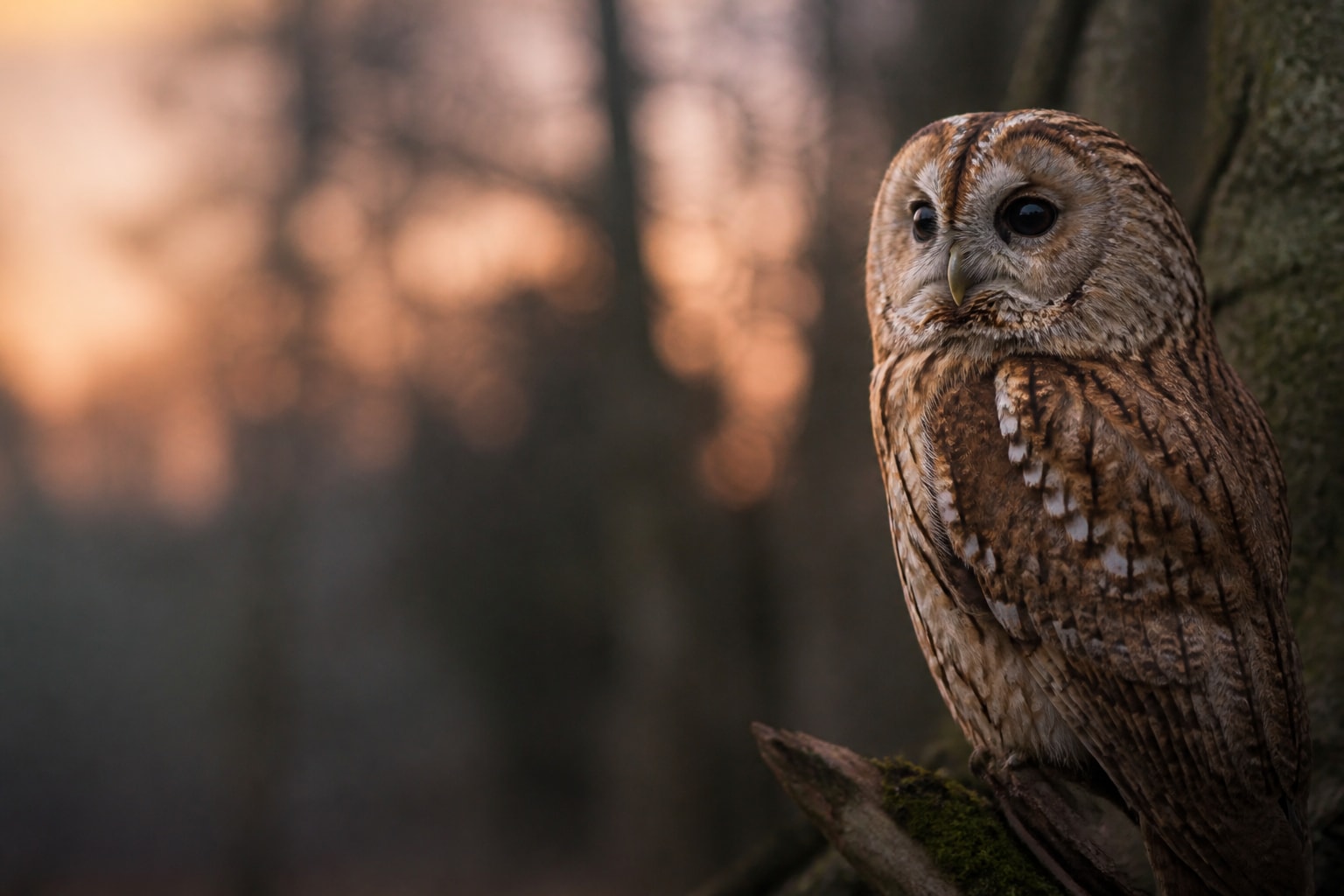
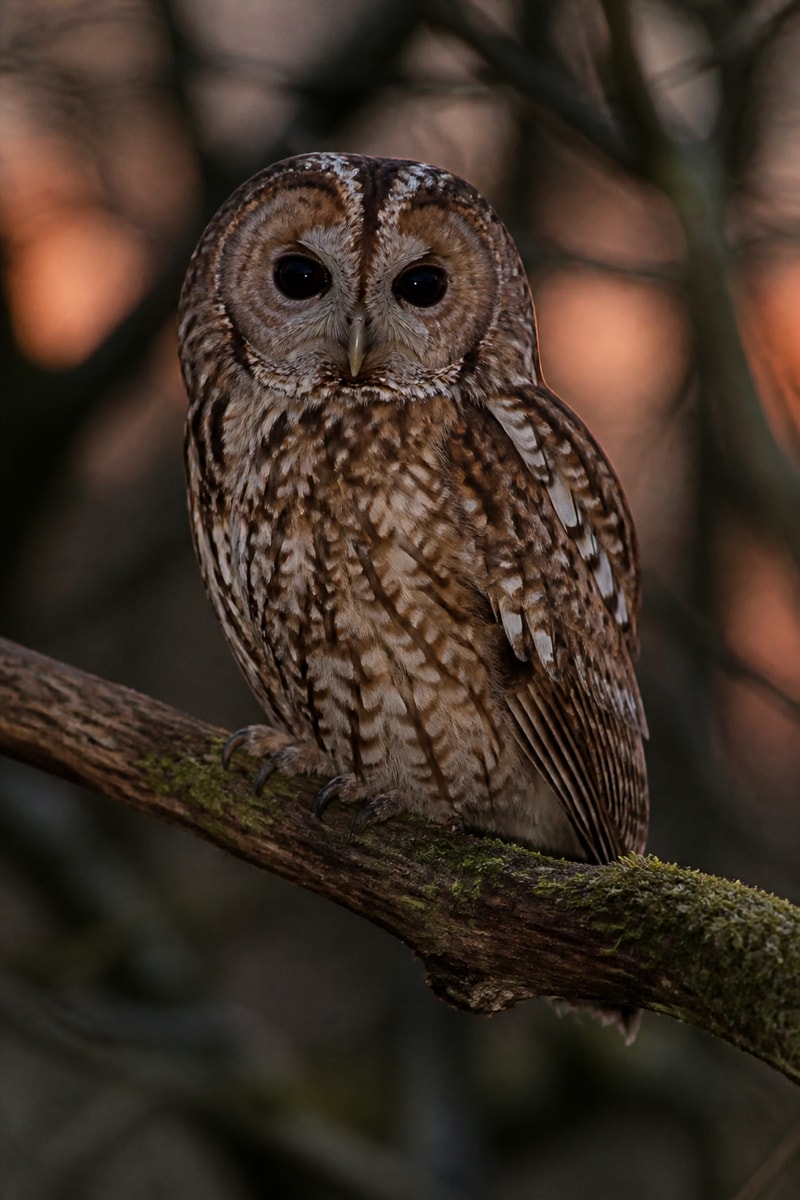
Tawny owls are the UK’s most familiar woodland owls, hunting small mammals from tree perches after dark. Their hooting duets define British night soundscapes, and rounded heads with dark eyes set them apart from yellow-eyed barn owls.
For UK collectors, the tawny is a common night icon — garden woodlands, unmistakable calls, and a staple of British fieldcraft after dusk.
- Scientific nameStrix aluco
- Length37–43 cm
- Weight350–650 g
- LifespanAround 4–5 years average; up to 18+ recorded
- DietPrimarily small mammals…
- ConservationLeast Concern
- RegionBritish Woodland Nights
Where to see them
Habitat
- Broadleaf woodland
- Parkland
- Large garden
- Churchyard trees
Broadleaf woodland, parks, churchyards, and large gardens across Britain and much of Europe, nesting in tree hollows or nest boxes.
Field notes
Field scale for the Tawny Owl: length around 37-43 cm; weight 350-650 g. Typical lifespan: Around 4-5 years average; up to 18+ recorded.
When you are scanning habitat, prioritise broadleaf woodland, parkland, large garden, and churchyard trees. Those settings are where a clean look and a usable photo are most likely.
Quick ID anchor: Medium owl with mottled brown or grey plumage, round head, and dark eyes. Confirm with behaviour and habitat before you log the discovery.
Diet
Primarily small mammals such as wood mice and voles, plus birds, frogs, and large insects.
Still-hunt from a perch, dropping silently onto prey.
Behaviour
Strictly nocturnal and highly territorial; pairs hold woodlands year-round.
Contact hoots and sharp kewick calls coordinate partners at night.
How to identify
Medium owl with mottled brown or grey plumage, round head, and dark eyes.
No ear tufts; stockier than barn owl with a fuller facial disc.
Interesting facts
- 01
Gives the classic British hoot often written as ‘tu-whit tu-whoo’.
- 02
Dark eyes and a round facial disc without ear tufts.
- 03
Mainly nocturnal; roosts high in trees by day.
- 04
Hunts wood mice, voles, and other small mammals.
- 05
Rarely seen in open farmland compared with barn owls.
- 06
Common and widespread across England, Wales, and Scotland.
Conservation status
Tawny owls are Least Concern globally and remain widespread in the UK. Loss of mature trees with hollows and secondary rodenticide poisoning are ongoing local concerns.
Sources: IUCN Red List


Keep exploring
Free on iOS
Catch the Tawny Owl
Spot one in the wild, then scan it in Catch'Um to log your common discovery.