
Field guide · common
Stoat
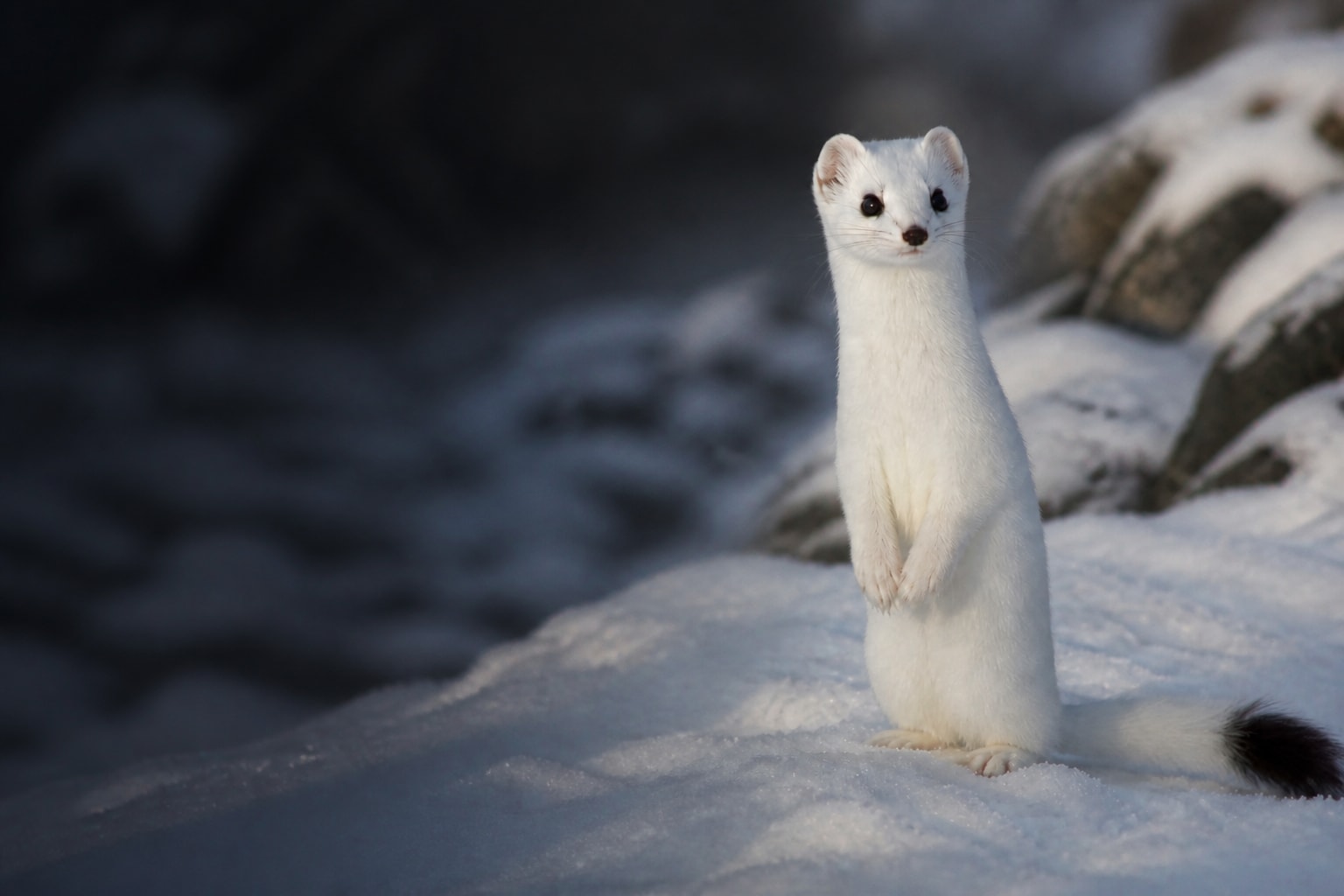
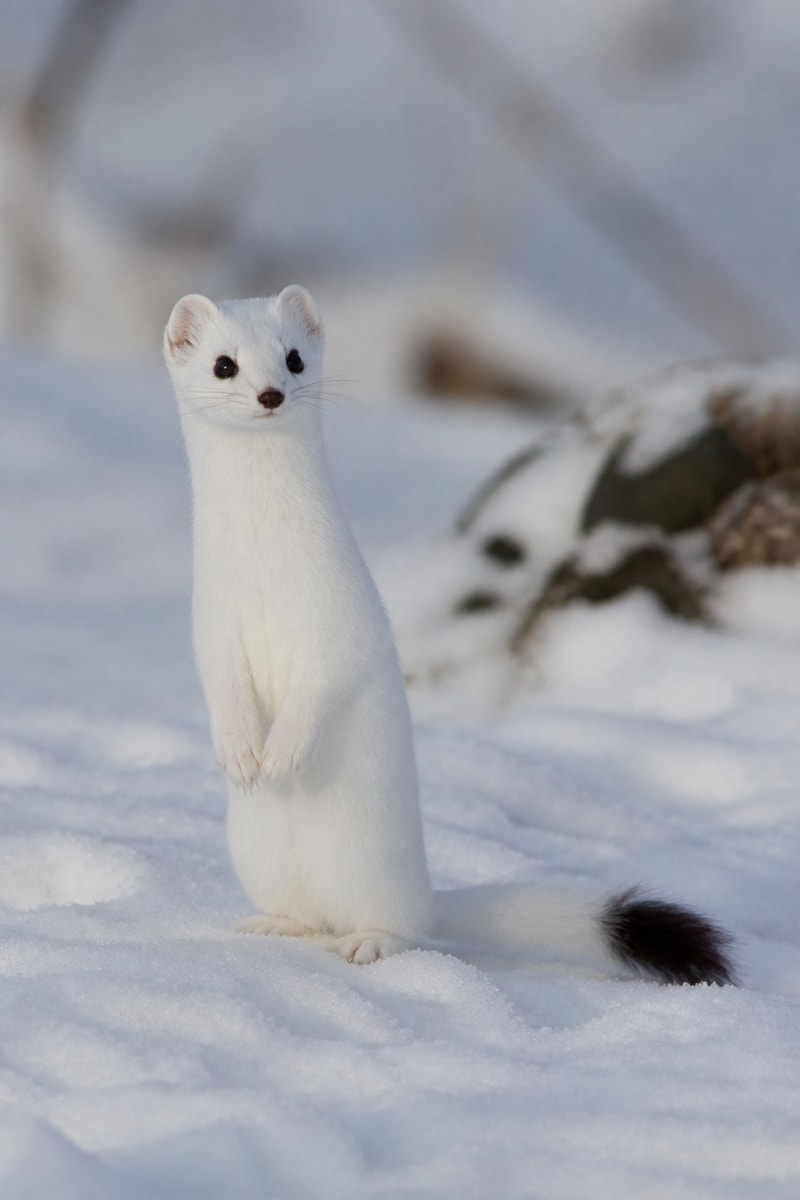
The lightning weasel, a fierce little hunter whose winter coat turns white but always keeps a black tail tip.
Least Concern
Mustela erminea
Overview
The stoat is a small predator with the attitude of something ten times its size, fast, fearless, and capable of killing rabbits many times its weight with a bite to the back of the skull. In summer it is chestnut brown with a cream belly; in northern winters it turns white except for the telltale black tip of its tail.
Stoats perform a hypnotic bouncing dance, the 'weasel war dance', that may confuse prey before a strike. They are common across Britain but rarely seen, slipping through hedgerows and stone walls on quick, looping hunts.
- Scientific nameMustela erminea
- Length17–33 cm body; tail 6–12 cm
- Weight120–450 g
- LifespanAround 1–3 years in the wild; up to about 7 years
- DietSpecialist predator of…
- ConservationLeast Concern
- RegionFarmland & Hedgerow
Habitat
- Hedgerows
- Farmland
- Woodland edge
- Moorland
Farmland, hedgerows, woodland edge, and moorland across the UK suit stoats. They nest in burrows taken from rabbits and rats, and range widely through cover hunting small mammals and birds.
Countries found
Field notes
Field scale for the Stoat: length around 17-33 cm body; tail 6-12 cm; weight 120-450 g. Typical lifespan: Around 1-3 years in the wild; up to about 7 years.
When you are scanning habitat, prioritise hedgerows, farmland, woodland edge, and moorland. Those settings are where a clean look and a usable photo are most likely.
Quick ID anchor: Long, slender body; chestnut-brown upperparts and cream underside in summer; black tip always present on the tail. Confirm with behaviour and habitat before you log the discovery.
Diet
Specialist predator of small mammals, especially rabbits and voles; also takes birds, eggs, and insects.
Can kill prey much larger than itself with a bite to the nape.
Behaviour
Active day and night, hunting along hedgerows, walls, and burrow systems with rapid, bounding gait.
In colder parts of the range the coat turns white in winter (ermine), but the black tail tip remains.
How to identify
Long, slender body; chestnut-brown upperparts and cream underside in summer; black tip always present on the tail.
Larger than a weasel, with a longer black-tipped tail; winter ermine is white except that tip.
Interesting facts
- 01
Stoats turn white in winter in northern areas, except the black tip of their tail.
- 02
They can take prey much larger than themselves, including rabbits.
- 03
The black tail tip may distract predators away from the stoat's body.
Conservation status
Stoats are Least Concern and common across Britain. They are sometimes persecuted by gamekeepers but populations remain stable in most areas.
Sources: IUCN Red List
Keep exploring
Free on iOS
Catch the Stoat
Spot one in the wild, then scan it in Catch'Um to log your common discovery.