
Field guide · common
Starling
Winter's aerial spectacle, when thousands swirl in murmurations that confuse every predator.
Least Concern
Sturnus vulgaris
Overview
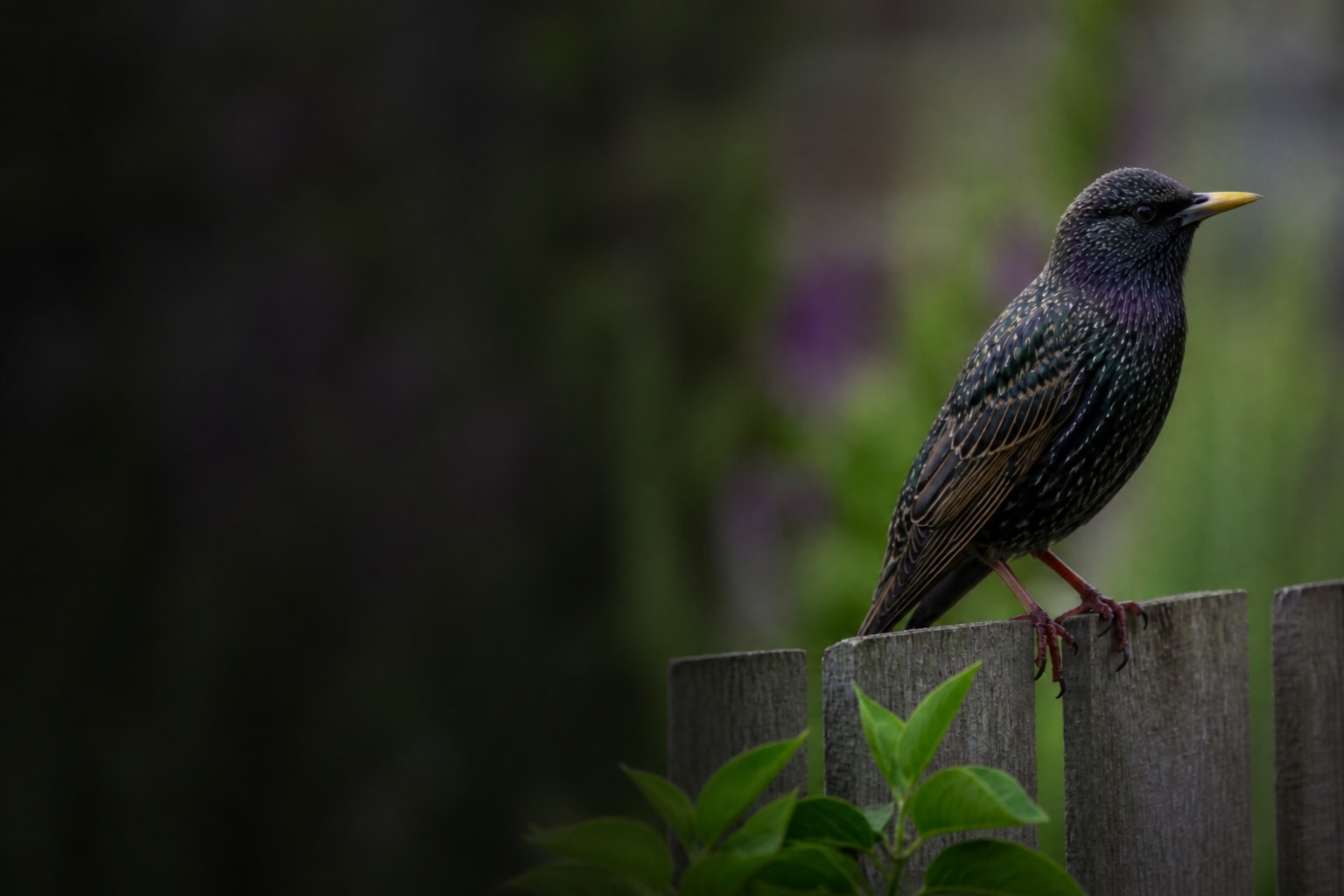
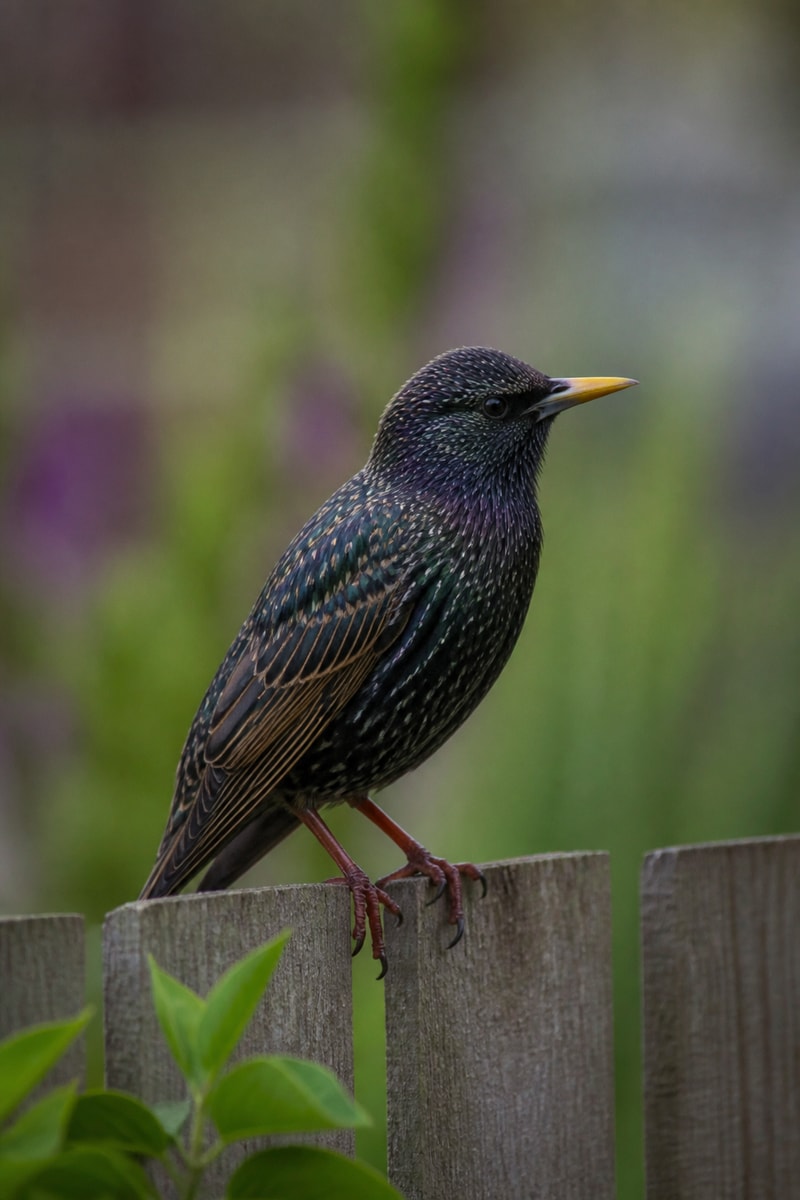
The starling is a bird of two moods. In summer, it's a glossy, speckled songster with purple and green iridescence in sunlight, a talented mimic in the garden. In winter, it becomes part of something extraordinary: murmurations, where thousands flock together at dusk in swirling, shape-shifting clouds above reedbeds and piers.
Starling numbers have fallen sharply in Britain since the 1980s, but they remain a common sight in towns and farmland, and those winter roosts remain one of the greatest free wildlife shows in the country.
- Scientific nameSturnus vulgaris
- Length19–22 cm
- Weight70–100 g
- Lifespan2–5 years in the wild typical; some reach 15+ years
- DietInsects and larvae…
- ConservationLeast Concern
- RegionGardens & Farmland
Habitat
- Farmland
- Towns
- Parks
- Coastal roosts
Starlings live across the United Kingdom in gardens, farmland, parks, and urban areas. They nest in cavities, holes in trees, buildings, and nest boxes, and feed on lawns and fields for invertebrates, switching to berries in autumn and joining massive communal roosts in winter.
Countries found
Field notes
Field scale for the Starling: length around 19-22 cm; weight 70-100 g. Typical lifespan: 2-5 years in the wild typical; some reach 15+ years.
When you are scanning habitat, prioritise farmland, towns, parks, and coastal roosts. Those settings are where a clean look and a usable photo are most likely.
Quick ID anchor: Stocky black bird with a short tail and pointed bill. Breeding plumage is glossed purple-green with fine pale spots; winter birds look heavily speckled white. Walks with a bustling gait. Confirm with behaviour and habitat before you log the discovery.
Diet
Insects and larvae probed from soil in summer; fruit, seeds, and scraps in winter. Famous for probing lawns with an open-bill technique.
Behaviour
Highly social; winter murmurations can number tens of thousands. Nest in cavities and eaves; excellent mimics that chatter, whistle, and copy other birds' calls.
How to identify
Stocky black bird with a short tail and pointed bill. Breeding plumage is glossed purple-green with fine pale spots; winter birds look heavily speckled white. Walks with a bustling gait.
Interesting facts
- 01
Starlings gather in murmurations of thousands, swirling shapes that confuse predators.
- 02
They are talented mimics, starlings copy other birds, phones, and car alarms.
- 03
Breeding plumage is glossy with purple and green iridescence; winter birds are speckled white.
- 04
UK starling numbers have fallen by over 50% since the 1980s, a steep decline for a once-ubiquitous bird.
- 05
Each bird in a murmuration responds to the seven nearest neighbours, creating coordinated movement.
- 06
They nest in cavities and will evict other hole-nesting birds to claim a site.
Conservation status
Starlings are Least Concern globally but red-listed as a declining species in the UK. Loss of permanent pasture and reduced insect food in farmland are likely causes, garden feeding and nest boxes help local populations.
Sources: IUCN Red List


Keep exploring
Free on iOS
Catch the Starling
Spot one in the wild, then scan it in Catch'Um to log your common discovery.