
Field guide · rare
Stag Beetle
Britain’s largest beetle — antler jaws, dusk flights, and rotting-wood larvae.
Near Threatened
Lucanus cervus
Overview
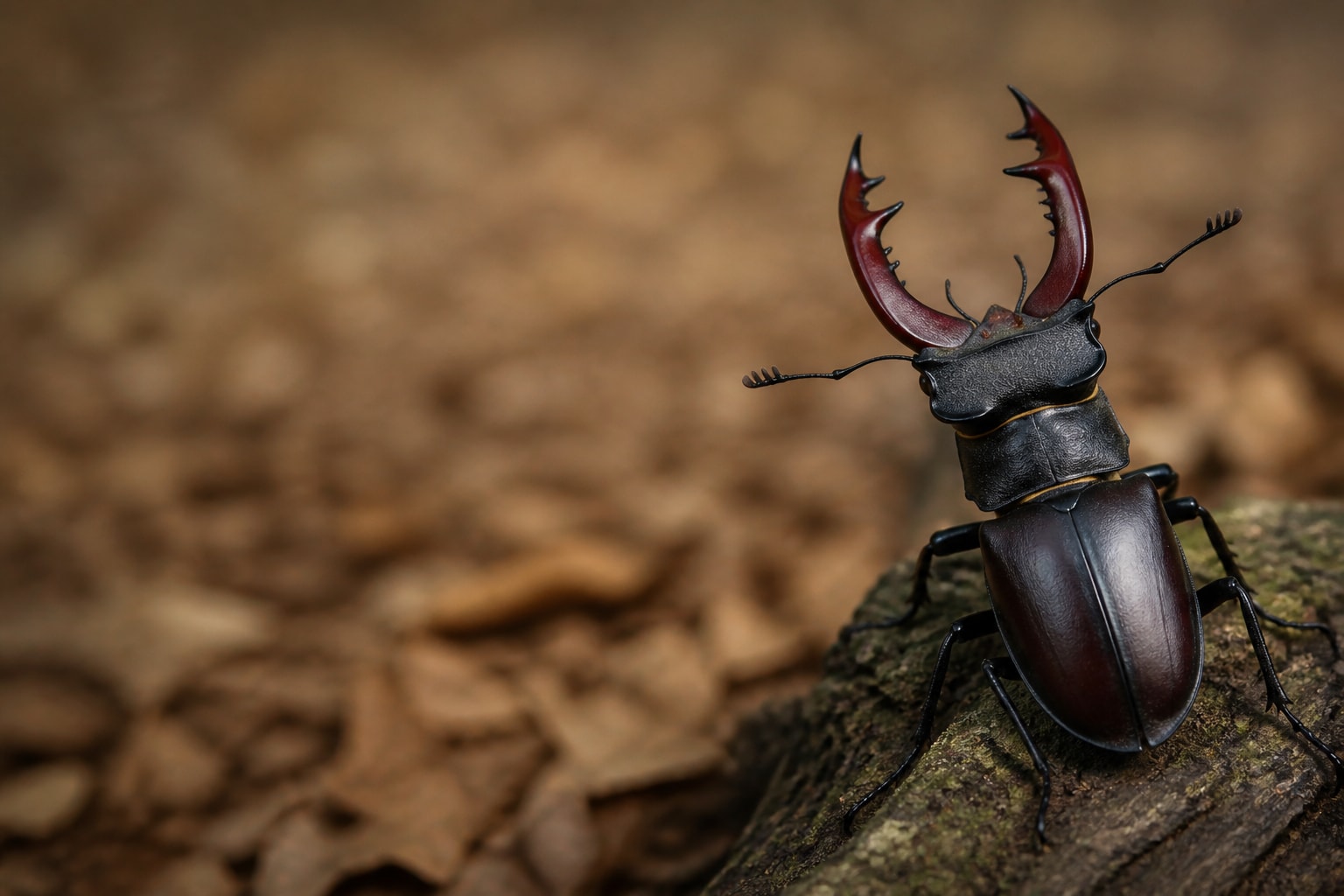
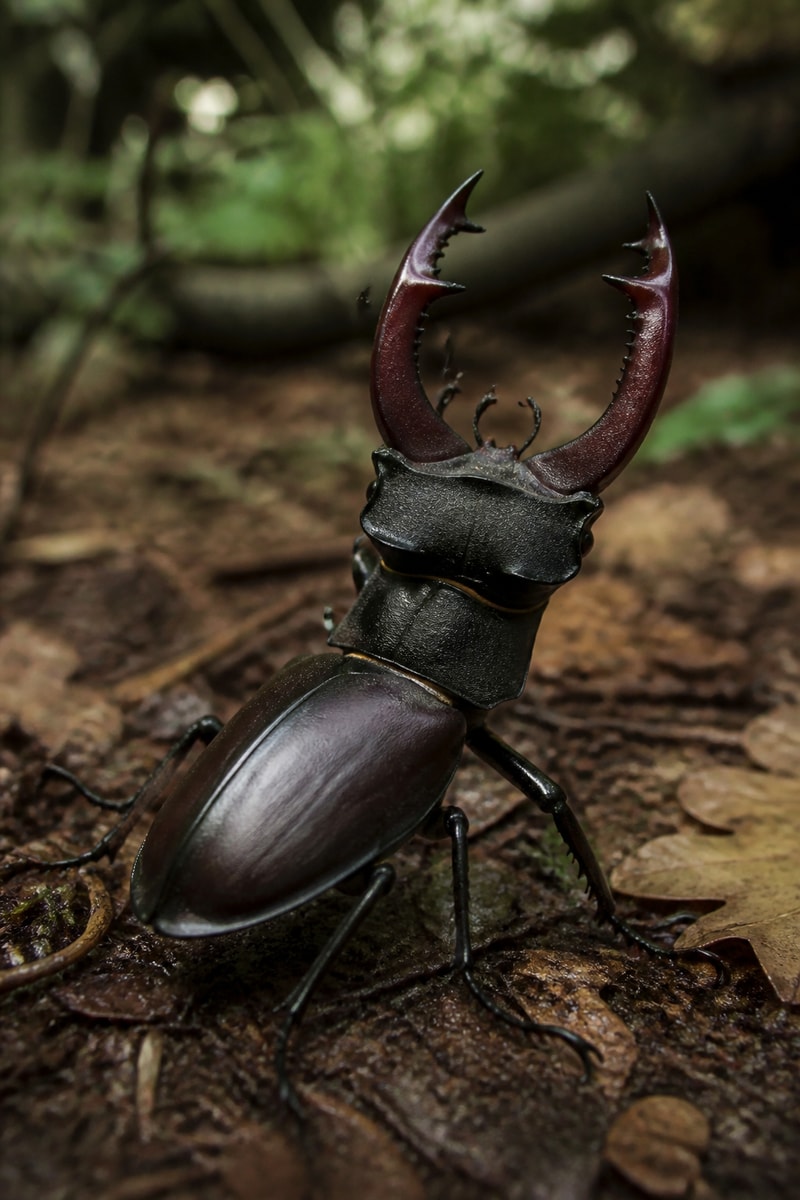
Stag beetles are Britain’s largest terrestrial beetles, named for the antler-like jaws of adult males. Larvae spend years developing in rotting wood, and adults take clumsy dusk flights on warm summer evenings in southern England.
For UK collectors, the stag beetle is a rare summer icon — massive jaws, southern strongholds, and a flagship of deadwood garden conservation.
- Scientific nameLucanus cervus
- LengthMales 5–8 cm; females 3–5 cm
- LifespanAdults live weeks to a few months; larvae 3–7 years
- DietAdults take tree sap and…
- ConservationNear Threatened
- RegionSouthern British Woodlands
Where to see them
Habitat
- Rotting stump
- Woodland edge
- Orchard
- Garden deadwood
Woodland edges, parks, orchards, and gardens in southern Britain with underground rotting timber — roots, stumps, and buried deadwood for larvae.
Field notes
Field scale for the Stag Beetle: length around Males 5-8 cm; females 3-5 cm. Typical lifespan: Adults live weeks to a few months; larvae 3-7 years.
When you are scanning habitat, prioritise rotting stump, woodland edge, orchard, and garden deadwood. Those settings are where a clean look and a usable photo are most likely.
Quick ID anchor: Huge chestnut-black beetle; males have oversized branched mandibles. Confirm with behaviour and habitat before you log the discovery.
Diet
Adults take tree sap and juices from damaged fruit; larvae feed on decaying wood.
Males rarely feed heavily; energy stores from the larval stage fuel adult life.
Behaviour
Males wrestle with mandibles over mating sites near breeding timber.
Adults are most active at dusk; clumsy fliers attracted to warm evenings.
How to identify
Huge chestnut-black beetle; males have oversized branched mandibles.
Females have smaller heads and shorter jaws but a powerful bite.
Interesting facts
- 01
Britain’s largest beetle; males can exceed 7 cm including jaws.
- 02
Male ‘antlers’ are oversized mandibles used in rival sparring.
- 03
Larvae develop for several years in decaying wood.
- 04
Adults fly at dusk on warm summer evenings.
- 05
Strongholds centre on southern England, especially London’s fringes.
- 06
UK Biodiversity Action Plan priority species.
Conservation status
Stag beetles are Near Threatened across their European range. Loss of deadwood habitat is the main pressure; UK garden log piles and stump retention help local populations.
Sources: IUCN Red List


Keep exploring
Free on iOS
Catch the Stag Beetle
Spot one in the wild, then scan it in Catch'Um to log your rare discovery.