
Field guide · rare
Sperm Whale
The ocean's deepest diver — blocky head, sonar clicks, and giant squid hunts in the dark.
Vulnerable
Physeter macrocephalus
Overview
Sperm whales are the largest toothed whales, built around a massive head filled with spermaceti oil used in echolocation. They dive thousands of metres for squid and live in matrilineal social groups.
For United States, Australia, and United Kingdom collectors, a sperm whale blow offshore is a rare deep-ocean link to coasts that still see these giants.
- Scientific namePhyseter macrocephalus
- LengthFemales ~11 m; males ~16 m (rarely larger)
- WeightFemales ~15–20 tonnes; males ~35–50 tonnes
- LifespanAround 60–70 years in the wild
- DietPrimarily deep-sea squid
- ConservationVulnerable
- RegionDeep Ocean
Habitat
- Deep ocean
- Continental slope
- Submarine canyons
Deep oceans worldwide, especially along continental slopes and canyons where squid are abundant; mothers and calves favour productive temperate and tropical waters.
Field notes
Field scale for the Sperm Whale: length around Females ~11 m; males ~16 m (rarely larger); weight Females ~15-20 tonnes; males ~35-50 tonnes. Typical lifespan: Around 60-70 years in the wild.
When you are scanning habitat, prioritise deep ocean, continental slope, and submarine canyons. Those settings are where a clean look and a usable photo are most likely.
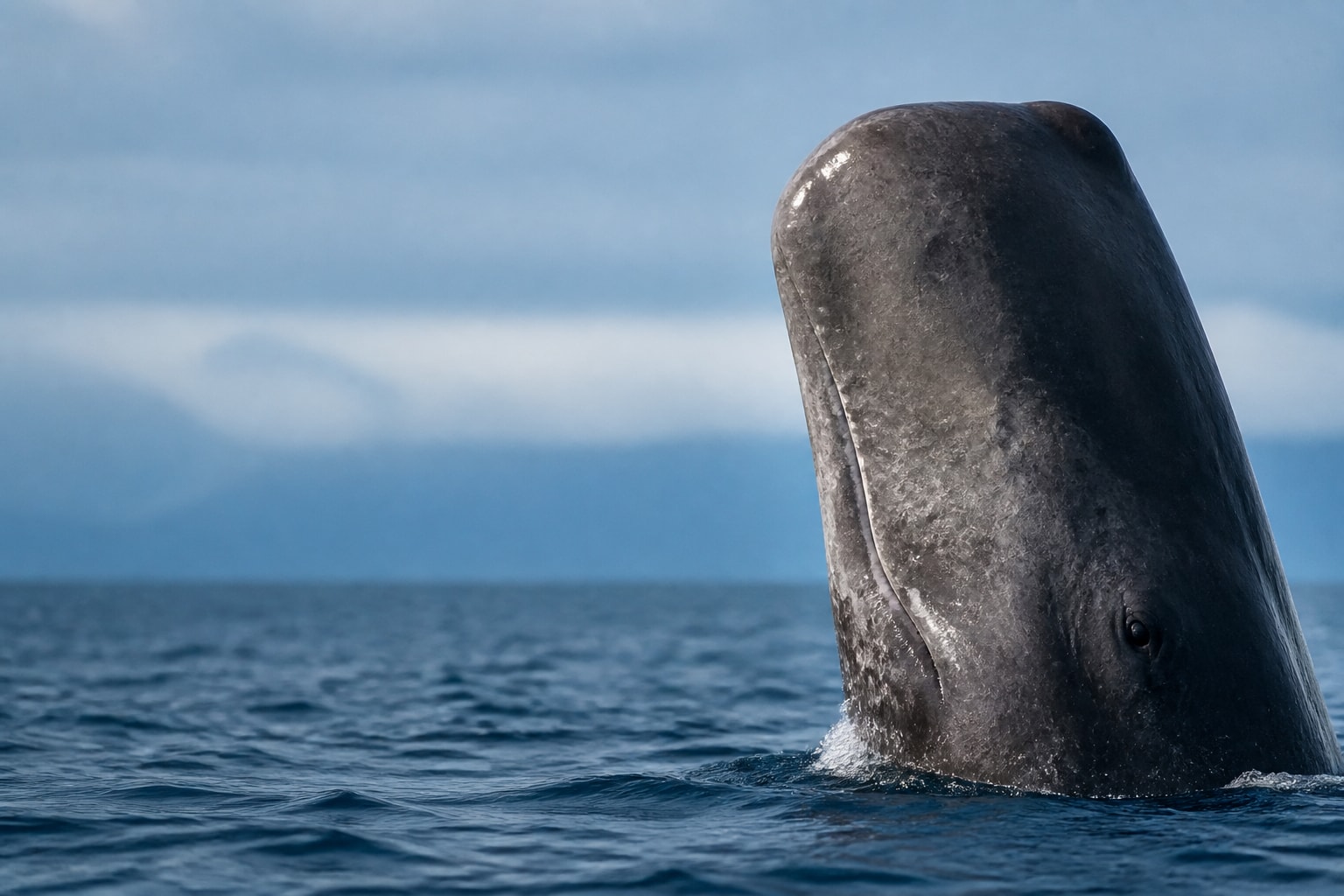
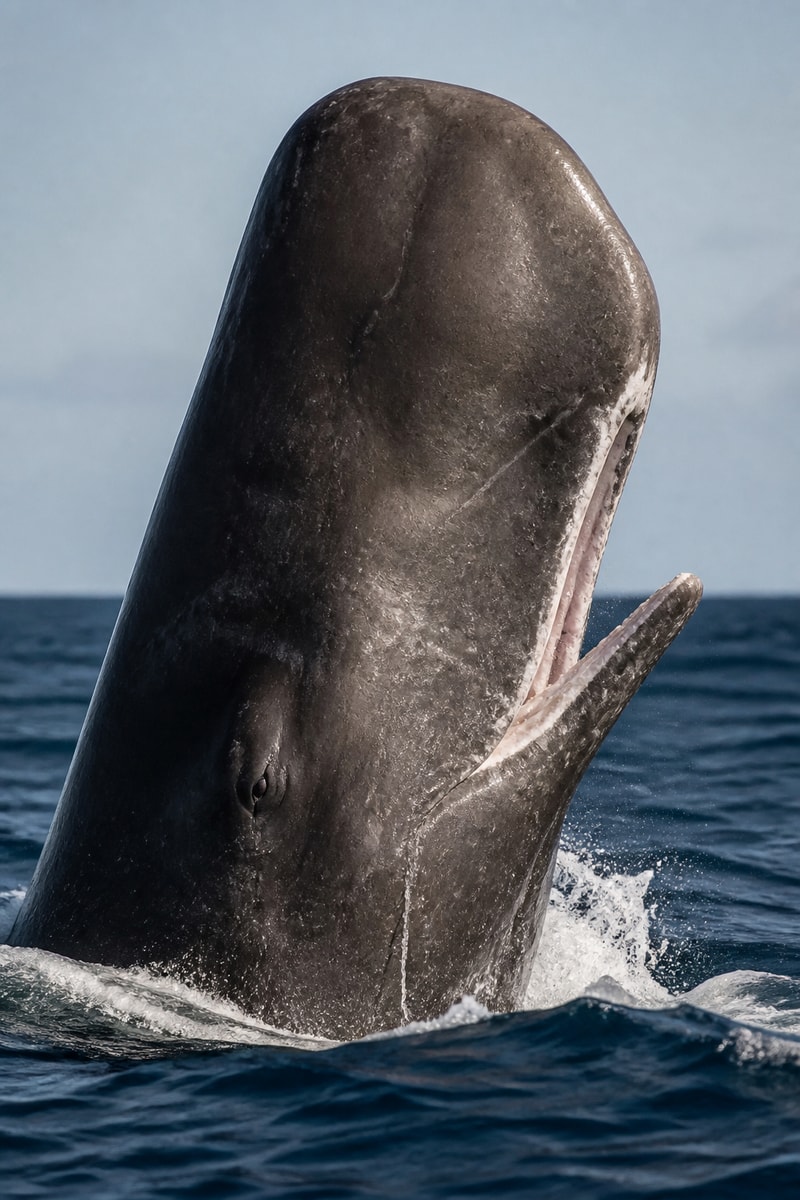
Quick ID anchor: Huge squared head (about one-third of body length), wrinkled dark skin, and a single blowhole set far left. Confirm with behaviour and habitat before you log the discovery.
Diet
Primarily deep-sea squid, plus fish and occasional other cephalopods.
Locate prey with intense echolocation clicks in dark midwater.
Behaviour
Females and young form stable social units; adult males roam widely.
Surface with a distinctive angled blow, then fluke up before long dives.
How to identify
Huge squared head (about one-third of body length), wrinkled dark skin, and a single blowhole set far left.
Bushy forward-angled spout; small dorsal hump rather than a tall fin.
Interesting facts
- 01
Largest toothed predator on Earth.
- 02
Can dive over 1,000 m and stay down for an hour or more.
- 03
Massive head holds the spermaceti organ used in echolocation.
- 04
Hunt giant and other deep-sea squid in darkness.
- 05
Skin often scarred by squid suckers and rival whales.
- 06
Social units of related females raise calves together.
Conservation status
Sperm whales are Vulnerable. Historic whaling cut numbers sharply; ship strikes, entanglement, and ocean noise still threaten recovery. International protection and quieter seas matter.
Sources: IUCN Red List



Keep exploring
Where it lives
Related discoveries
- Bald Eaglelegendary • Lakes & Coasts
- Grizzly Bearlegendary • Mountains & Rivers
- Blue Whalelegendary • Open Ocean
- Mountain Lionlegendary • Mountains & Desert
- Great White Sharklegendary • Coastal Ocean
- Saltwater Crocodilelegendary • Estuaries & Coast
- Orcalegendary • Coastal Ocean
- Southern Cassowarylegendary • Rainforest
Free on iOS
Catch the Sperm Whale
Spot one in the wild, then scan it in Catch'Um to log your rare discovery.