
Field guide · common
Sparrowhawk
Garden ambush hawk — barred chest, yellow eye, sudden dash through hedges.
Least Concern
Accipiter nisus
Overview
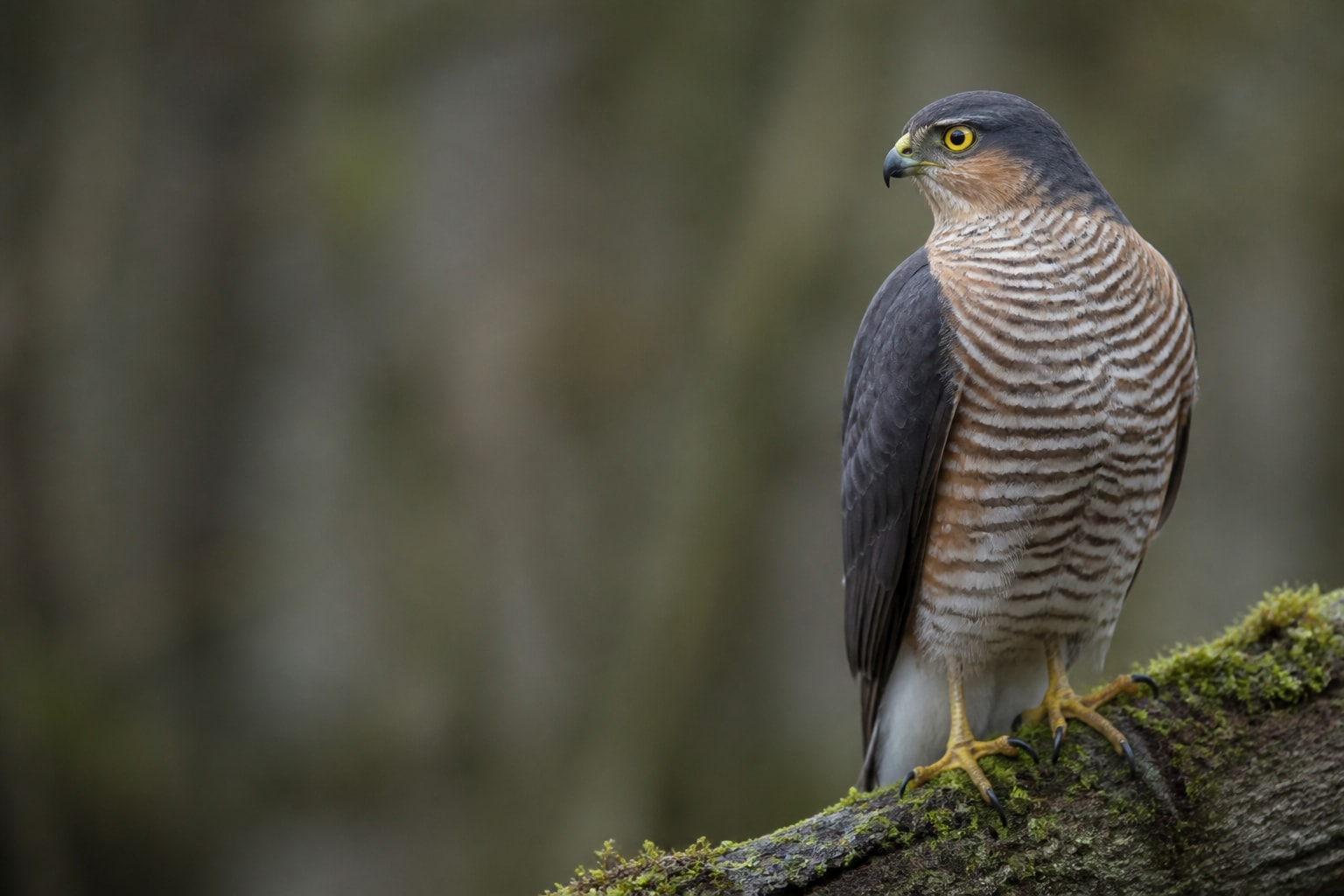
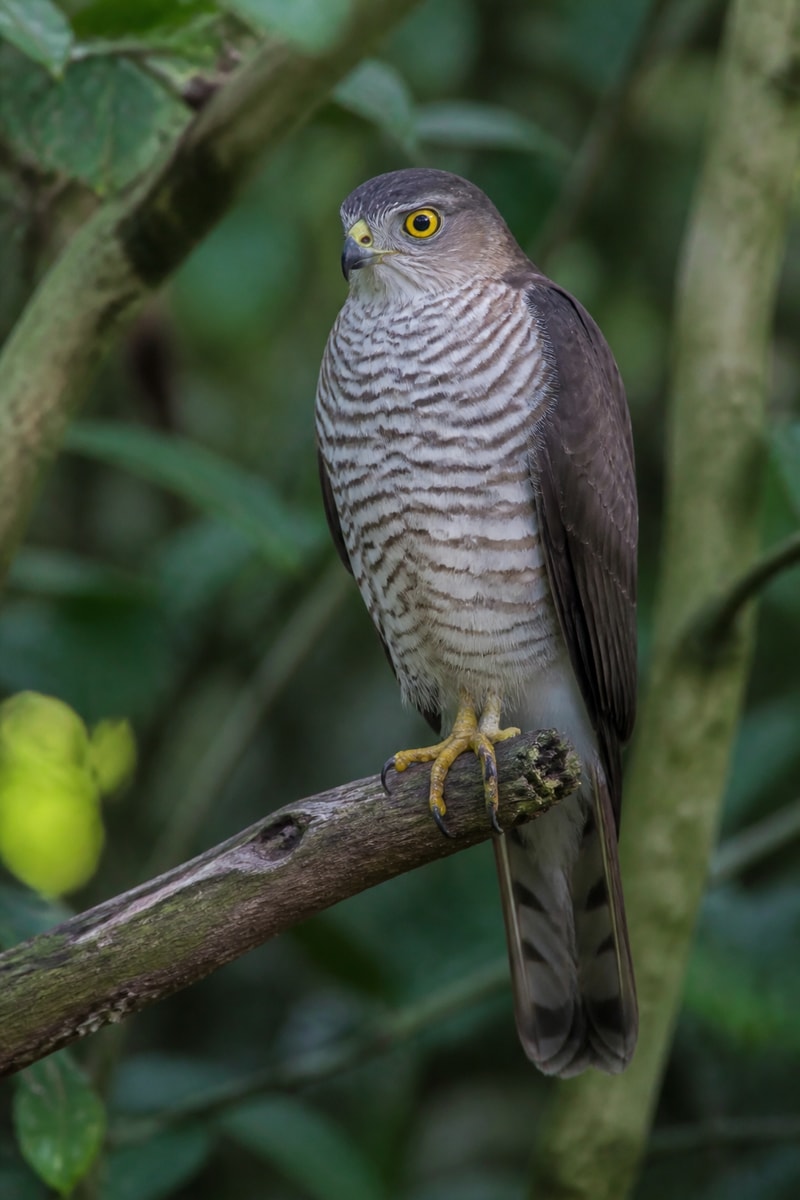
Sparrowhawks are agile Accipiter hawks that hunt small birds through British woodland and gardens. Females are much larger than males; both flash barred underparts and yellow eyes as they thread hedges at speed or perch in quiet ambush.
For UK collectors, the sparrowhawk is the classic garden raptor — feeder ambush, blur of barred wings, and a common woodland hunter you can still meet in town.
- Scientific nameAccipiter nisus
- Length28–40 cm; wingspan 55–70 cm
- Weight110–350 g
- LifespanAround 4–7 years in the wild
- DietSmall to medium birds
- ConservationLeast Concern
- RegionBritish Woods & Gardens
Where to see them
Habitat
- Deciduous woodland
- Garden with hedges
- Farmland edge
- Urban park
Woodland, farmland with hedges, parks, and gardens across the UK wherever small birds and cover for ambush hunting are available.
Field notes
Field scale for the Sparrowhawk: length around 28-40 cm; wingspan 55-70 cm; weight 110-350 g. Typical lifespan: Around 4-7 years in the wild.
When you are scanning habitat, prioritise deciduous woodland, garden with hedges, farmland edge, and urban park. Those settings are where a clean look and a usable photo are most likely.
Quick ID anchor: Short broad wings and a long tail built for weaving through trees. Confirm with behaviour and habitat before you log the discovery.
Diet
Small to medium birds — tits, finches, thrushes, and starlings are common prey.
Males take smaller birds; larger females can tackle pigeons and collared doves.
Behaviour
Ambush hunters that fly low along hedges then strike in a burst.
Secretive nesters; display flights over woodland in spring.
How to identify
Short broad wings and a long tail built for weaving through trees.
Barred breast; males greyer above, females browner and larger.
Interesting facts
- 01
Females are roughly twice the weight of males.
- 02
Hunt small birds in sudden dashes through cover.
- 03
Barred underparts and piercing yellow to orange eyes.
- 04
Often use garden bird feeders as hunting hotspots.
- 05
Build stick nests high in woodland trees.
- 06
Recovered strongly after mid-century pesticide declines.
Conservation status
Sparrowhawks are Least Concern and have recovered well in the UK since organochlorine pesticide bans. They remain widespread wherever woodland and prey birds persist.
Sources: IUCN Red List
Keep exploring
Free on iOS
Catch the Sparrowhawk
Spot one in the wild, then scan it in Catch'Um to log your common discovery.