
Field guide · common
Song Thrush
Speckled singer of the dawn — snail-smashing thrush of British gardens.
Least Concern
Turdus philomelos
Overview
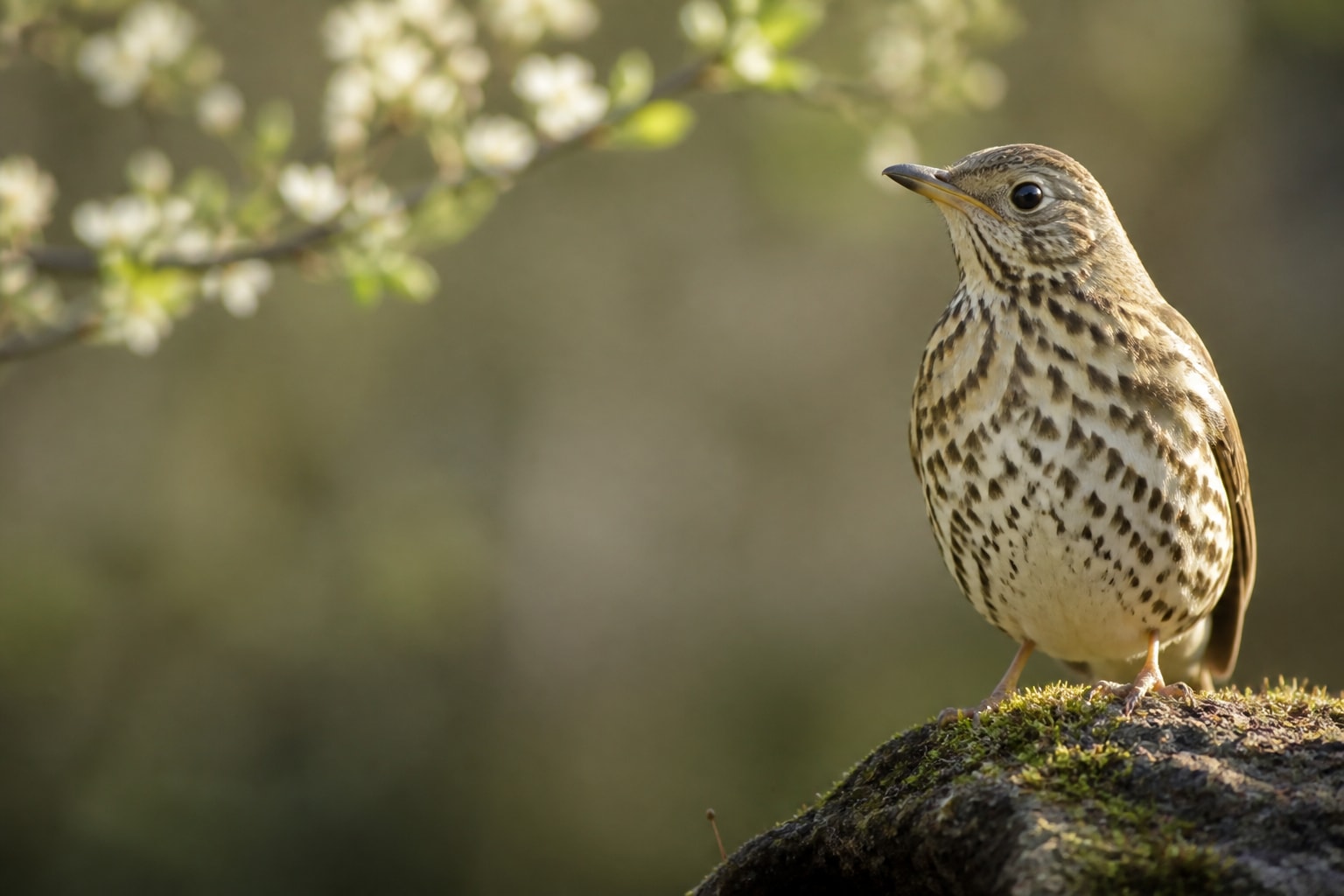
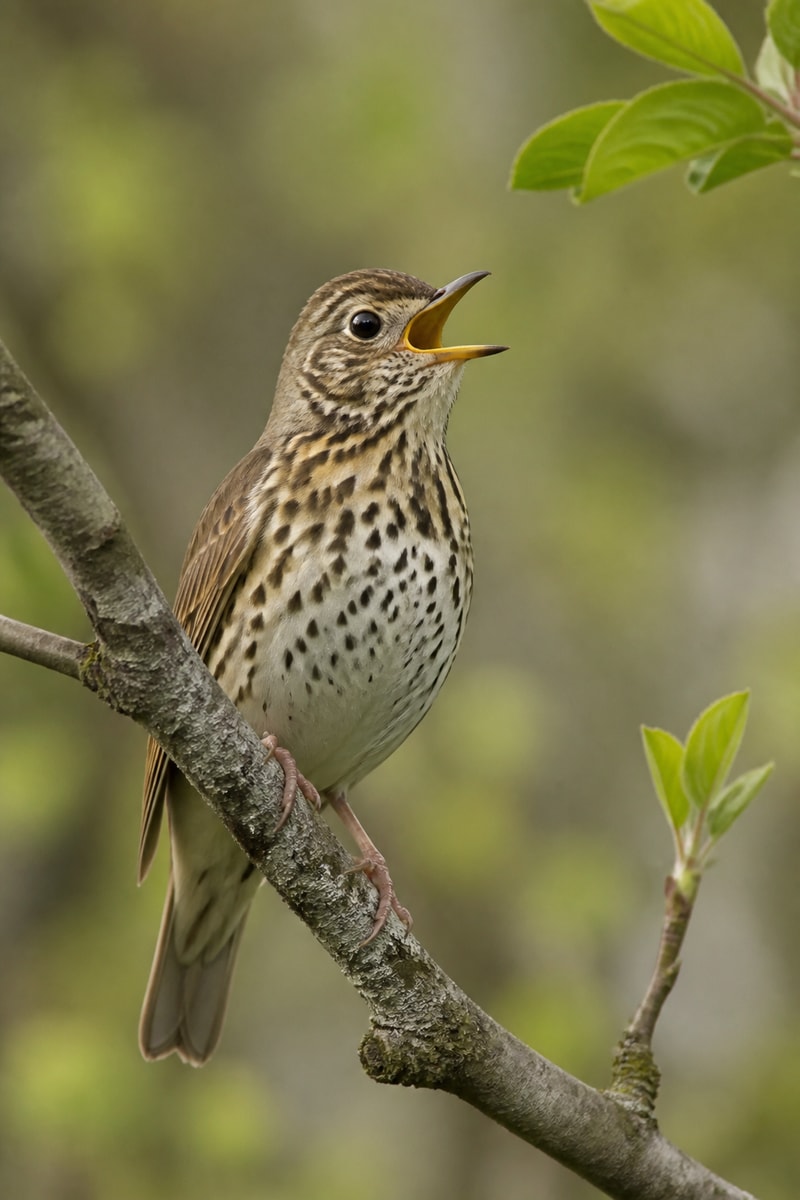
Song thrushes are warm-brown thrushes with cream underparts densely spotted black. Their clear, repeated phrases ring from trees and rooftops, and they famously smash snails on favourite ‘anvil’ stones in gardens and woodland.
For UK collectors, the song thrush is a classic garden song card — repeating flute phrases, speckled breast, and a snail anvil that proves the bird was here.
- Scientific nameTurdus philomelos
- Length20–23 cm
- Weight65–100 g
- LifespanAround 3–5 years in the wild
- DietEarthworms
- ConservationLeast Concern
- RegionBritish Gardens & Woods
Where to see them
Habitat
- Garden lawn
- Deciduous woodland
- Hedgerow
- Park shrubbery
Woodland, gardens, parks, and farmland hedges across the UK where soft ground, snails, and song posts are available.
Field notes
Field scale for the Song Thrush: length around 20-23 cm; weight 65-100 g. Typical lifespan: Around 3-5 years in the wild.
When you are scanning habitat, prioritise garden lawn, deciduous woodland, hedgerow, and park shrubbery. Those settings are where a clean look and a usable photo are most likely.
Quick ID anchor: Warm brown upperparts with a boldly black-spotted cream breast. Confirm with behaviour and habitat before you log the discovery.
Diet
Earthworms, insects, snails, and other invertebrates.
Berries and fruit in autumn and winter.
Behaviour
Hop across lawns listening for worms; smash snails at anvils.
Males deliver loud, repetitive song from trees and TV aerials.
How to identify
Warm brown upperparts with a boldly black-spotted cream breast.
Smaller and warmer-toned than mistle thrush; no white outer-tail corners.
Interesting facts
- 01
Song repeats short phrases two to four times in clear succession.
- 02
Smash snails on hard ‘anvil’ stones or paths.
- 03
Cream breast with bold black teardrop spots.
- 04
Often sing at dawn and dusk from high perches.
- 05
Diet mixes invertebrates, snails, worms, and fruit.
- 06
Familiar British garden bird, scarcer in some intensive farmland.
Conservation status
Song thrushes are Least Concern globally. UK numbers fell through the late twentieth century with farmland change, but gardens and scrub still support many birds.
Sources: IUCN Red List
Keep exploring
Free on iOS
Catch the Song Thrush
Spot one in the wild, then scan it in Catch'Um to log your common discovery.