
Field guide · common
Robin
Britain's Christmas-card bird, a fierce little red-breast that sings through every season.
Least Concern
Erithacus rubecula
Overview
The European robin is not the same bird Americans call a robin. It's smaller, brighter, and far bolder. That orange-red breast, the round body, the trusting approach to gardeners digging for worms: for UK collectors, the robin is the bird most likely to follow you down a path.
Robins sing all year round, not just in spring, and hold territories fiercely through winter. Males and females look alike and both defend patches. A sharp, sweet song from a fence post on a frosty morning is one of Britain's most familiar wild sounds.
- Scientific nameErithacus rubecula
- Length12.5–14 cm
- Weight14–21 g
- Lifespan2–5 years in the wild typical; some reach 8+ years
- DietInsects and earthworms…
- ConservationLeast Concern
- RegionGardens & Woodlands
Habitat
- Gardens
- Woodland
- Hedgerows
- Parks
Robins live across the United Kingdom in gardens, parks, woodland, hedgerows, and farmland edge. They favour areas with dense cover for nesting (ivy, shrubs, and woodland understory) but are famously tame around people, often feeding within arm's reach in gardens and churchyards.
Countries found
Field notes
Field scale for the Robin: length around 12.5-14 cm; weight 14-21 g. Typical lifespan: 2-5 years in the wild typical; some reach 8+ years.
When you are scanning habitat, prioritise gardens, woodland, hedgerows, and parks. Those settings are where a clean look and a usable photo are most likely.
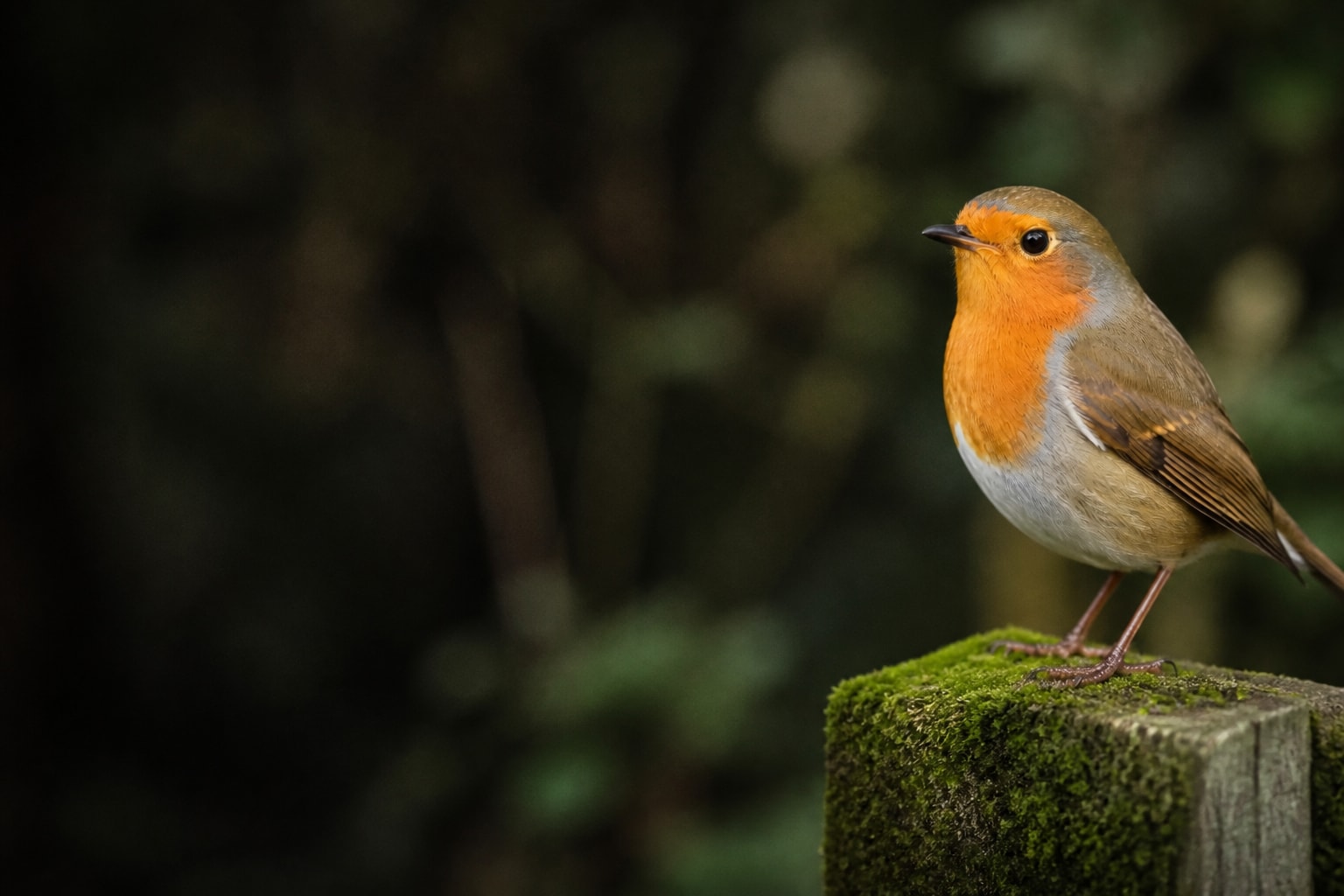
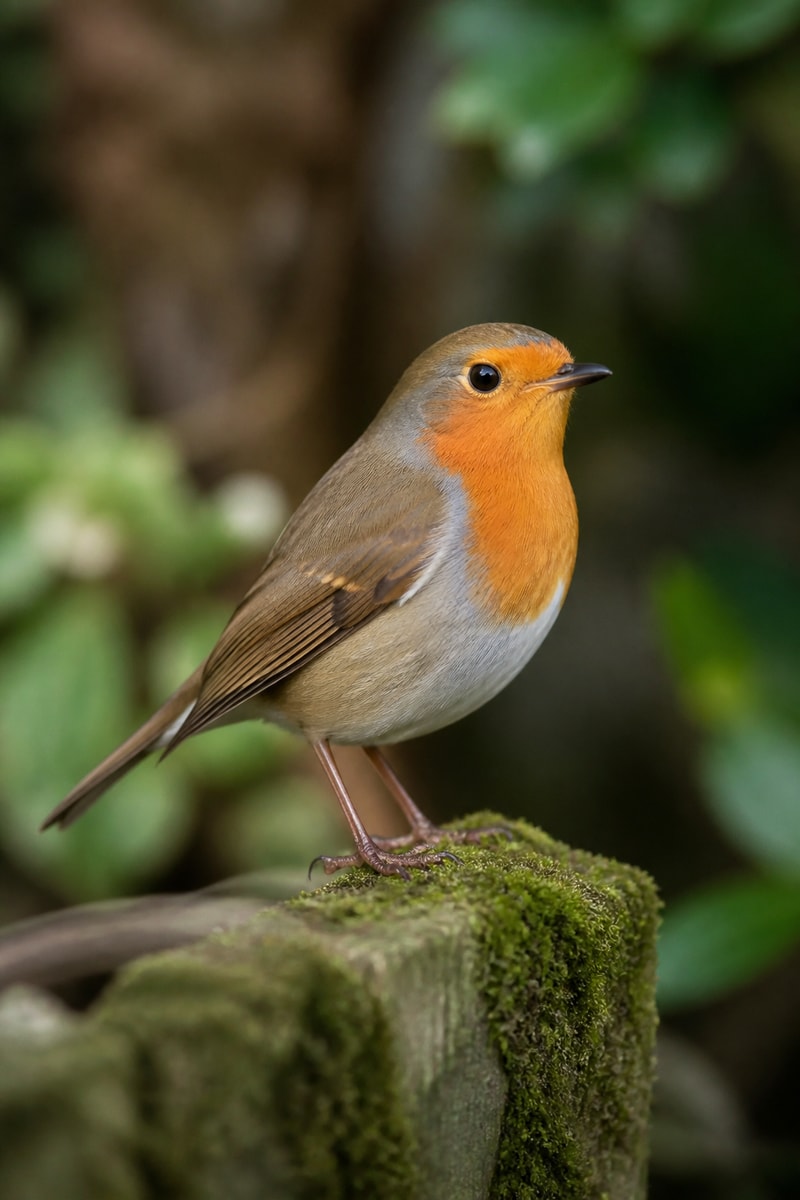
Quick ID anchor: Warm orange-red face and breast with a grey-brown back, white belly, and large dark eye. Juveniles are speckled brown without the red breast. Compact and upright, often hopping rather than walking. Confirm with behaviour and habitat before you log the discovery.
Where to see one
United Kingdom
In United Kingdom, start at The New Forest (Hampshire). Open heath and oak woodland where foxes, deer, ponies, and woodland birds share a landscape that feels surprisingly wild for southern England.
More context on this destination lives on the United Kingdom expedition page.
Diet
Insects and earthworms form the bulk of the diet, taken from lawns and leaf litter. In autumn and winter they switch more to berries and soft fruit.
Behaviour
Bold, territorial songbirds that often approach gardeners turning soil. Males sing a clear, wistful song from prominent perches year-round; they defend feeding territories fiercely.
How to identify
Warm orange-red face and breast with a grey-brown back, white belly, and large dark eye. Juveniles are speckled brown without the red breast. Compact and upright, often hopping rather than walking.
Interesting facts
- 01
Robins sing all year round and are fiercely territorial. Each pair defends its patch through every season.
- 02
Both males and females have orange-red breasts; juveniles are speckled brown without the red.
- 03
Robins often follow gardeners to snap up worms and insects turned over by the spade.
- 04
They nest in unusual places: old kettles, coat pockets, and open garage shelves have all been used.
- 05
A robin's song varies regionally. Birds in different parts of the UK have distinct dialects.
- 06
They were voted Britain's national bird in a 2015 poll.
Conservation status
The European robin is Least Concern and abundant across the UK and much of Europe. Severe winters can cause local dips, but populations recover quickly, making them a reassuring common for British collectors.
Sources: IUCN Red List

Keep exploring
Free on iOS
Catch the Robin
Spot one in the wild, then scan it in Catch'Um to log your common discovery.