
Field guide · common
Red Squirrel
Britain's native squirrel, a tufted-eared acrobat of pine forest, outcompeted by greys but holding on in strongholds.
Endangered
Sciurus vulgaris
Overview
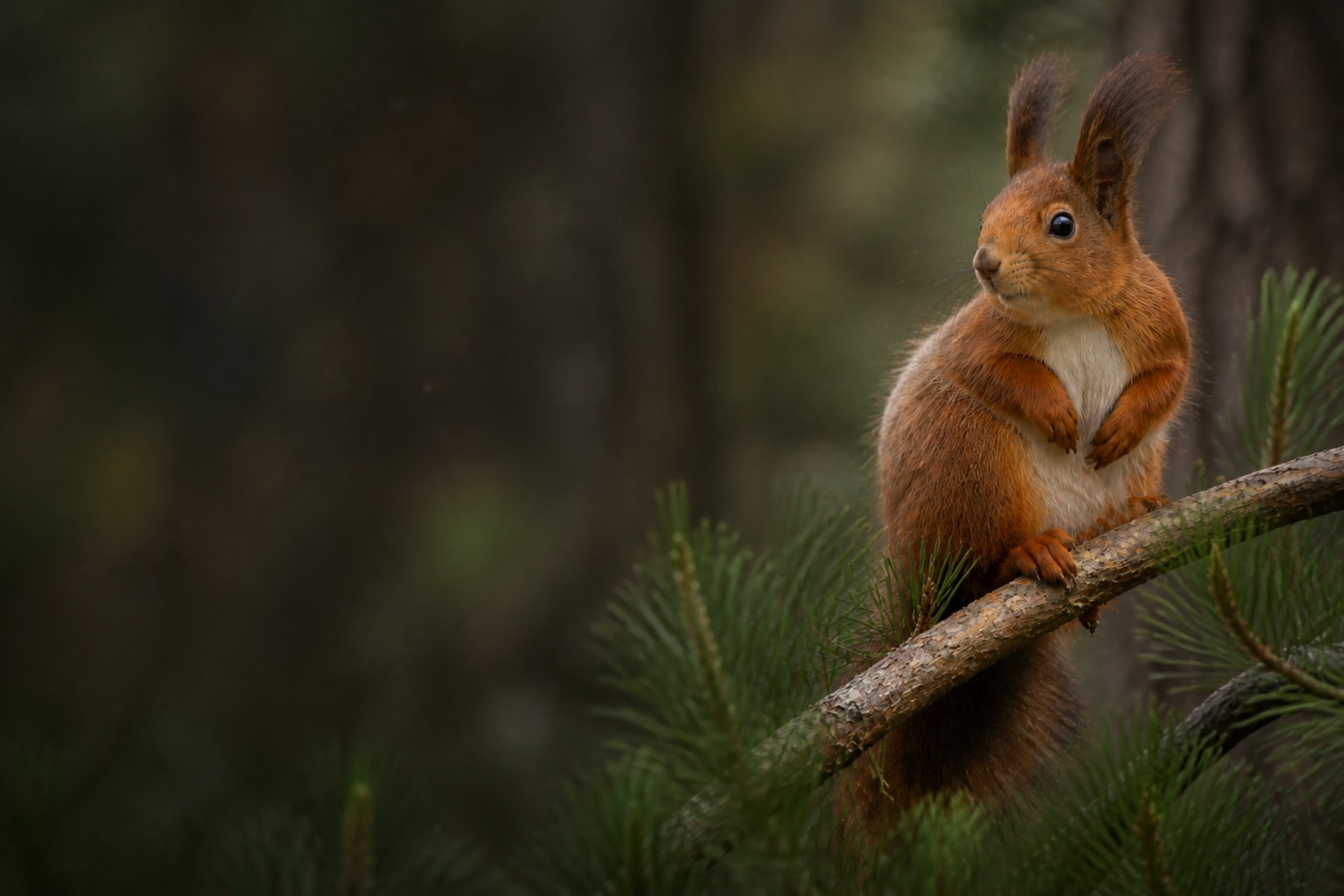
The red squirrel is Britain's only native squirrel, smaller and nimbler than the introduced grey, with distinctive ear tufts in winter and a chestnut coat. It leaps through Scots pine canopy with effortless grace, caching seeds and stripping cones with practiced efficiency.
Red squirrels have retreated as grey squirrels spread, carrying a poxvirus lethal to reds and outcompeting them for food. Strongholds remain in Scotland, the Lake District, Anglesey, and the Isle of Wight, places where conservation efforts keep the native red alive.
- Scientific nameSciurus vulgaris
- Length18–24 cm body; tail 15–20 cm
- Weight250–350 g
- LifespanAround 3–7 years in the wild
- DietFeeds mainly on conifer…
- ConservationEndangered
- RegionConifer Woodland
Habitat
- Conifer woodland
- Mixed woodland
- Pine forest
Conifer woodland and mixed forest across Scotland, northern England, and Wales suit red squirrels. They prefer Scots pine and spruce, where they can exploit cone crops that grey squirrels handle less efficiently.
Countries found
Field notes
Field scale for the Red Squirrel: length around 18-24 cm body; tail 15-20 cm; weight 250-350 g. Typical lifespan: Around 3-7 years in the wild.
When you are scanning habitat, prioritise conifer woodland, mixed woodland, and pine forest. Those settings are where a clean look and a usable photo are most likely.
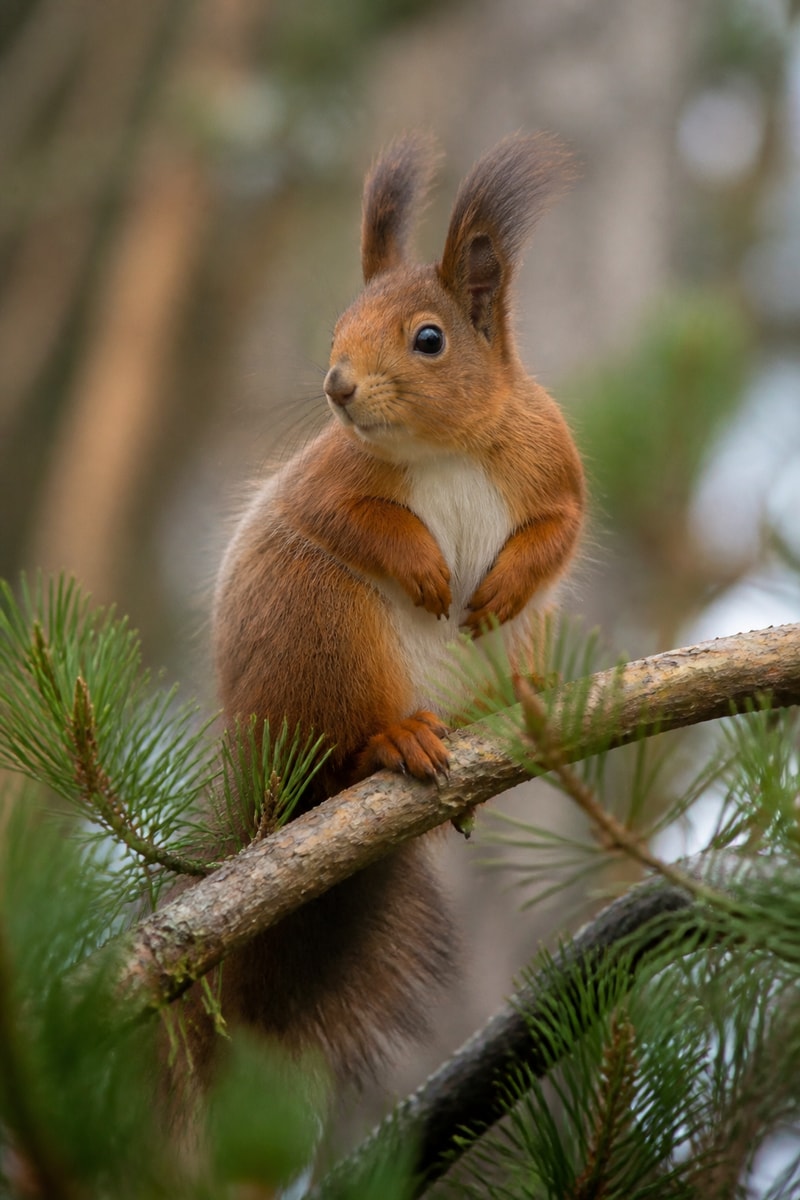
Quick ID anchor: Chestnut-red coat, creamy underside, and prominent ear tufts in winter; bushy tail often the same colour as the body. Confirm with behaviour and habitat before you log the discovery.
Diet
Feeds mainly on conifer seeds, hazelnuts, fungi, buds, and berries, often caching cones for winter.
Will also take bird eggs and insects when plant food is scarce.
Behaviour
Diurnal and highly arboreal, leaping through canopy and building dreys of twigs and moss.
Caches food widely; memory of stores helps it through lean winters.
How to identify
Chestnut-red coat, creamy underside, and prominent ear tufts in winter; bushy tail often the same colour as the body.
Smaller and slimmer than the grey squirrel, with a sharper face and more upright posture when alert.
Interesting facts
- 01
Red squirrels are native to the UK, greys outcompete them for food.
- 02
Ear tufts grow longer in winter and are shed in summer.
- 03
A red squirrel can tell if a nut is worth opening by shaking it.
Conservation status
Red squirrels are Endangered in the UK after grey squirrel competition and squirrelpox devastated populations. Scotland holds roughly 75% of Britain's remaining reds.
Sources: IUCN Red List
Keep exploring
Free on iOS
Catch the Red Squirrel
Spot one in the wild, then scan it in Catch'Um to log your common discovery.