

Field guide · rare
Pine Marten
A chocolate-brown climber with a cream bib — Scotland's recovering woodland jewel.
Least Concern
Martes martes
Overview
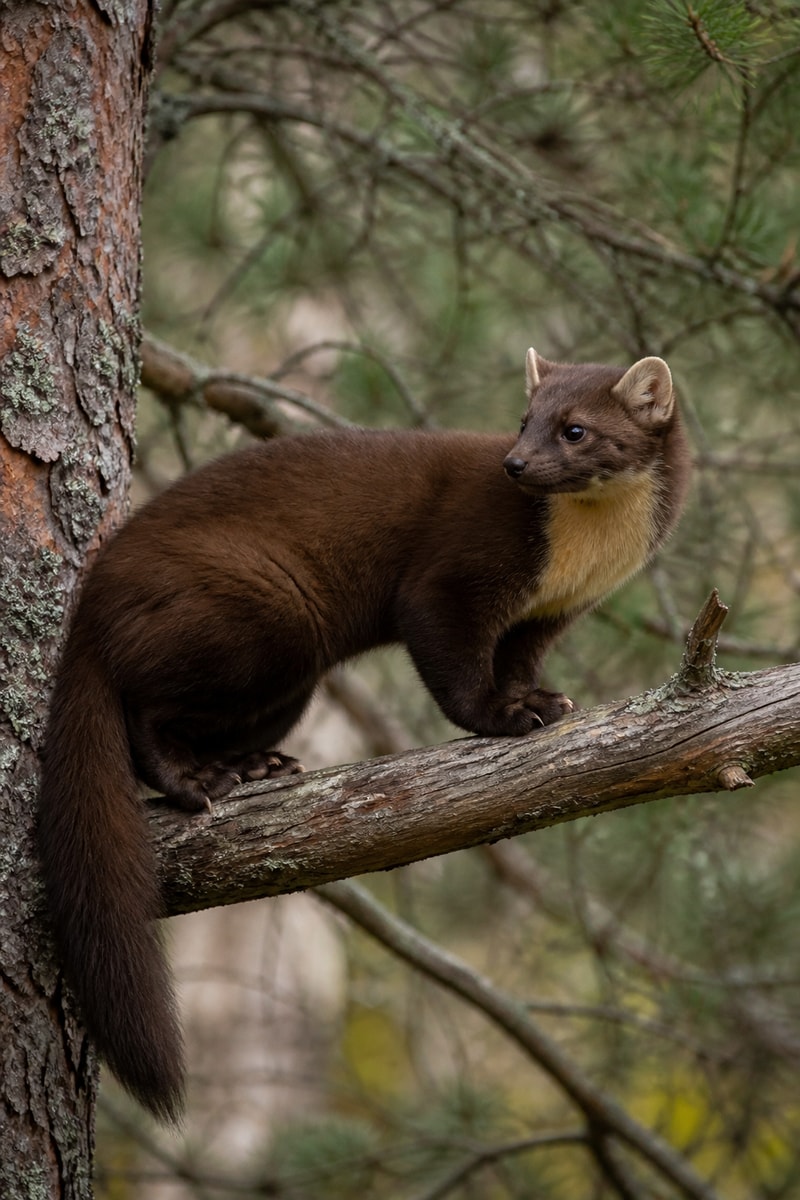
Pine martens are sleek arboreal mustelids of British woodland: rich brown fur, a creamy yellow throat patch, and a bushy tail. Once persecuted to scarcity, they are quietly reclaiming forests — and helping keep grey squirrels in check in some areas.
A rare UK mammal card that rewards patient woodland collectors.
- Scientific nameMartes martes
- Length45–55 cm body; tail 20–25 cm
- Weight1–2 kg
- LifespanAround 8–10 years in the wild
- DietSmall mammals
- ConservationLeast Concern
- RegionWoodland
Where to see them
Habitat
- Conifer woodland
- Mixed forest
- Rocky dens
Coniferous and mixed woodland across Scotland and expanding parts of the UK, using tree cavities, rocky dens, and quiet forest cover.
Field notes
Field scale for the Pine Marten: length around 45-55 cm body; tail 20-25 cm; weight 1-2 kg. Typical lifespan: Around 8-10 years in the wild.
When you are scanning habitat, prioritise conifer woodland, mixed forest, and rocky dens. Those settings are where a clean look and a usable photo are most likely.
Quick ID anchor: Chocolate-brown mustelid with a cream-yellow throat patch and bushy tail. Confirm with behaviour and habitat before you log the discovery.
Diet
Small mammals, birds, eggs, insects, carrion, and seasonal berries and fruit.
Opportunistic hunters active mainly at night and dusk.
Behaviour
Mostly solitary; den in trees, rocky crevices, or quiet structures.
Climb with ease; patrol woodland territories.
How to identify
Chocolate-brown mustelid with a cream-yellow throat patch and bushy tail.
Pointed face, rounded ears, and climbing build — larger than a stoat.
Interesting facts
- 01
Creamy-yellow throat 'bib' is a key ID mark.
- 02
Excellent climbers that hunt in trees and on the ground.
- 03
Recovery in Scotland is a UK conservation success.
- 04
Diet includes small mammals, birds, insects, and berries.
- 05
May use nest boxes and attics near woodland edges.
- 06
Related to sable and fisher, but smaller and more arboreal.
Conservation status
Pine martens are Least Concern globally and recovering in parts of the UK after legal protection. Road mortality and fragmented woodland still limit spread in England and Wales.
Sources: IUCN Red List

Keep exploring
Free on iOS
Catch the Pine Marten
Spot one in the wild, then scan it in Catch'Um to log your rare discovery.