
Field guide · common
Moorhen
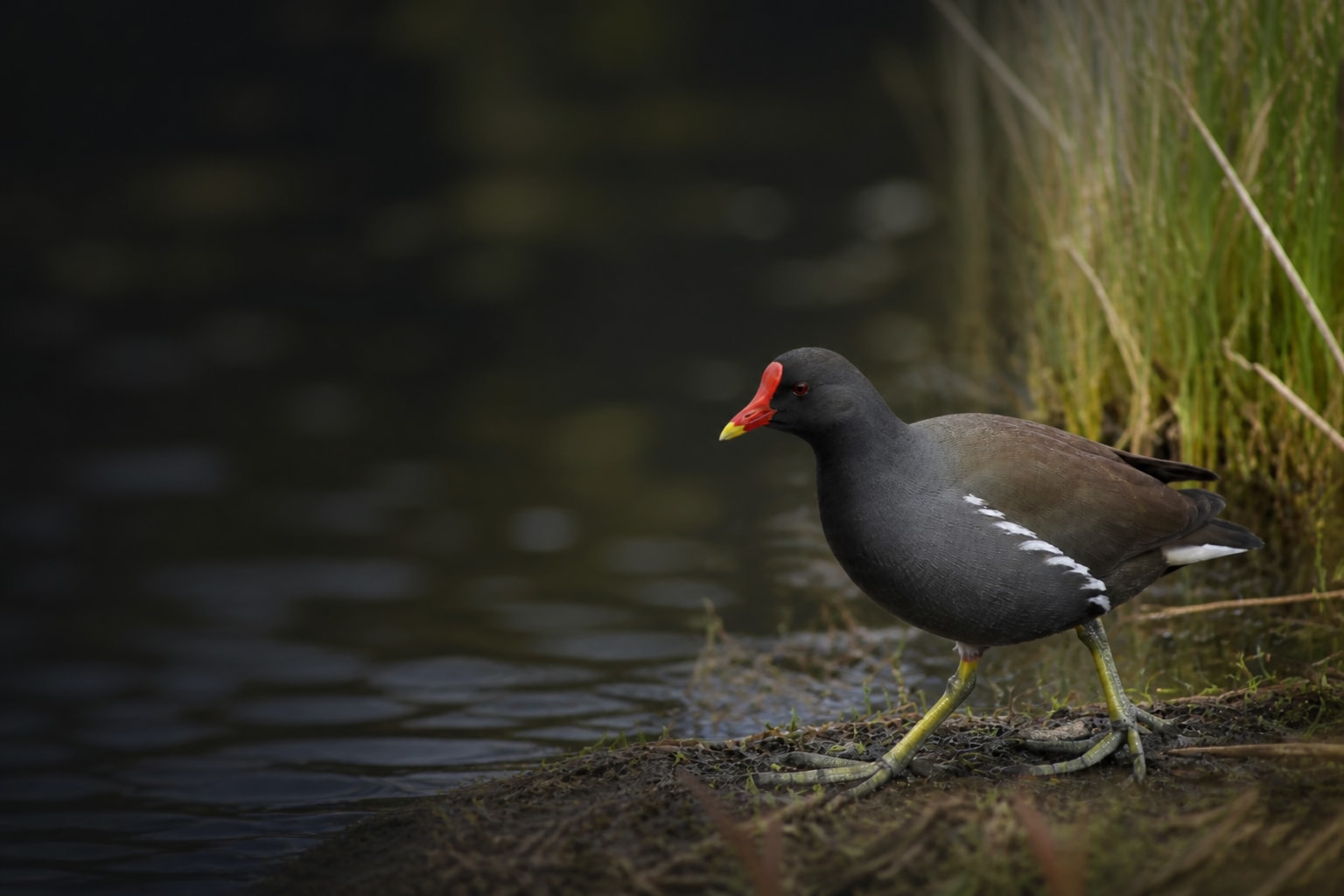
The pond walker, a charcoal waterbird with a scarlet bill and a white tail-flash that flicks as it scurries across lily pads.
Least Concern
Gallinula chloropus
Overview
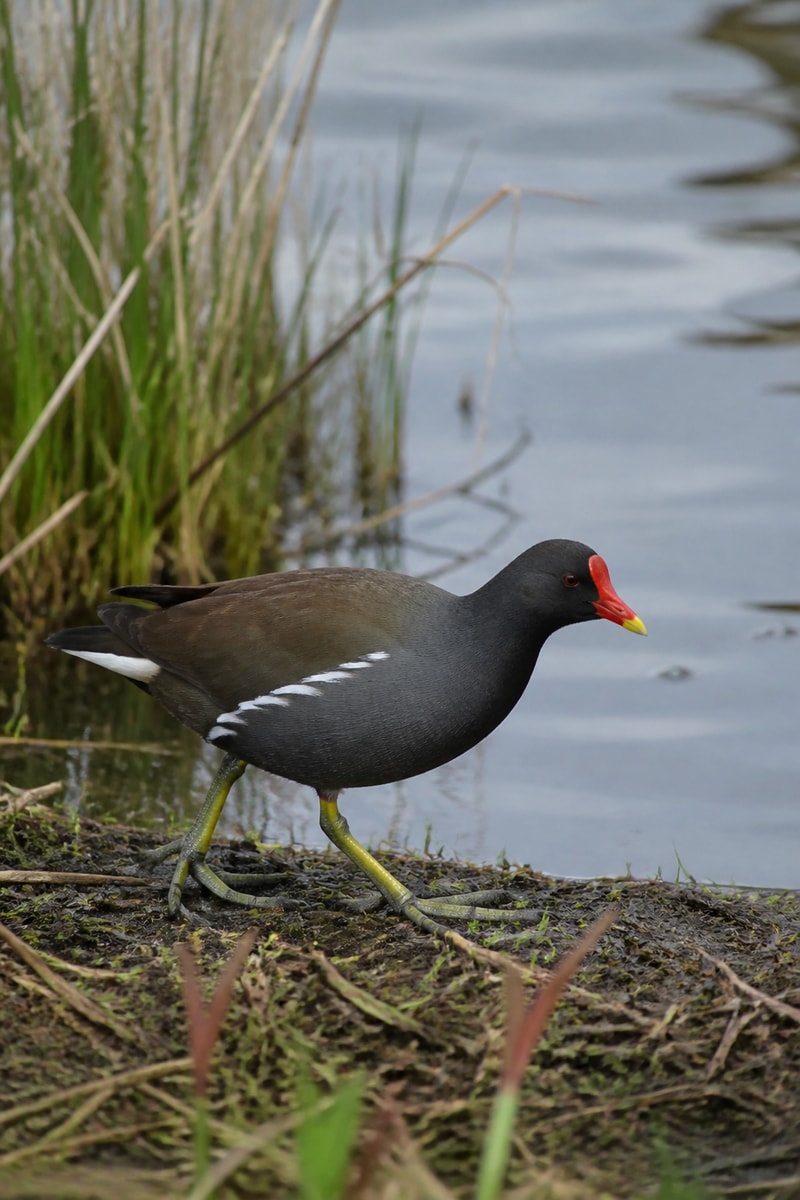
The moorhen is a familiar sight on park ponds and village meres across Britain: a compact waterbird with dark plumage, a brilliant red-and-yellow bill, and long green toes that spread its weight as it walks on floating vegetation.
Moorhens are bolder than many wetland birds, often feeding openly at the water's edge and squabbling noisily with rivals. When alarmed, they flick their white undertail feathers, a flash signal, before diving for cover in reeds.
- Scientific nameGallinula chloropus
- Length30–38 cm
- Weight250–500 g
- Lifespan3–5 years in the wild
- DietOmnivore
- ConservationLeast Concern
- RegionPonds & Reedbeds
Habitat
- Ponds
- Lakes
- Rivers
- Marshes
Freshwater ponds, lakes, canals, and reedbeds with plenty of marginal vegetation suit moorhens across the UK. They nest in dense reed or bush cover at the water's edge and feed on plants, seeds, and small aquatic insects.
Countries found
Field notes
Field scale for the Moorhen: length around 30-38 cm; weight 250-500 g. Typical lifespan: 3-5 years in the wild.
When you are scanning habitat, prioritise ponds, lakes, rivers, and marshes. Those settings are where a clean look and a usable photo are most likely.
Quick ID anchor: Slaty-black body with a bright red frontal shield and yellow-tipped red bill, a white flank line, and long greenish-yellow legs. Distinguished from coot by the red shield (coot has white). Confirm with behaviour and habitat before you log the discovery.
Where to see one
United Kingdom
In United Kingdom, start at Hyde Park & Regent's Park (London). Urban park lakes for mallards, tree lines full of sparrows, and pigeons along the Serpentine. Starter discoveries in the heart of the city.
More context on this destination lives on the United Kingdom expedition page.
Diet
Omnivorous waterbird: aquatic plants, algae, seeds, invertebrates, and occasional small fish or tadpoles. Picks food from the surface, underwater, and while walking on floating vegetation.
Behaviour
Swims with a characteristic head-bob and flicks its white undertail when nervous. Territorial around ponds in spring; often skulks in reed edges but walks confidently on open mud.
How to identify
Slaty-black body with a bright red frontal shield and yellow-tipped red bill, a white flank line, and long greenish-yellow legs. Distinguished from coot by the red shield (coot has white).
Interesting facts
- 01
Moorhens have a white stripe on their flank and a red bill with a yellow tip.
- 02
Their oversized feet let them walk on floating vegetation.
- 03
Both parents feed the chicks, which leave the nest within days.
Conservation status
Moorhens are Least Concern and common on wetlands throughout the UK. Mild winters and urban park ponds have helped maintain stable populations.
Sources: IUCN Red List







Keep exploring
Free on iOS
Catch the Moorhen
Spot one in the wild, then scan it in Catch'Um to log your common discovery.