
Field guide · common
Long-tailed Tit
Tiny pink-flushed fluffball on a stick — restless flock acrobat of British hedges.
Least Concern
Aegithalos caudatus
Overview
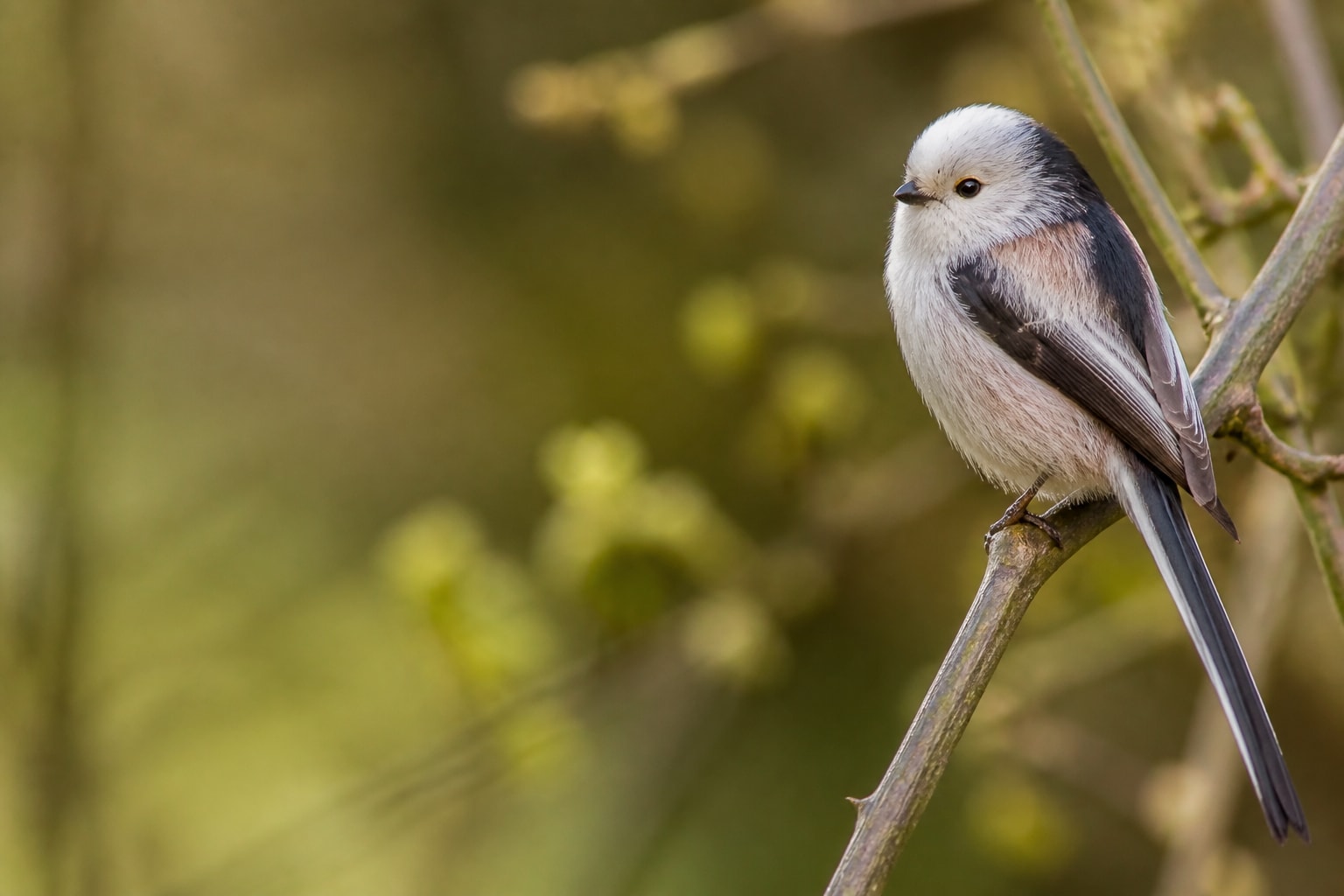
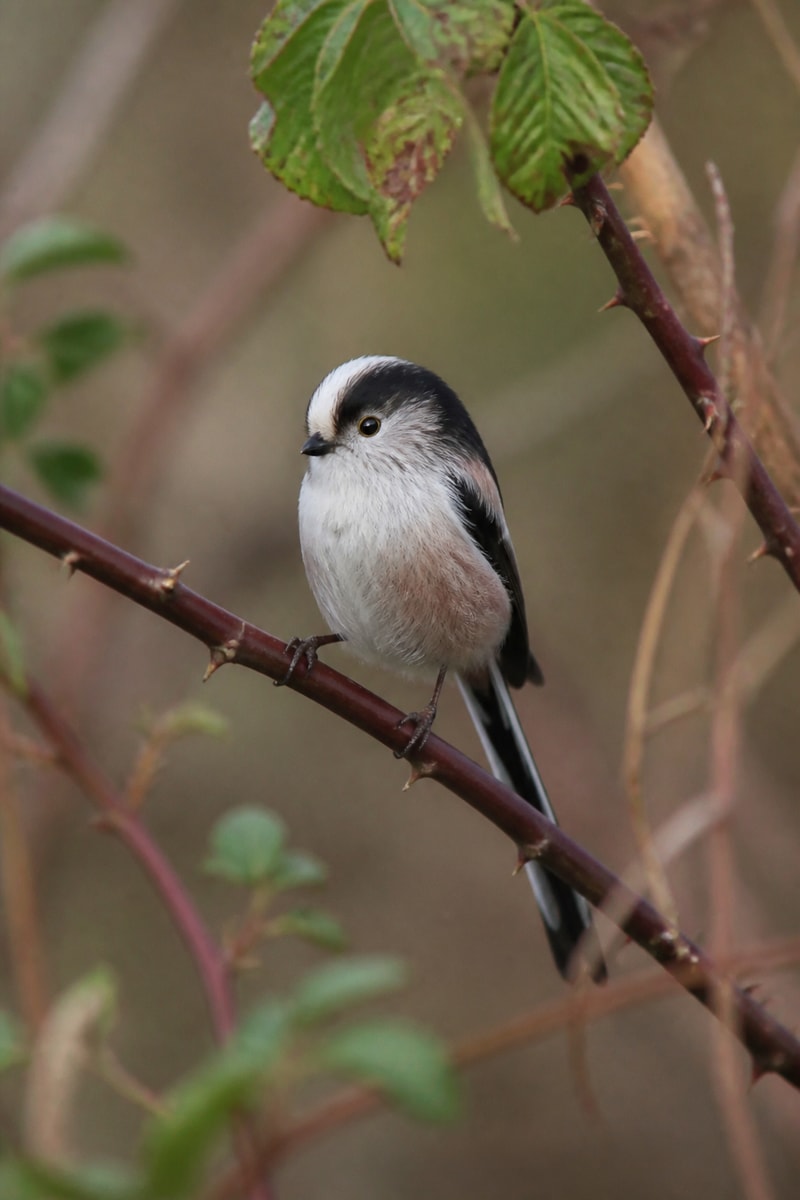
Long-tailed tits are tiny, round-bodied birds with extraordinarily long tails, pinkish flanks, and black-and-white markings. They roam British hedges and woodland in soft-calling family flocks, weaving dome nests from moss, lichen, and spider silk.
For UK collectors, the long-tailed tit is a hedgerow favourite — bouncing flock, needle-tail silhouette, and one of the sweetest common birds of British winter walks.
- Scientific nameAegithalos caudatus
- Length13–15 cm including tail
- Weight7–10 g
- LifespanAround 2–3 years on average in the wild
- DietTiny insects
- ConservationLeast Concern
- RegionBritish Hedgerows & Woods
Where to see them
Habitat
- Hedgerow
- Woodland edge
- Scrub
- Garden thicket
Woodland edges, hedgerows, scrub, and gardens across the UK wherever tangled twigs offer insects and nest sites.
Field notes
Field scale for the Long-tailed Tit: length around 13-15 cm including tail; weight 7-10 g. Typical lifespan: Around 2-3 years on average in the wild.
When you are scanning habitat, prioritise hedgerow, woodland edge, scrub, and garden thicket. Those settings are where a clean look and a usable photo are most likely.
Quick ID anchor: Tiny fluffy body with a disproportionately long black-and-white tail. Confirm with behaviour and habitat before you log the discovery.
Diet
Tiny insects, spiders, and other invertebrates gleaned from twigs.
Take some seeds and fat from feeders in cold weather.
Behaviour
Roam in restless flocks that follow one another through hedges.
Cooperative breeders — helpers may feed chicks at a relative’s nest.
How to identify
Tiny fluffy body with a disproportionately long black-and-white tail.
Pinkish sides, black eye stripe, and bouncing undulating flight.
Interesting facts
- 01
Tail is longer than the body — a floating needle in flight.
- 02
Travel in family flocks with soft ‘see-see-see’ contact calls.
- 03
Build elaborate oval nests of moss, lichen, and spider silk.
- 04
Helpers often assist related pairs at the nest.
- 05
Diet is mostly tiny insects and spiders year-round.
- 06
Pink flanks and white crown stripe are classic British field marks.
Conservation status
Long-tailed tits are Least Concern and generally doing well in the UK. Hard winters can cause short-term dips, but hedgerows and gardens support strong populations.
Sources: IUCN Red List

Keep exploring
Free on iOS
Catch the Long-tailed Tit
Spot one in the wild, then scan it in Catch'Um to log your common discovery.