
Field guide · common
Kingfisher
A flash of electric blue over water, Britain's brightest bird, streaking low over rivers before vanishing into the bank.
Least Concern
Alcedo atthis
Overview
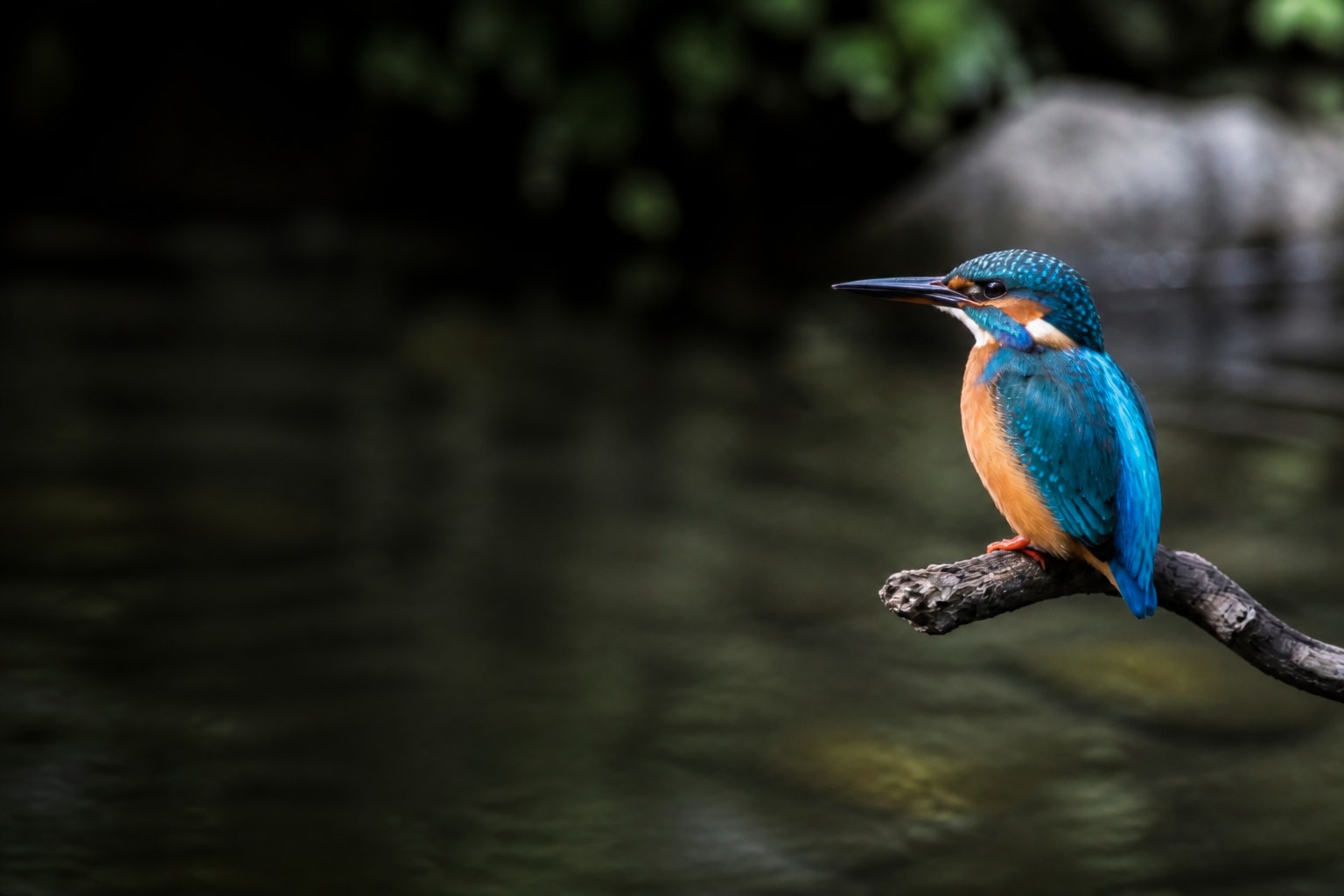
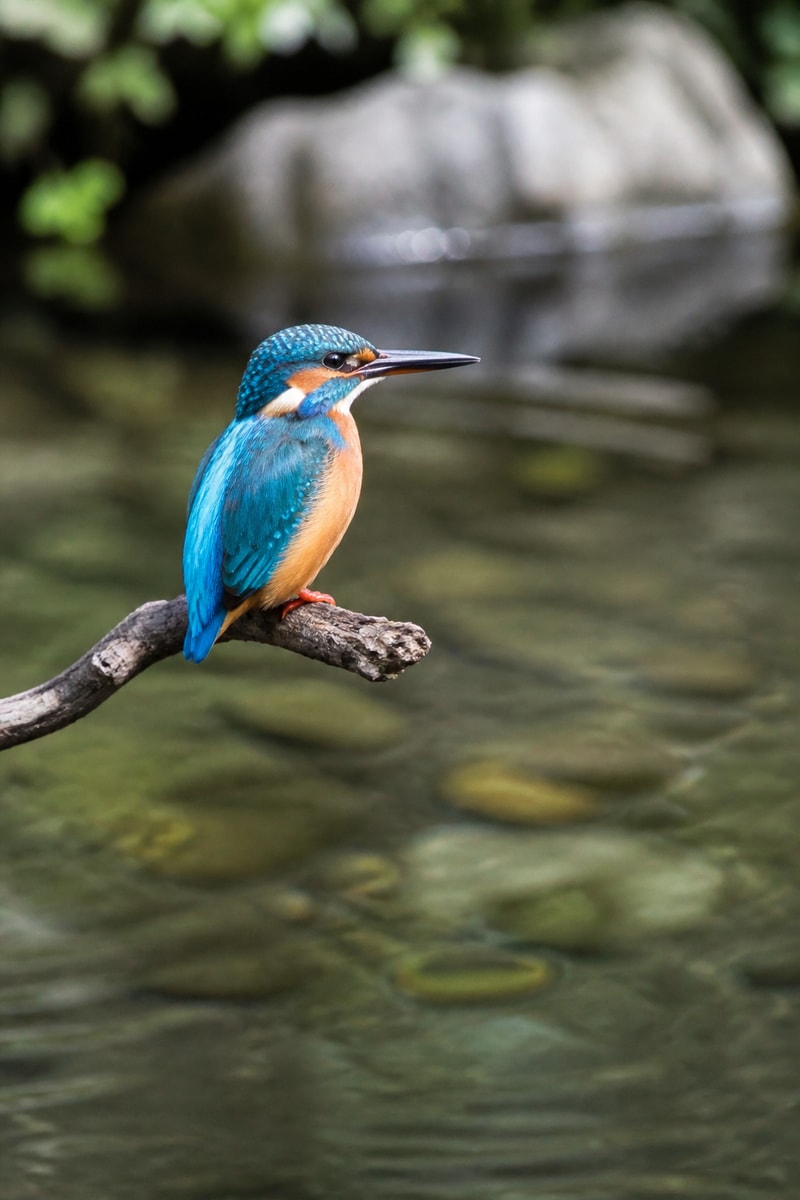
The common kingfisher is a jewel of British waterways: compact, vivid, and impossibly fast. Its orange underparts and metallic blue back catch the light like a fishing lure as it flies inches above the surface, then halts on an overhanging branch to watch for minnows below.
Kingfishers nest in burrows they excavate in soft riverbanks, raising two or three broods in a good year. Spotting one requires patience, a turquoise streak crossing a bridge pool, or a telltale whistle as it commutes upstream.
- Scientific nameAlcedo atthis
- Length16–17 cm
- Weight30–45 g
- Lifespan2–5 years in the wild
- DietSmall fish are the main prey
- ConservationLeast Concern
- RegionRivers & Streams
Habitat
- Rivers
- Streams
- Lakes
- Canals
Clear, slow-moving rivers, canals, and lake margins with overhanging vegetation and steep muddy banks for nesting. Kingfishers need clean water with enough small fish and aquatic insects to support a territory.
Countries found
Field notes
Field scale for the Kingfisher: length around 16-17 cm; weight 30-45 g. Typical lifespan: 2-5 years in the wild.
When you are scanning habitat, prioritise rivers, streams, lakes, and canals. Those settings are where a clean look and a usable photo are most likely.
Quick ID anchor: Jewel-like blue-green upperparts, warm orange underparts, and a long dagger-like bill on a compact body. White neck patches and a short tail complete the classic riverside silhouette. Confirm with behaviour and habitat before you log the discovery.
Diet
Small fish are the main prey, taken by plunge-diving from a perch; also aquatic insects, tadpoles, and crustaceans. Prey is usually beaten on a branch before swallowing.
Behaviour
Solitary and fiercely territorial along linear waterways. Hunts by sitting motionless, then diving bill-first; flight is rapid and low over the water with a sharp whistle.
How to identify
Jewel-like blue-green upperparts, warm orange underparts, and a long dagger-like bill on a compact body. White neck patches and a short tail complete the classic riverside silhouette.
Interesting facts
- 01
Kingfishers dive at up to 40 km/h and must hit the water beak-first to avoid breaking bones.
- 02
Their nest burrows can extend a metre into a riverbank.
- 03
Each bird must eat its body weight in fish daily in winter.
Conservation status
Kingfishers are Least Concern in the UK but sensitive to river pollution and bank disturbance. Populations fluctuate with harsh winters and ice-covered water.
Sources: IUCN Red List
Keep exploring
Free on iOS
Catch the Kingfisher
Spot one in the wild, then scan it in Catch'Um to log your common discovery.