
Field guide · common
Hippopotamus
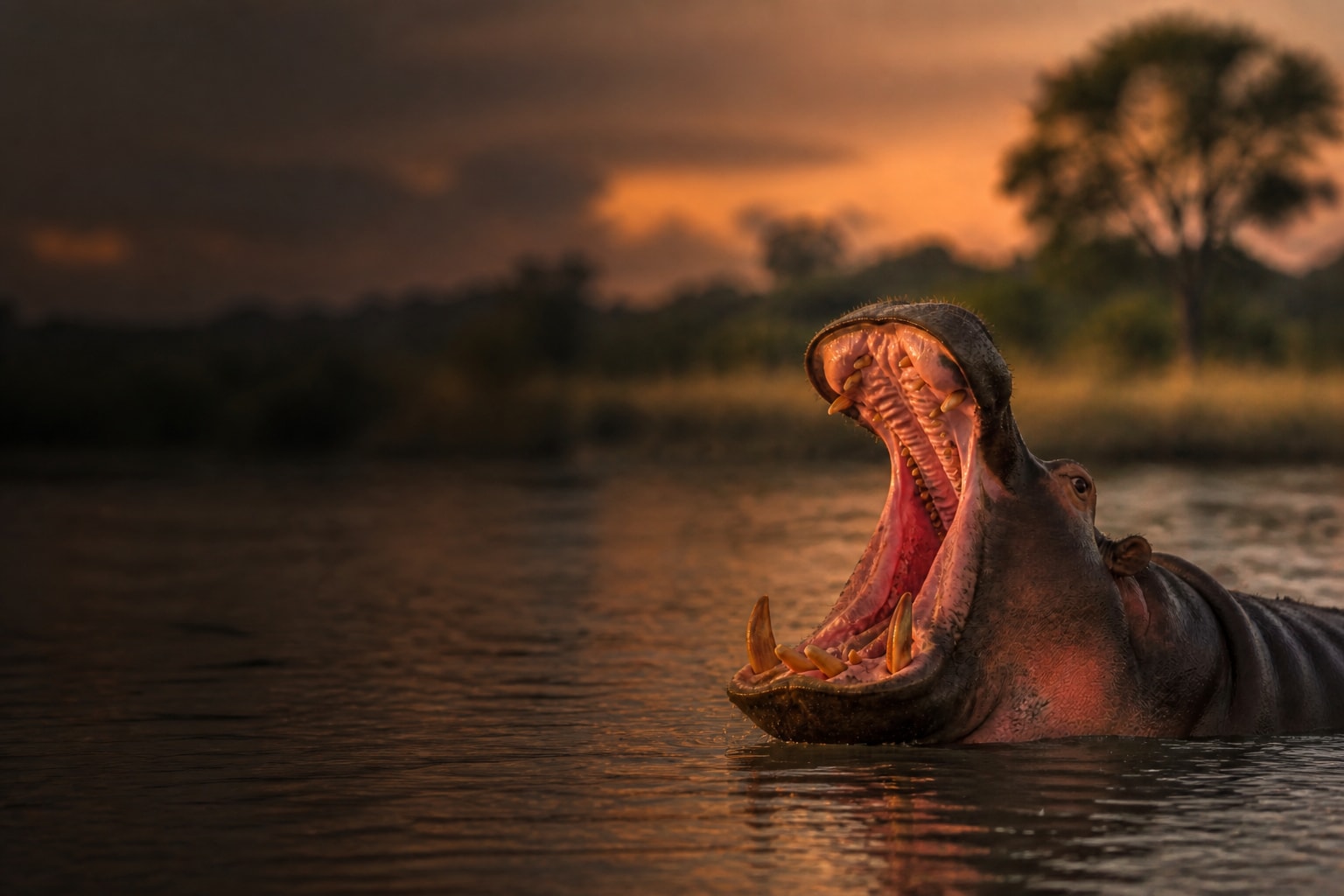
The river horse, a two-tonne wall of muscle that spends its days submerged and its nights grazing on land.
Vulnerable
Hippopotamus amphibius
Overview
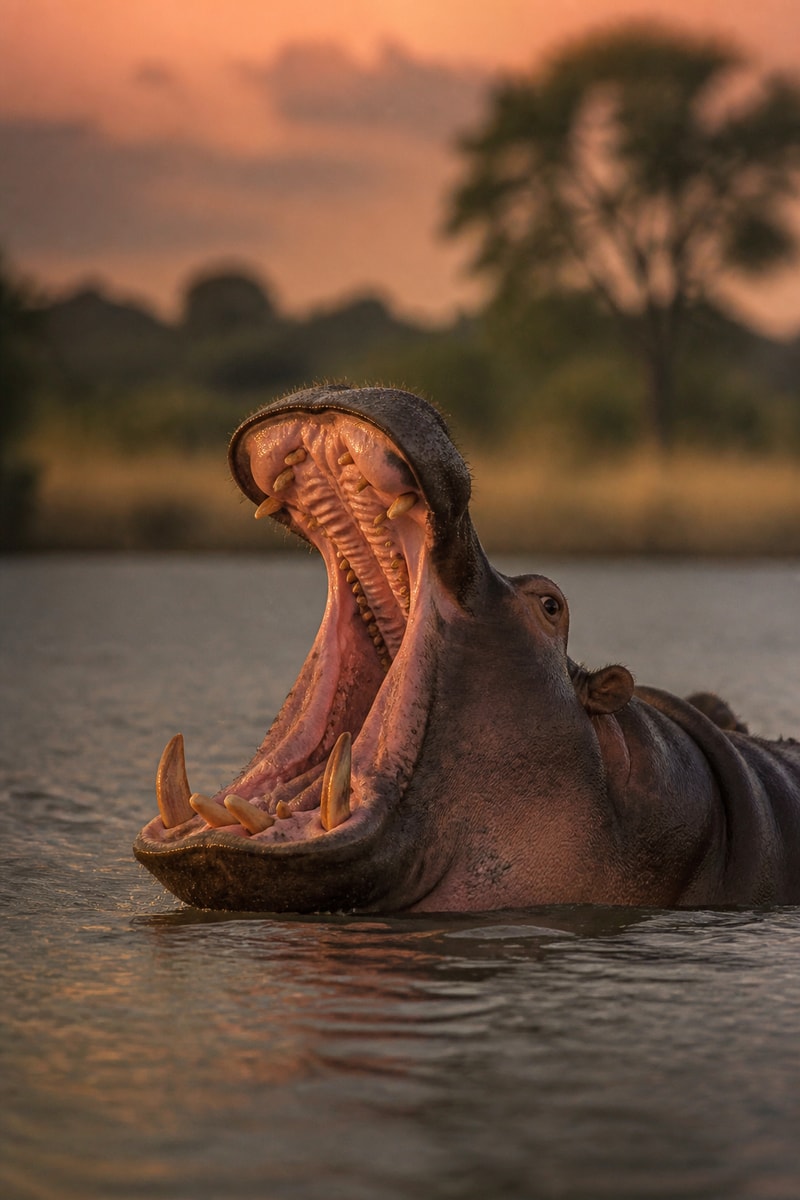
The hippopotamus is Africa's most dangerous large mammal despite its placid appearance. Bulls weigh up to 1,500 kilograms and defend river territories with massive jaws that can snap a canoe in half. By day they lounge in water to stay cool; by night they walk kilometres to graze on grass.
Hippos secrete a red oily substance from their skin, once thought to be blood sweat, that acts as sunscreen and antibiotic. Their grunts, bellows, and explosive exhalations echo across African rivers at dusk.
- Scientific nameHippopotamus amphibius
- Length3–5 m
- Height~1.5 m at shoulder
- Weight1,300–3,200 kg
- LifespanAround 40–50 years in the wild
- DietNocturnal grazers that…
- ConservationVulnerable
- RegionRivers & Lakes
Habitat
- River
- Lake
- Wetland
Rivers, lakes, and wetlands across sub-Saharan Africa hold hippos. They need deep water for daytime submersion and nearby grassland for nocturnal feeding, and are found from the Okavango Delta to the Mara River and Zambia's Luangwa Valley.
Countries found
Field notes
Field scale for the Hippopotamus: length around 3-5 m; height ~1.5 m at shoulder; weight 1,300-3,200 kg. Typical lifespan: Around 40-50 years in the wild.
When you are scanning habitat, prioritise river, lake, and wetland. Those settings are where a clean look and a usable photo are most likely.
Quick ID anchor: Barrel-shaped body, short legs, huge head with broad muzzle, and nearly hairless grey-brown skin. Eyes, ears, and nostrils sit high so the animal can surface while mostly submerged. Confirm with behaviour and habitat before you log the discovery.
Where to see one
Kenya
In Kenya, start at Masai Mara National Reserve (Southwest Kenya). Open savanna where lion prides patrol the grassland and the Great Migration crosses the Mara River from July to October.
More context on this destination lives on the Kenya expedition page.
Botswana
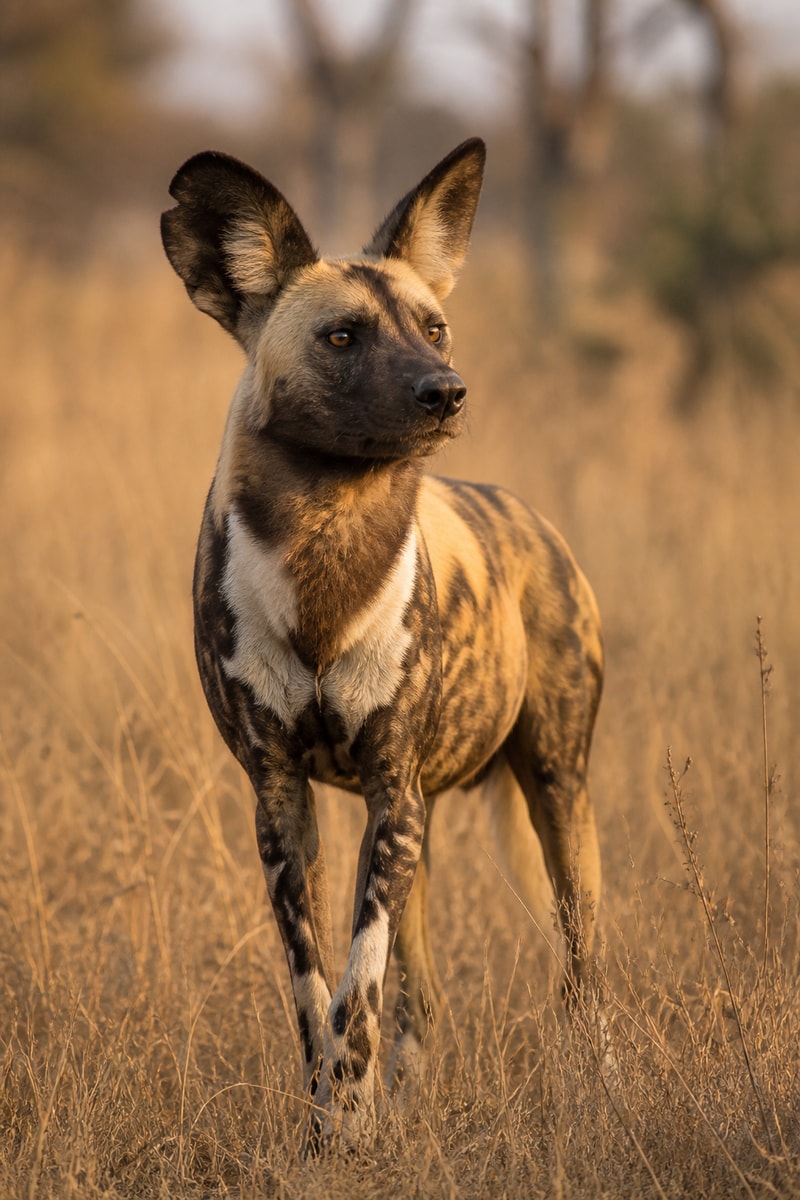
In Botswana, start at Okavango Delta (Northern Botswana). A river that never reaches the sea. Mokoro trips through papyrus channels with elephants, hippos, and painted dogs.
More context on this destination lives on the Botswana expedition page.
Diet
Nocturnal grazers that leave the water to eat short grasses, typically 40 kg or more per night. Rarely eat aquatic plants despite spending days submerged.
Behaviour
Amphibious and highly territorial in water; bulls defend river stretches. Rest and socialise in pods by day, walk inland at night to graze, and can be aggressively defensive.
How to identify
Barrel-shaped body, short legs, huge head with broad muzzle, and nearly hairless grey-brown skin. Eyes, ears, and nostrils sit high so the animal can surface while mostly submerged.
Interesting facts
- 01
Hippos secrete a red oily fluid that acts as sunblock and antibiotic.
- 02
They can hold their breath underwater for up to five minutes.
- 03
Hippos kill more people in Africa than any other large mammal.
Conservation status
Hippos are Vulnerable, with populations declining from habitat loss, drought, and illegal hunting for ivory canine teeth. Protected rivers in Kenya and Botswana remain strongholds.
Sources: IUCN Red List
Keep exploring
Where it lives
Free on iOS
Catch the Hippopotamus
Spot one in the wild, then scan it in Catch'Um to log your common discovery.