
Field guide · common
Herring Gull
The seaside scavenger, bold, loud, and clever enough to drop shellfish onto rocks to crack them open.
Least Concern
Larus argentatus
Overview
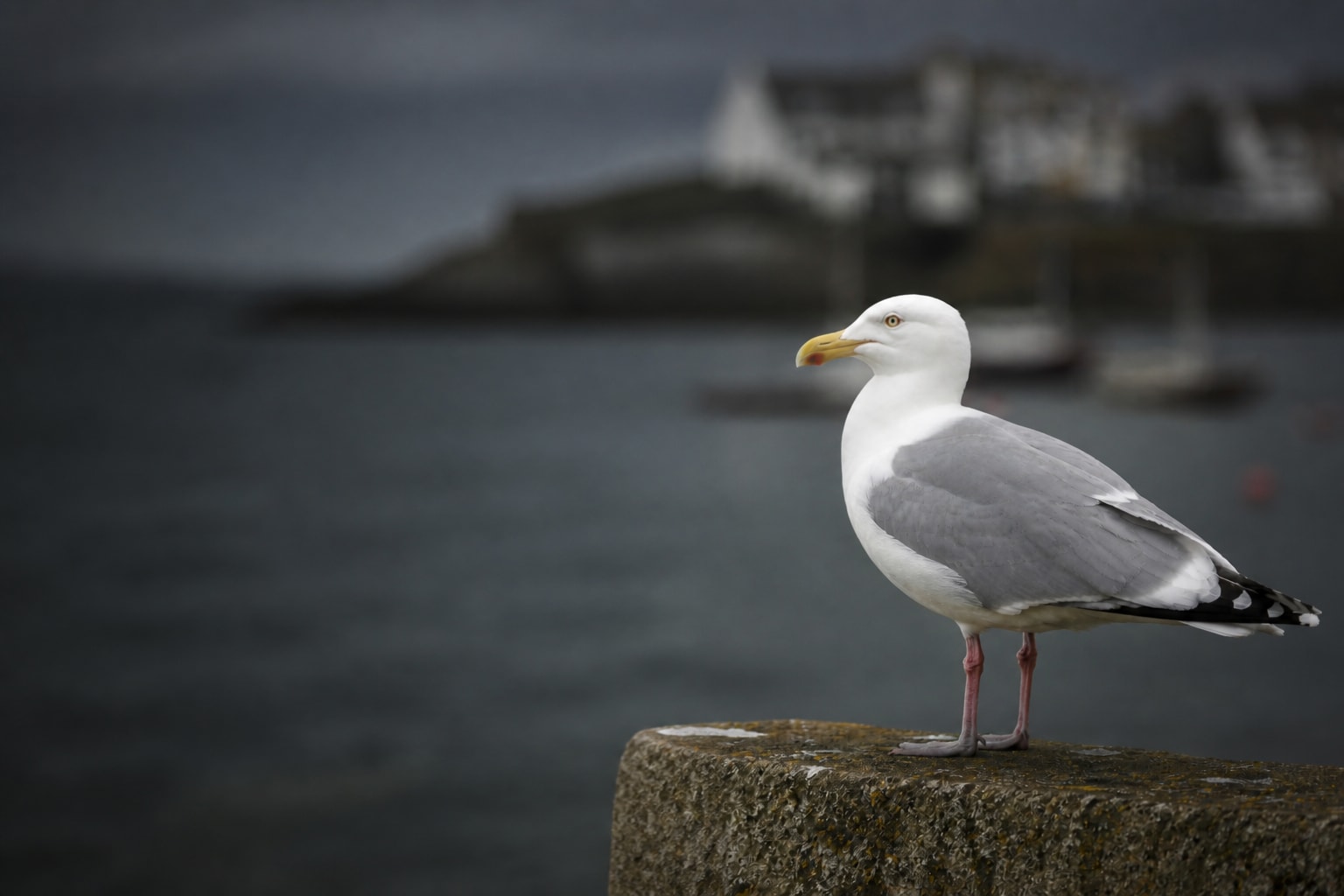
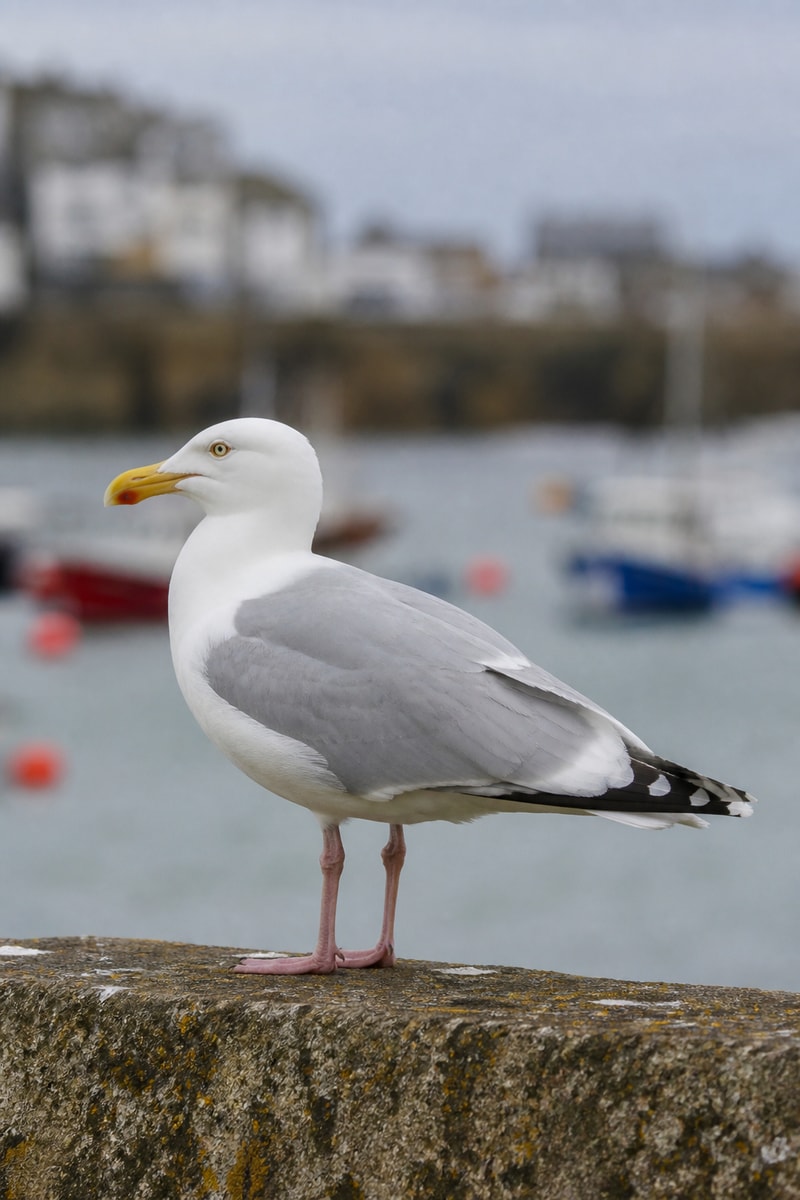
The herring gull is the bird that defines the British seaside, mewing calls over harbours, chip-stealing boldness on promenades, and silver-grey wings over cliff colonies in summer. Larger and paler than the common gull, adults carry pink legs and a red spot on the bill that chicks peck to trigger regurgitation.
Love them or brace yourself at picnic tables, herring gulls are resourceful survivors. They drop shellfish onto rocks from the air to crack them open, a learned behaviour passed between individuals, and have thrived in coastal towns as fishing fleets declined.
- Scientific nameLarus argentatus
- Length55–67 cm
- HeightWingspan 1.3–1.6 m
- Weight0.7–1.5 kg
- Lifespan10–15 years in the wild typical; some reach 30 years
- DietOpportunistic: fish
- ConservationLeast Concern
- RegionCoast & Harbours
Habitat
- Coasts
- Harbours
- Cliffs
- Urban rooftops
Herring gulls breed on cliffs, rooftops, and islands around the UK coast and increasingly nest on urban buildings inland. They forage on beaches, harbours, fields, and landfill sites, anywhere food is available, and form noisy colonies from March through summer.
Countries found
Field notes
Field scale for the Herring Gull: length around 55-67 cm; height Wingspan 1.3-1.6 m; weight 0.7-1.5 kg. Typical lifespan: 10-15 years in the wild typical; some reach 30 years.
When you are scanning habitat, prioritise coasts, harbours, cliffs, and urban rooftops. Those settings are where a clean look and a usable photo are most likely.
Quick ID anchor: Large gull with a pale grey back, white underparts, pink legs, and a yellow bill with a red spot. Adults have white-spotted black wingtips; immatures are mottled brown for several years. Confirm with behaviour and habitat before you log the discovery.
Diet
Opportunistic: fish, crabs, molluscs, carrion, and discarded human food. Inland birds raid tips and fields; coastal birds drop shellfish onto rocks to smash them.
Behaviour
Colonial nesters on cliffs, rooftops, and islands. Loud laughing calls and aggressive food-snatching are familiar at seaside towns; juveniles take years to reach adult plumage.
How to identify
Large gull with a pale grey back, white underparts, pink legs, and a yellow bill with a red spot. Adults have white-spotted black wingtips; immatures are mottled brown for several years.
Interesting facts
- 01
Herring gulls drop shellfish onto rocks from the air to crack them open.
- 02
They can live over 30 years, long-lived for a bird.
- 03
The red spot on an adult's bill is a target for chicks to peck, triggering food regurgitation.
- 04
UK herring gull numbers have fallen sharply on traditional cliff colonies, but urban nesting has increased.
- 05
They are highly intelligent, gulls in towns learn to snatch food when humans look away.
- 06
Their mewing call sounds like a cat, the origin of the name 'seagull' confusion with common gulls.
Conservation status
Herring gulls are Least Concern globally but red-listed in the UK due to steep declines in breeding numbers since the 1980s, linked to reduced fishing discards and food shortages at sea. Urban colonies partially offset coastal losses.
Sources: IUCN Red List
Keep exploring
Free on iOS
Catch the Herring Gull
Spot one in the wild, then scan it in Catch'Um to log your common discovery.