
Field guide · common
Grey Heron
The patient spear-fisher, a grey sentinel that stands motionless for minutes, then strikes like lightning.
Least Concern
Ardea cinerea
Overview
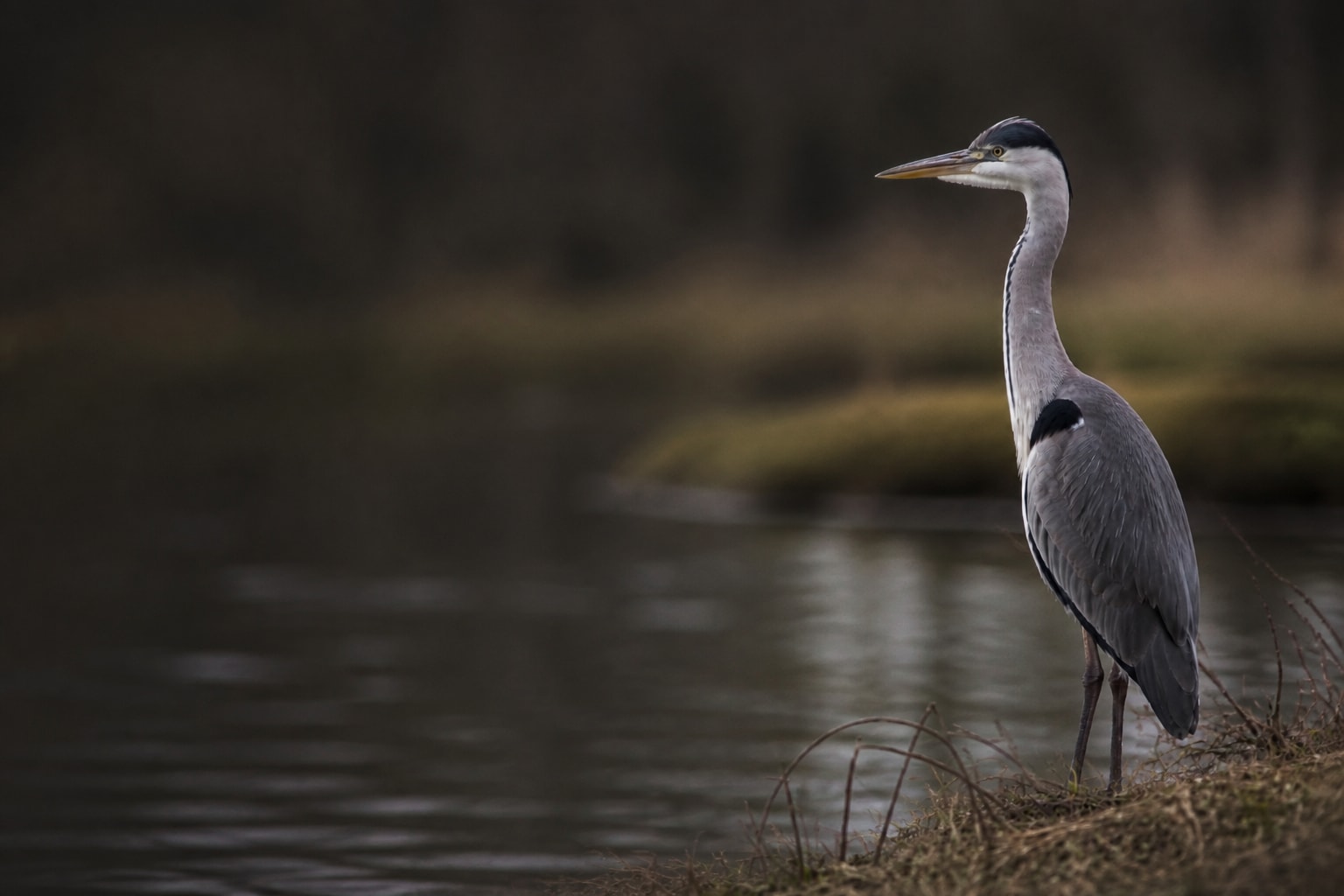
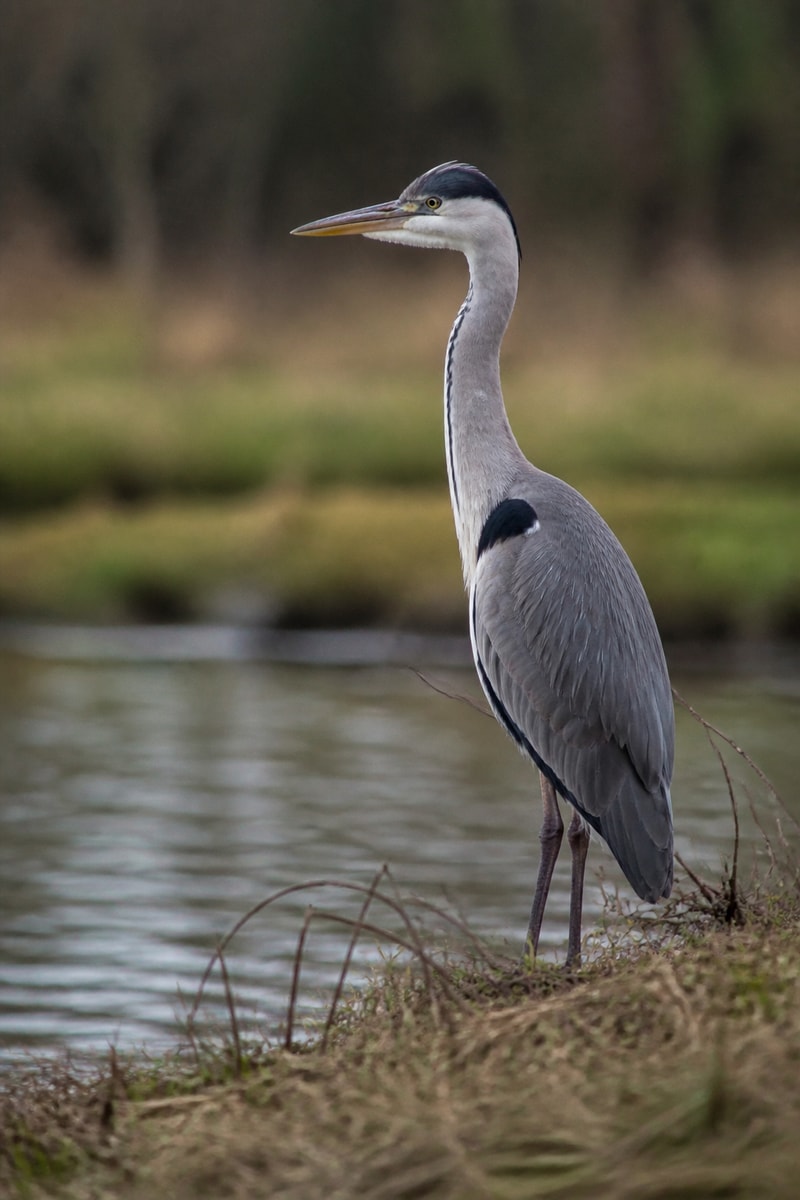
The grey heron is Britain's largest common heron, tall, slow, and statuesque at the edge of any pond, river, or park lake. It looks almost prehistoric: slate-grey plumage, a dagger bill, and a habit of standing utterly still until the moment it lunges at a fish.
Herons are familiar enough to be a reliable common, but never boring. Watch one for five minutes and you'll understand why: the stillness, the sudden strike, the awkward flap away if disturbed. They're on every canal and every village pond.
- Scientific nameArdea cinerea
- Length90–100 cm
- HeightWingspan 1.5–1.75 m
- Weight1–2 kg
- Lifespan5–10 years in the wild typical; some reach 20+ years
- DietFish are the main prey
- ConservationLeast Concern
- RegionRivers & Wetlands
Habitat
- Rivers
- Lakes
- Estuaries
- Wetlands
Grey herons are found throughout the United Kingdom on rivers, lakes, ponds, estuaries, and park water. They nest in colonies called heronries, often in tall trees, and hunt alone at the water's edge in shallow water or on grassy banks.
Countries found
Field notes
Field scale for the Grey Heron: length around 90-100 cm; height Wingspan 1.5-1.75 m; weight 1-2 kg. Typical lifespan: 5-10 years in the wild typical; some reach 20+ years.
When you are scanning habitat, prioritise rivers, lakes, estuaries, and wetlands. Those settings are where a clean look and a usable photo are most likely.
Quick ID anchor: Tall grey wading bird with a long yellow bill, black stripe through the eye extending to a slender crest, and long legs. In flight the neck is pulled into an S-shape, unlike a crane's outstretched neck. Confirm with behaviour and habitat before you log the discovery.
Diet
Fish are the main prey, stabbed with the spear-like bill in shallow water. Also take amphibians, small mammals, insects, and occasionally young birds.
Behaviour
Patient stand-and-wait hunters along water edges, often motionless for long periods. Nest colonially in heronries high in trees; slow, deep wingbeats with the neck retracted in flight.
How to identify
Tall grey wading bird with a long yellow bill, black stripe through the eye extending to a slender crest, and long legs. In flight the neck is pulled into an S-shape—unlike a crane's outstretched neck.
Interesting facts
- 01
Grey herons stand motionless for minutes before striking fish with lightning speed.
- 02
They can swallow fish whole. Herons have been seen taking prey larger than their head.
- 03
Heronries can hold dozens of nests in the same group of trees for decades.
- 04
Juvenile herons are duller grey and lack the adult's black crest and white head.
- 05
They will hunt far from water. Herons regularly take voles and amphibians in meadows.
- 06
Their harsh 'fraarnk' call is often heard before the bird is seen.
Conservation status
Grey herons are Least Concern and widespread across Europe. UK populations are stable and have benefited from cleaner rivers and park lakes, a dependable common for collectors nationwide.
Sources: IUCN Red List
Keep exploring
Free on iOS
Catch the Grey Heron
Spot one in the wild, then scan it in Catch'Um to log your common discovery.