
Field guide · rare
Great Crested Newt
Dark newt with a jagged breeding crest — Britain’s most strictly protected amphibian.
Least Concern
Triturus cristatus
Overview
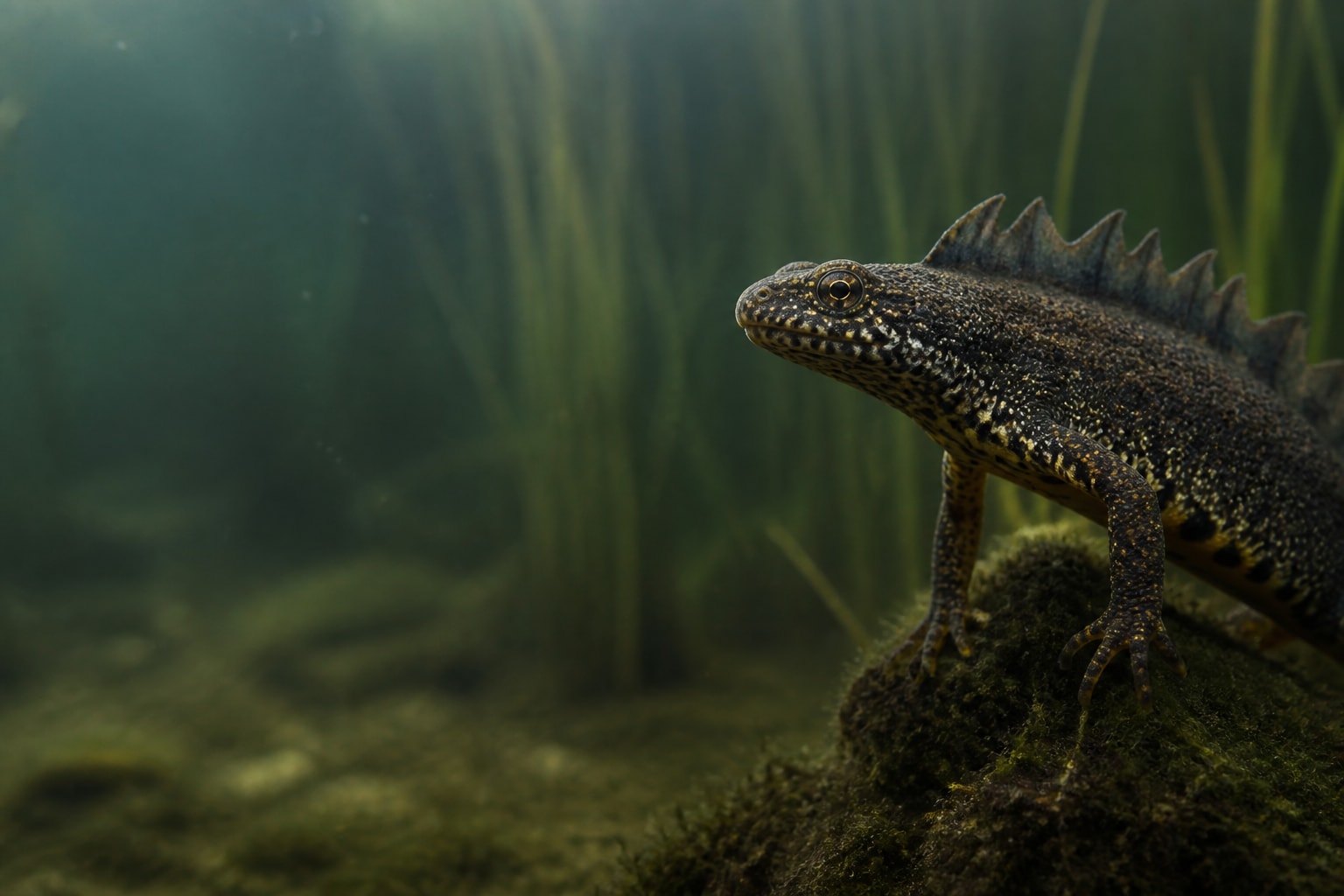
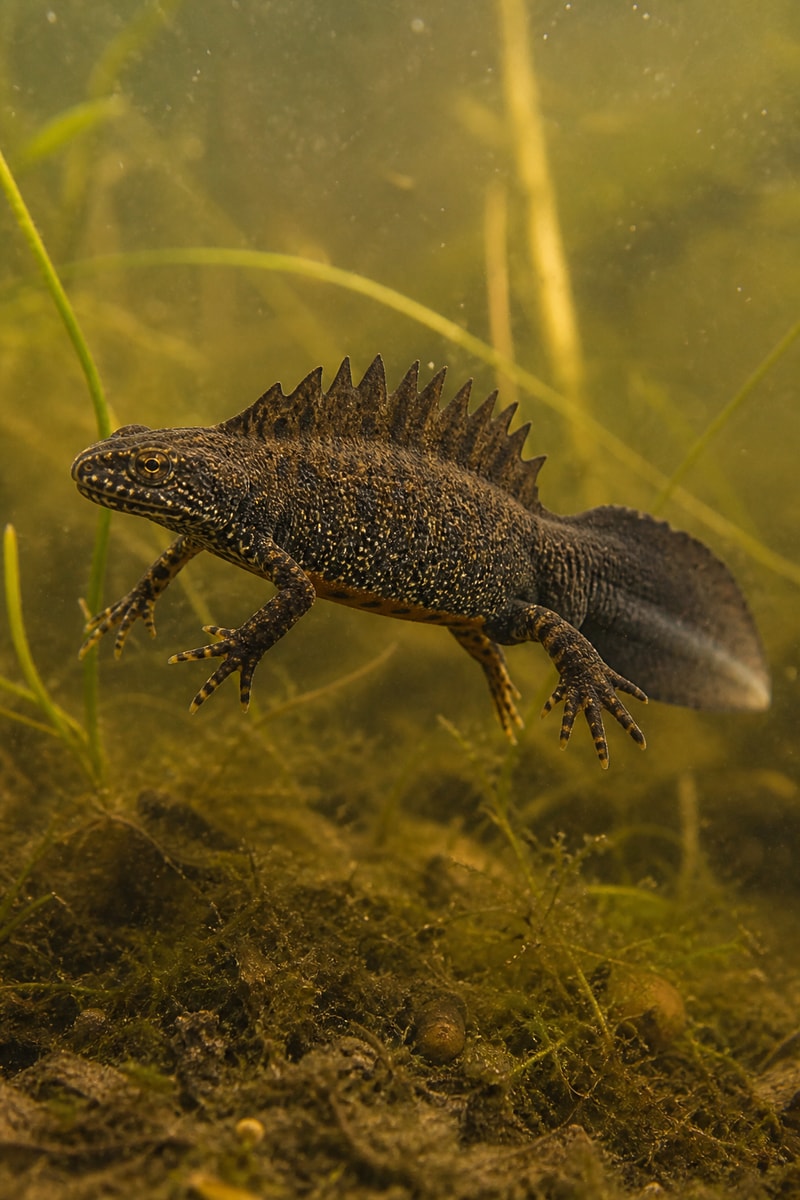
Great crested newts are Britain’s largest newts, famous for the tall jagged crest males grow in the breeding season. They need fish-free ponds with plenty of weed, spending much of the year on land in damp cover.
For UK collectors, this newt is a rare protected prize — crested males in spring ponds, orange-spotted belly, and a flagship of British pond conservation.
- Scientific nameTriturus cristatus
- Length13–18 cm
- WeightAbout 8–15 g
- LifespanAround 6–15 years in the wild
- DietAquatic invertebrates
- ConservationLeast Concern
- RegionBritish Breeding Ponds
Where to see them
Habitat
- Fish-free pond
- Pondweed shallows
- Damp woodland
- Hedgerow base
Breeding ponds with aquatic plants across lowland Britain, plus surrounding woodland, hedgerows, and rough grassland for terrestrial shelter.
Field notes
Field scale for the Great Crested Newt: length around 13-18 cm; weight About 8-15 g. Typical lifespan: Around 6-15 years in the wild.
When you are scanning habitat, prioritise fish-free pond, pondweed shallows, damp woodland, and hedgerow base. Those settings are where a clean look and a usable photo are most likely.
Quick ID anchor: Dark warty newt; breeding male has a high jagged dorsal crest and silver tail stripe. Confirm with behaviour and habitat before you log the discovery.
Diet
Aquatic invertebrates, tadpoles, and small crustaceans in ponds; worms and insects on land.
Ambush and stalk prey among pondweed and leaf litter.
Behaviour
Males display with crest raised and tail fanning during spring courtship.
Females wrap single eggs in live pondweed leaves.
How to identify
Dark warty newt; breeding male has a high jagged dorsal crest and silver tail stripe.
Bright orange belly with black blotches unique to each individual.
Interesting facts
- 01
Britain’s largest newt — adults often 14–16 cm long.
- 02
Males grow a tall jagged crest along the back in spring.
- 03
Belly is bright orange with irregular black blotches.
- 04
Strictly protected under UK and European law.
- 05
Need ponds without predatory fish for successful breeding.
- 06
Spend most of the year on land under logs and stones.
Conservation status
Great crested newts are Least Concern globally but are a priority species in the UK with strong legal protection. Pond loss, fish stocking, and development pressure remain the main threats.
Sources: IUCN Red List
Keep exploring
Free on iOS
Catch the Great Crested Newt
Spot one in the wild, then scan it in Catch'Um to log your rare discovery.