
Field guide · common
Giraffe
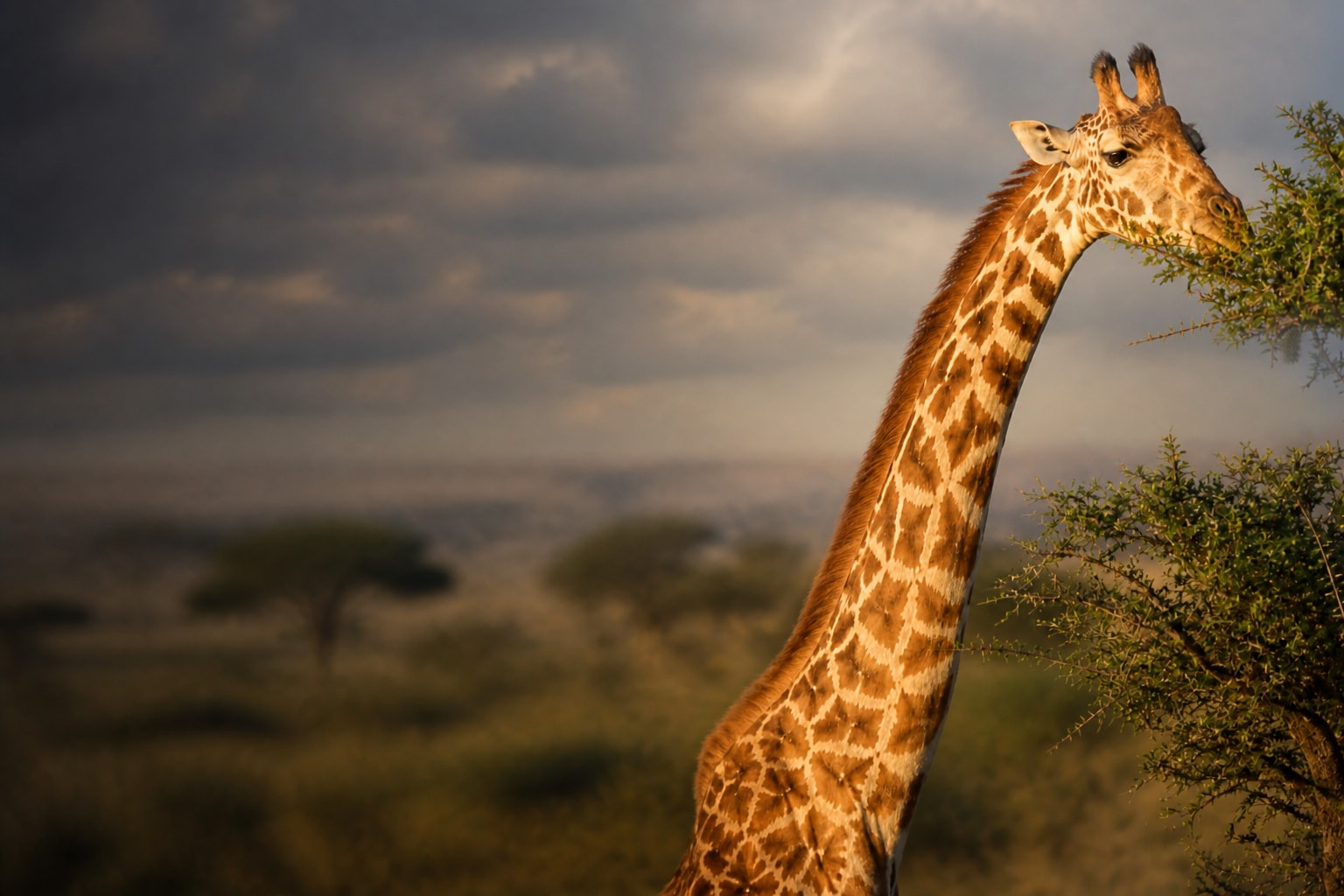
The sky-walker, Earth's tallest animal, browsing acacia tops with a prehensile tongue and a view no other herbivore can match.
Vulnerable
Giraffa camelopardalis
Overview
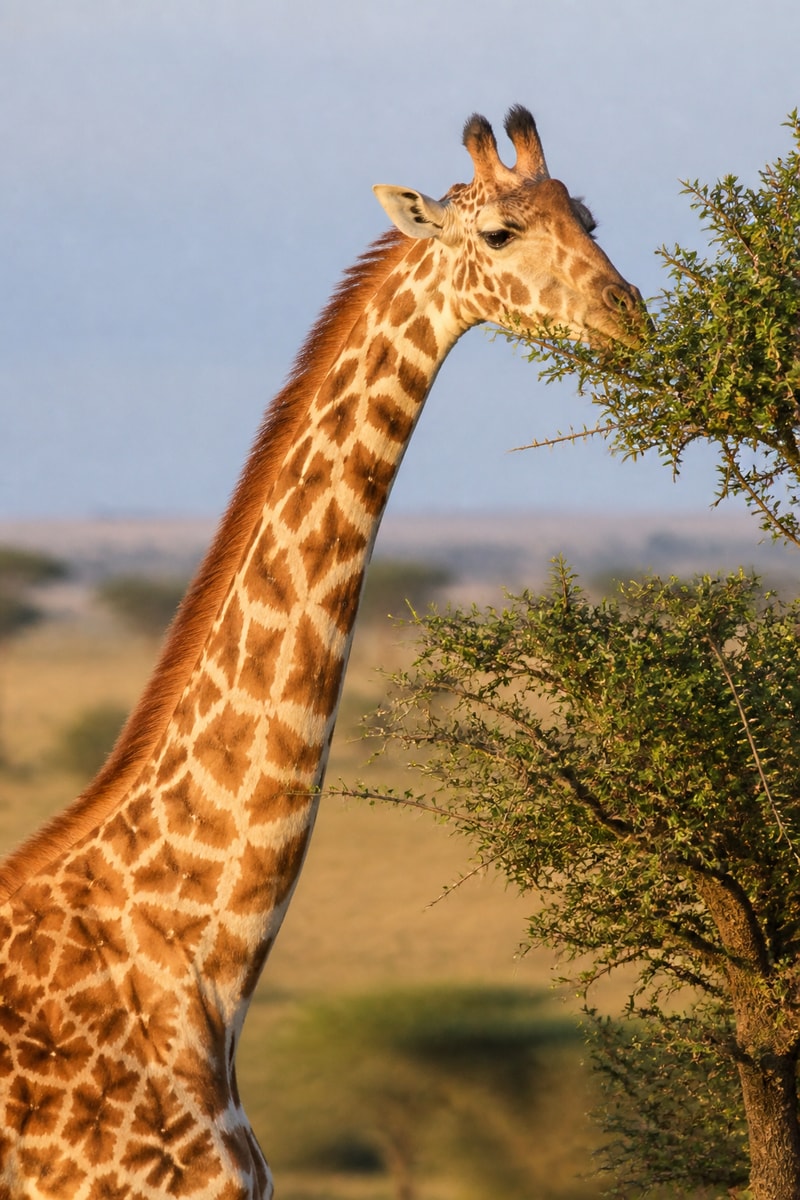
The giraffe is an icon of the African savanna: long-legged, long-necked, and patterned in patches that vary by subspecies, reticulated nets in Kenya, jagged oak-leaf shapes elsewhere. Bulls can reach nearly six metres tall and settle disputes with slow-motion neck swings called 'necking'.
Despite the length of their necks, giraffes have the same seven vertebrae as humans, each one simply much longer. Their 45-centimetre tongues are dark purple to prevent sunburn while reaching thorny acacia leaves other animals cannot touch.
- Scientific nameGiraffa camelopardalis
- Height4.3–5.7 m
- Weight700–1,400 kg
- LifespanAround 20–25 years in the wild
- DietHerbivore
- ConservationVulnerable
- RegionSavanna
Habitat
- Savanna
- Acacia woodland
- Open grassland
Open savanna and acacia woodland in Kenya, Tanzania, and across sub-Saharan Africa suit giraffes. They need scattered trees for browsing and open ground to detect predators, and are often seen at waterholes splaying their front legs to drink.
Countries found
Field notes
Field scale for the Giraffe: height 4.3-5.7 m; weight 700-1,400 kg. Typical lifespan: Around 20-25 years in the wild.
When you are scanning habitat, prioritise savanna, acacia woodland, and open grassland. Those settings are where a clean look and a usable photo are most likely.
Quick ID anchor: World's tallest land mammal: extremely long neck and legs, ossicone horns, and a patchwork coat. Spot shape and colour vary by subspecies, from reticulated nets to jagged leaf-like blotches. Confirm with behaviour and habitat before you log the discovery.
Where to see one
Kenya
In Kenya, strong options include Masai Mara National Reserve and Amboseli National Park. Open savanna where lion prides patrol the grassland and the Great Migration crosses the Mara River from July to October.
Open the Kenya spotting guide for every park note tied to the giraffe.
Diet
Browse high foliage, especially acacia and other woody plants, using a long prehensile tongue. Prefer leaves, shoots, and flowers other herbivores cannot reach.
Behaviour
Loose, fluid herds; bulls may 'neck' in slow sparring contests. Spend much of the day browsing, rest standing or briefly lying down, and splay front legs to drink.
How to identify
World's tallest land mammal: extremely long neck and legs, ossicone horns, and a patchwork coat. Spot shape and colour vary by subspecies, from reticulated nets to jagged leaf-like blotches.
Interesting facts
- 01
Giraffes have the same number of neck vertebrae as humans, just seven, each much longer.
- 02
No two giraffes have identical spot patterns.
- 03
They sleep for only minutes at a time, often standing up.
Conservation status
Giraffes are Vulnerable, with populations falling by nearly 30% since the 1980s due to habitat loss, poaching, and civil unrest. Kenya's protected areas remain important strongholds.
Sources: IUCN Red List
Keep exploring
Where it lives
Free on iOS
Catch the Giraffe
Spot one in the wild, then scan it in Catch'Um to log your common discovery.