
Field guide · common
European Goldfinch
Red face, gold wing-bar, liquid twitter — thistle specialist of UK gardens.
Least Concern
Carduelis carduelis
Overview
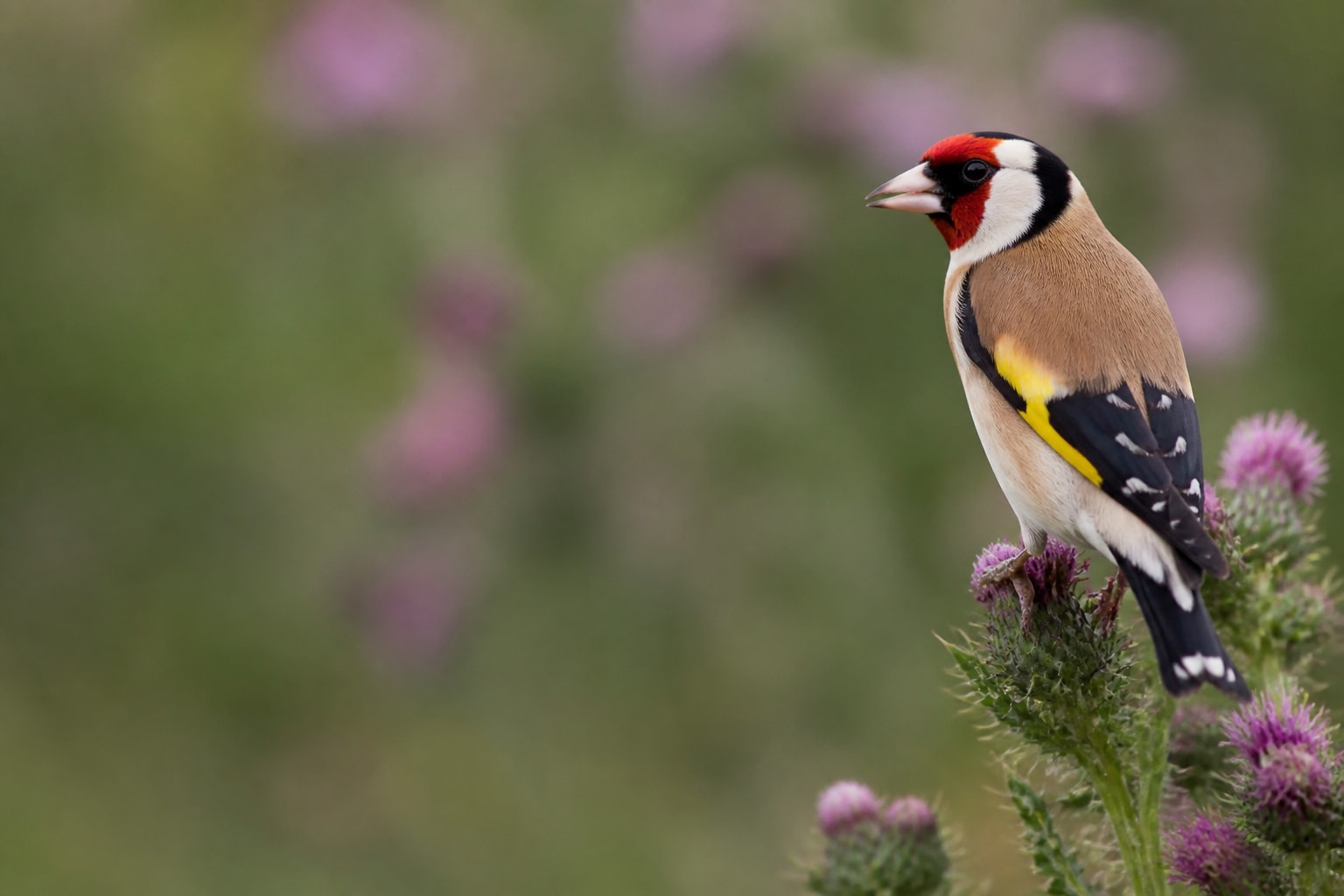
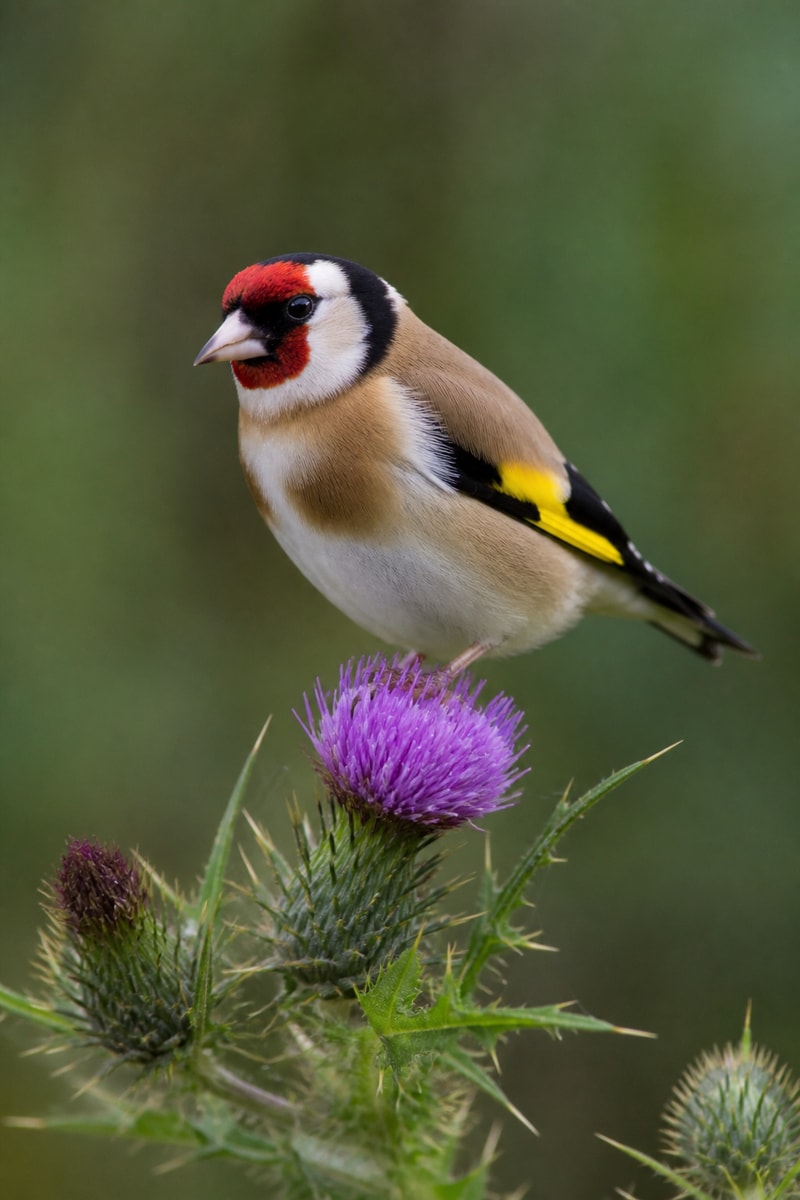
European goldfinches are bright little finches that flock to thistles, teasels, and niger seed feeders. A crimson face mask and bold yellow wing flashes make them among Britain’s most colourful garden birds.
For UK collectors, the goldfinch is a common feeder favourite — twittering flocks, gold wing-bars, and easy garden ticks year-round.
- Scientific nameCarduelis carduelis
- Length12–13 cm
- Weight14–19 g
- LifespanAround 2–3 years average; up to 8+ recorded
- DietSeeds of thistles
- ConservationLeast Concern
- RegionBritish Gardens & Weedy Fields
Where to see them
Habitat
- Garden feeder
- Weedy field edge
- Parkland
- Farmland scrub
Gardens, parks, farmland edges, and weedy waste ground across the UK, especially where seed-rich thistles and teasels stand.
Field notes
Field scale for the European Goldfinch: length around 12-13 cm; weight 14-19 g. Typical lifespan: Around 2-3 years average; up to 8+ recorded.
When you are scanning habitat, prioritise garden feeder, weedy field edge, parkland, and farmland scrub. Those settings are where a clean look and a usable photo are most likely.
Quick ID anchor: Small finch with red face, black-and-white head, and broad yellow wing-bar. Confirm with behaviour and habitat before you log the discovery.
Diet
Seeds of thistles, teasels, birch, and alder, plus garden feeder seed.
Feed acrobatically on seed heads, often hanging upside down.
Behaviour
Form twittering flocks outside the breeding season.
Build neat cup nests high in outer tree branches.
How to identify
Small finch with red face, black-and-white head, and broad yellow wing-bar.
Buffy body and notched tail; bouncing undulating flight.
Interesting facts
- 01
Crimson face and yellow wing-bar are unmistakable.
- 02
Specialise on thistle and teasel seeds with fine bills.
- 03
Liquid twittering calls announce arriving flocks.
- 04
Frequent garden niger and sunflower heart feeders.
- 05
Breed in loose colonies in tall trees and hedges.
- 06
Numbers rose with garden feeding across Britain.
Conservation status
European goldfinches are Least Concern and have increased in many UK gardens thanks to feeders and scrub. Farmland seed scarcity still limits some rural flocks.
Sources: IUCN Red List
Keep exploring
Free on iOS
Catch the European Goldfinch
Spot one in the wild, then scan it in Catch'Um to log your common discovery.