
Field guide · common
Emperor Dragonfly
Britain’s sky-patrol giant — apple-green thorax and endless pond circuits.
Least Concern
Anax imperator
Overview
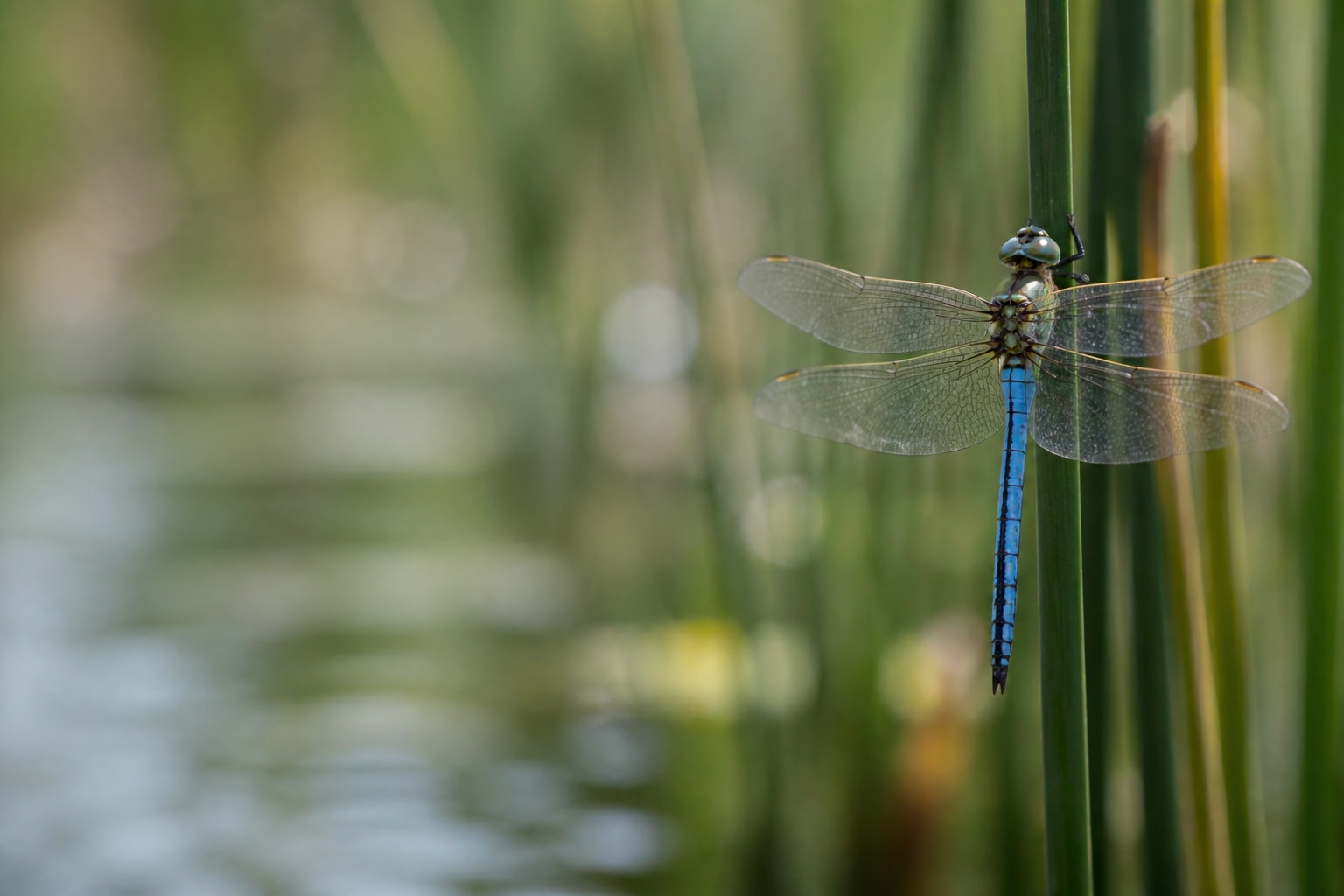
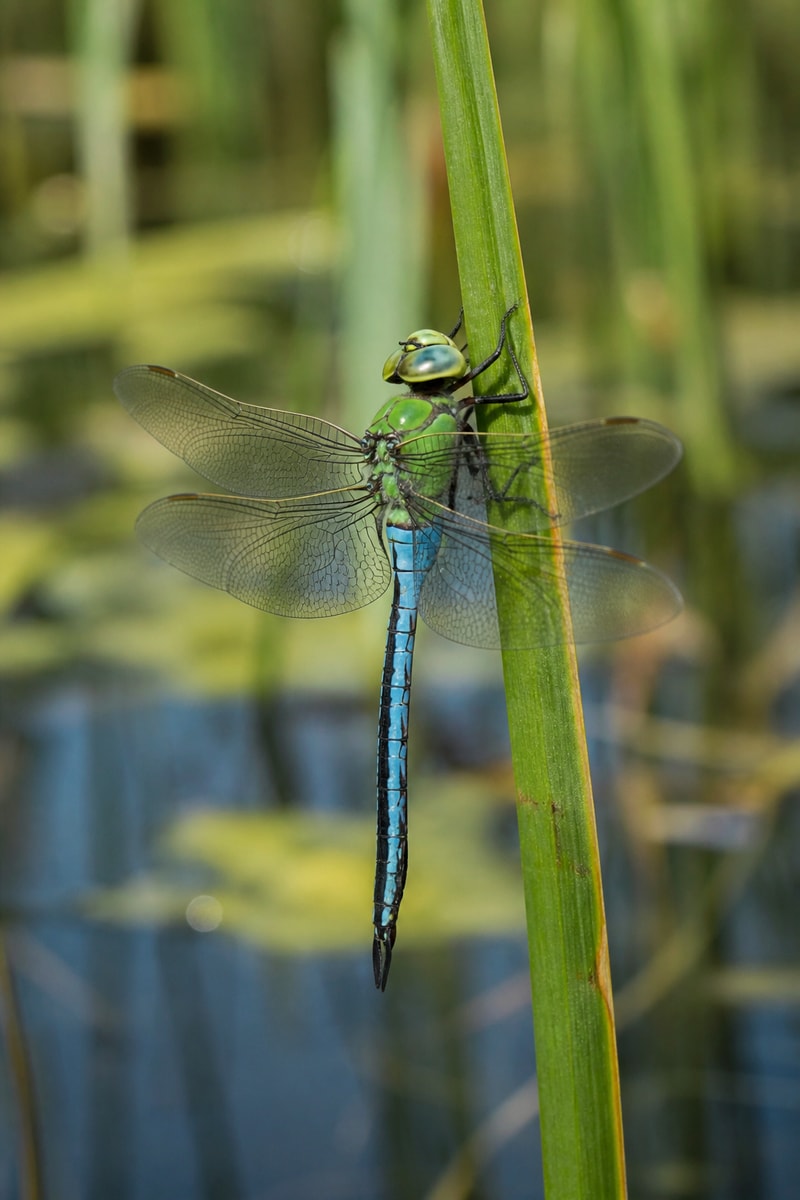
Emperor dragonflies are among Britain’s largest dragonflies, with males showing a sky-blue abdomen and apple-green thorax as they hawk relentlessly over ponds and lakes. They seize flying insects on the wing and rarely perch for long during peak summer.
For UK collectors, the emperor is a summer pond trophy — huge silhouette, continuous patrol, and one of the most impressive common odonates at a still-water site.
- Scientific nameAnax imperator
- Length7–8 cm; wingspan 10–11 cm
- LifespanAdults live a few weeks; larvae may take 1–2 years
- DietAdults hawk flying…
- ConservationLeast Concern
- RegionBritish Ponds & Lakes
Where to see them
Habitat
- Garden and farm pond
- Lake margin
- Canal
- Slow river backwater
Larger ponds, lakes, canals, and slow rivers across lowland Britain with open water for patrol flights and aquatic vegetation for larval life.
Field notes
Field scale for the Emperor Dragonfly: length around 7-8 cm; wingspan 10-11 cm. Typical lifespan: Adults live a few weeks; larvae may take 1-2 years.
When you are scanning habitat, prioritise garden and farm pond, lake margin, canal, and slow river backwater. Those settings are where a clean look and a usable photo are most likely.
Quick ID anchor: Very large dragonfly; male blue abdomen with a green thorax and forehead. Confirm with behaviour and habitat before you log the discovery.
Diet
Adults hawk flying insects including midges, flies, and butterflies.
Aquatic larvae ambush tadpoles, invertebrates, and small fish fry.
Behaviour
Males patrol long beats over open water and chase rivals.
Females oviposit alone into floating or emergent vegetation.
How to identify
Very large dragonfly; male blue abdomen with a green thorax and forehead.
Females are greener overall; strong, purposeful flight rarely perches.
Interesting facts
- 01
One of the UK’s largest dragonflies — wingspan often over 10 cm.
- 02
Males have a bright blue abdomen and green thorax.
- 03
Patrol territories in tireless horizontal circuits over water.
- 04
Catch flies, butterflies, and other insects in mid-air.
- 05
Larvae are fierce underwater predators among pondweed.
- 06
Peak flight season is typically June to August.
Conservation status
Emperor dragonflies are Least Concern and have expanded in parts of Britain with warming summers. Clean, vegetated still waters remain essential for breeding success.
Sources: IUCN Red List
Keep exploring
Free on iOS
Catch the Emperor Dragonfly
Spot one in the wild, then scan it in Catch'Um to log your common discovery.