
Field guide · common
Dunnock
The hedge-hopper, a quiet, streaky brown bird that shuffles through garden shrubs and sings a thin, reeling song from the shadows.
Least Concern
Prunella modularis
Overview
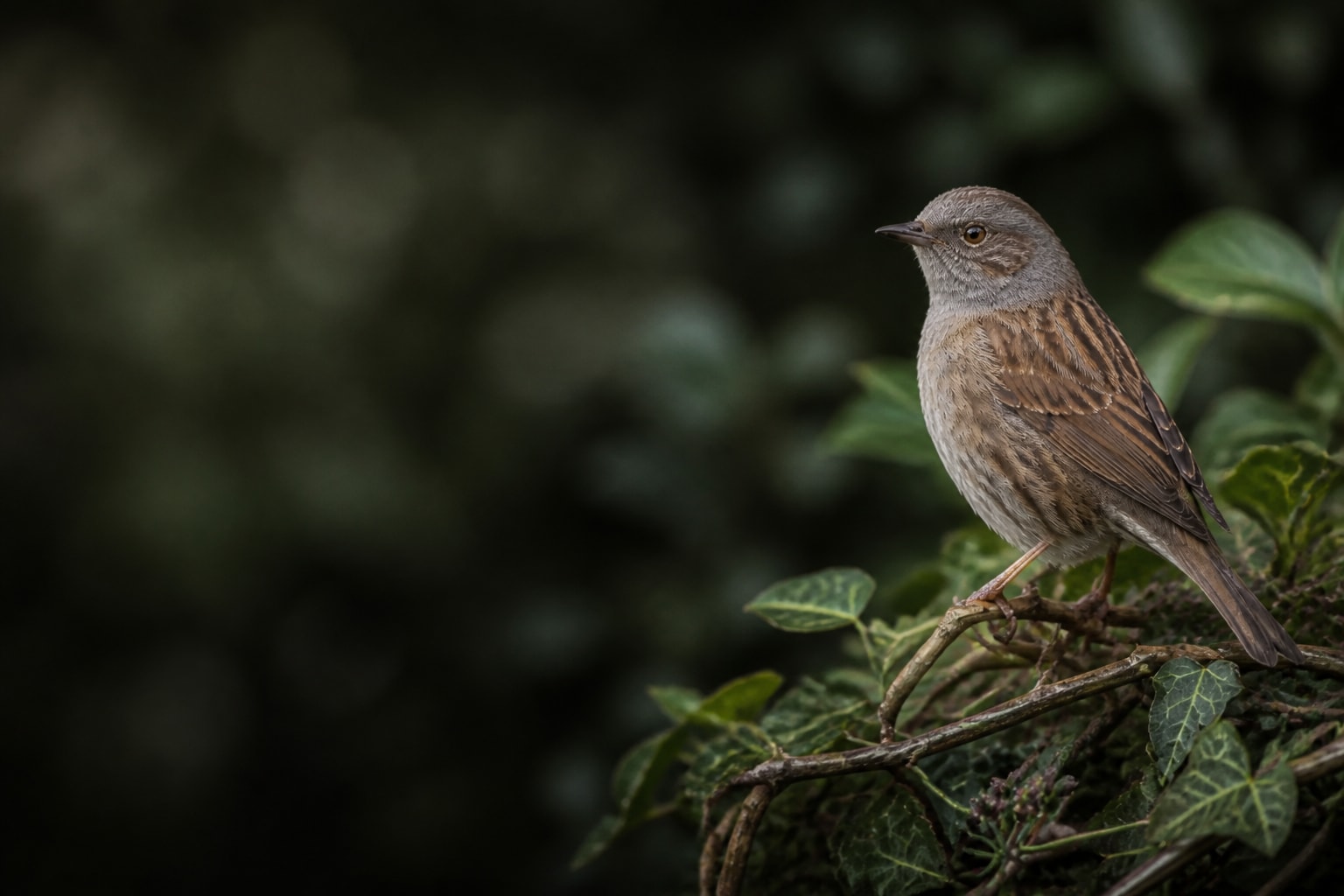
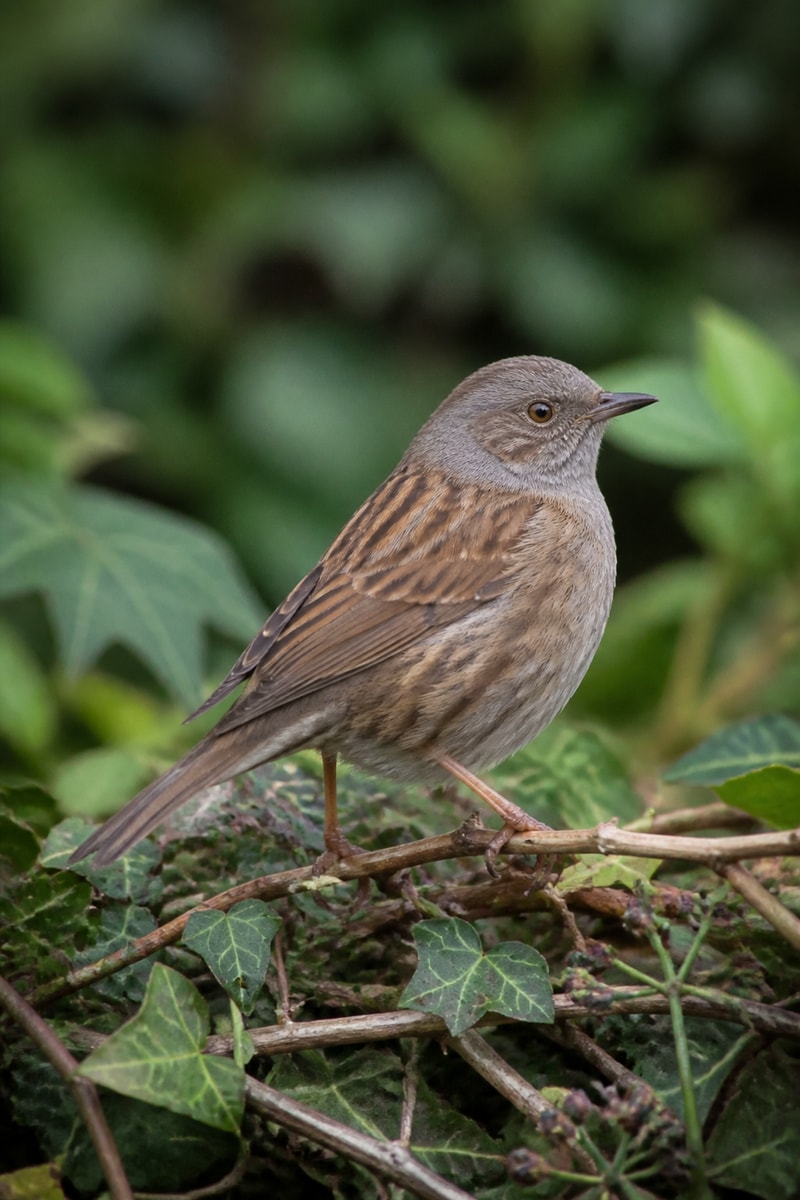
The dunnock is one of Britain's most overlooked garden birds: small, brown, and unobtrusive, often mistaken for a female house sparrow until you notice its fine streaked breast and jerky, creeping movements through low cover.
Despite its modest appearance, the dunnock has one of the most complicated social lives of any songbird, with flexible mating systems that can involve multiple males sharing a territory. Its song, a fast, metallic trill, is easy to miss unless you're listening for it.
- Scientific namePrunella modularis
- Length13–14 cm
- Weight19–24 g
- Lifespan2–3 years in the wild
- DietMostly small insects and…
- ConservationLeast Concern
- RegionHedges & Shrubs
Habitat
- Gardens
- Hedgerows
- Woodland scrub
- Parks
Hedgerows, garden shrubberies, woodland understorey, and park edges across the UK. Dunnocks prefer dense low cover with nearby open ground for foraging on insects and seeds.
Countries found
Field notes
Field scale for the Dunnock: length around 13-14 cm; weight 19-24 g. Typical lifespan: 2-3 years in the wild.
When you are scanning habitat, prioritise gardens, hedgerows, woodland scrub, and parks. Those settings are where a clean look and a usable photo are most likely.
Quick ID anchor: Grey head and breast contrasting with warm brown, streaked upperparts and a thin, pointed insectivore bill. Slimmer and greyer-headed than a sparrow; lacks bold wing bars. Confirm with behaviour and habitat before you log the discovery.
Where to see one
United Kingdom
In United Kingdom, start at Cotswolds Farmland (Gloucestershire & Oxfordshire). Hedgerows, pasture, and village edges, classic fox country where russet coats show clearly against green fields at last light.
More context on this destination lives on the United Kingdom expedition page.
Diet
Mostly small insects and spiders taken from the ground and low cover; seeds become more important in winter. Often forages quietly beneath hedges and shrubs.
Behaviour
A skulking undergrowth bird with a complex mating system that can include polyandry and polygyny. Moves with a nervous, mouse-like hop and flicks its wings while feeding.
How to identify
Grey head and breast contrasting with warm brown, streaked upperparts and a thin, pointed insectivore bill. Slimmer and greyer-headed than a sparrow; lacks bold wing bars.
Interesting facts
- 01
Dunnocks are shy hedge birds often mistaken for sparrows.
- 02
They have unusually flexible breeding arrangements for a small songbird.
- 03
Both sexes look similar, streaky brown with a grey head and fine bill.
Conservation status
Dunnocks are Least Concern and common across the UK. Garden hedges and shrub plantings provide excellent habitat in suburban areas.
Sources: IUCN Red List

Keep exploring
Free on iOS
Catch the Dunnock
Spot one in the wild, then scan it in Catch'Um to log your common discovery.