
Field guide · common
Common Warthog
Kneeling grazers with tusks and character — the comic, tough survivors of African plains.
Least Concern
Phacochoerus africanus
Overview
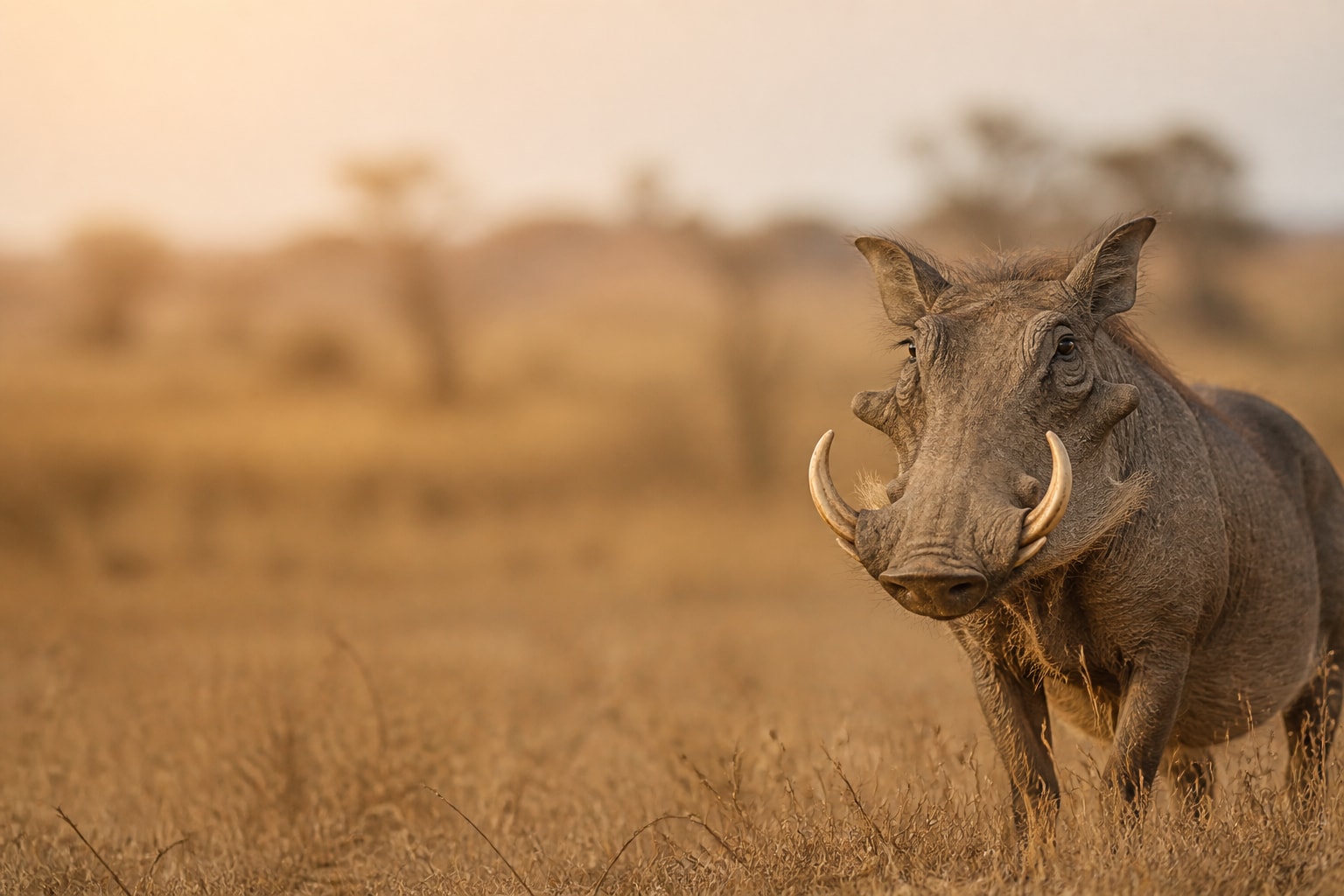
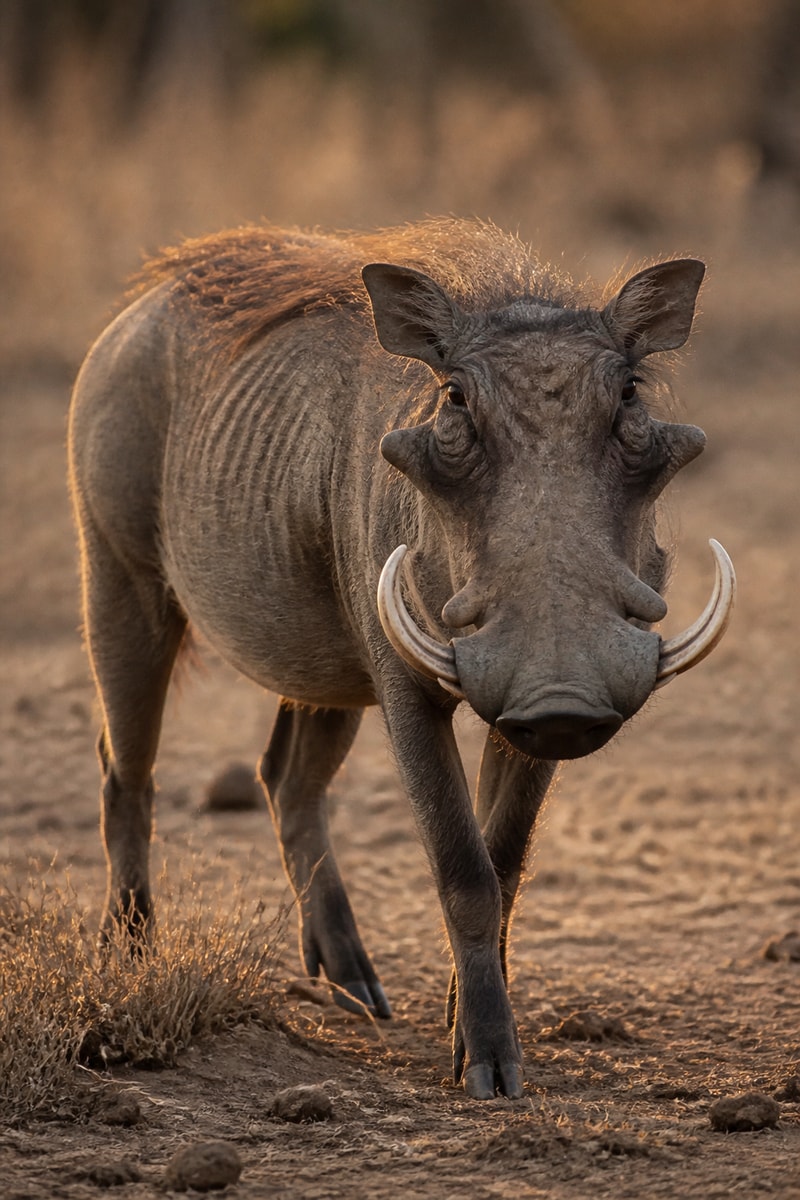
Common warthogs are iconic safari pigs: warty faces, curved tusks, and a habit of grazing on their knees. They bolt for burrows when danger appears, entering backwards so tusks face the threat.
A warthog family trotting through Kenyan grass with tails held high like antennae is classic, collectible Africa.
- Scientific namePhacochoerus africanus
- Length0.9–1.5 m
- Height65–85 cm at the shoulder
- Weight50–150 kg
- LifespanAround 12–18 years in the wild
- DietGrazers and rooters…
- ConservationLeast Concern
- RegionSavanna
Where to see them
Habitat
- Savanna
- Open woodland
- Grassland
Warthogs live in savanna, open woodland, and grassland across sub-Saharan Africa, using aardvark burrows for shelter and grazing short grass near water and wallows.
Field notes
Field scale for the Common Warthog: length around 0.9-1.5 m; height 65-85 cm at the shoulder; weight 50-150 kg. Typical lifespan: Around 12-18 years in the wild.
When you are scanning habitat, prioritise savanna, open woodland, and grassland. Those settings are where a clean look and a usable photo are most likely.
Quick ID anchor: Grey-brown sparsely haired pig with a mane, curved tusks, and facial warts. Confirm with behaviour and habitat before you log the discovery.
Where to see one
Kenya
In Kenya, start at Masai Mara National Reserve (Southwest Kenya). Open savanna where lion prides patrol the grassland and the Great Migration crosses the Mara River from July to October.
More context on this destination lives on the Kenya expedition page.
Diet
Grazers and rooters taking grass, roots, bulbs, and fruit; also scavenge opportunistically.
Kneel to crop short grass close to the ground.
Behaviour
Diurnal; family groups share burrows dug by aardvarks.
Alarm calls and fast dashes for holes when lions or wild dogs appear.
How to identify
Grey-brown sparsely haired pig with a mane, curved tusks, and facial warts.
Long tail held upright in flight; compact body on relatively long legs.
Interesting facts
- 01
Warthogs often kneel on calloused wrists to graze short grass.
- 02
They reverse into burrows so tusks face predators.
- 03
Both sexes have tusks; males' facial 'warts' are larger.
- 04
Tails stand upright when they run — a classic safari sight.
- 05
Piglets are called piglets; groups are sounders.
- 06
They wallow in mud to cool and protect their skin.
Conservation status
Common warthogs are Least Concern and remain widespread in protected savannas. Outside parks they can decline where hunting pressure is high or habitat is converted to intensive farms.
Sources: IUCN Red List

Keep exploring
Where it lives
Free on iOS
Catch the Common Warthog
Spot one in the wild, then scan it in Catch'Um to log your common discovery.