
Field guide · common
Common Frog
Britain's familiar pond hopper, a spring breeder whose spawn fills garden pools and whose croak signals winter is finally over.
Least Concern
Rana temporaria
Overview
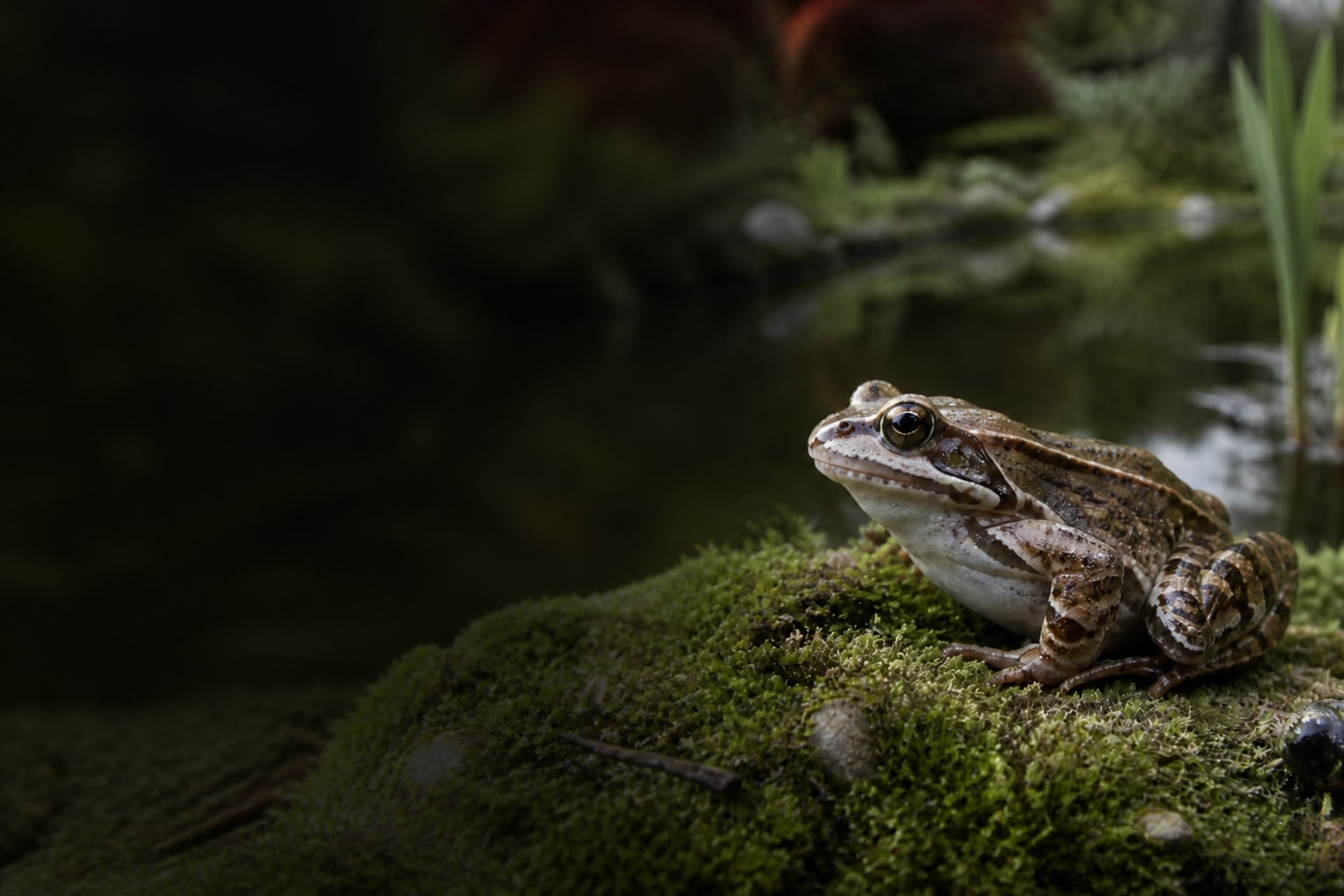
The common frog is Britain's most widespread amphibian, found in gardens, ponds, and woodland across the country. In spring, frogs migrate to breeding ponds, sometimes crossing roads in numbers, and lay clumps of spawn that swell into clouds of tadpoles by April.
Frogs are voracious predators of slugs and insects, making them welcome garden guests. They hibernate through winter in compost heaps, log piles, and pond mud, slowing their metabolism until warmth returns.
- Scientific nameRana temporaria
- Length6–9 cm
- Weight15–40 g
- LifespanAround 5–10 years in the wild
- DietAdults eat insects
- ConservationLeast Concern
- RegionPonds & Gardens
Habitat
- Garden pond
- Woodland pool
- Damp grassland
Garden ponds, farm ditches, woodland pools, and moorland lochans across the UK suit common frogs. They need freshwater for breeding but spend much of the year foraging on land in damp vegetation.
Countries found
Field notes
Field scale for the Common Frog: length around 6-9 cm; weight 15-40 g. Typical lifespan: Around 5-10 years in the wild.
When you are scanning habitat, prioritise garden pond, woodland pool, and damp grassland. Those settings are where a clean look and a usable photo are most likely.
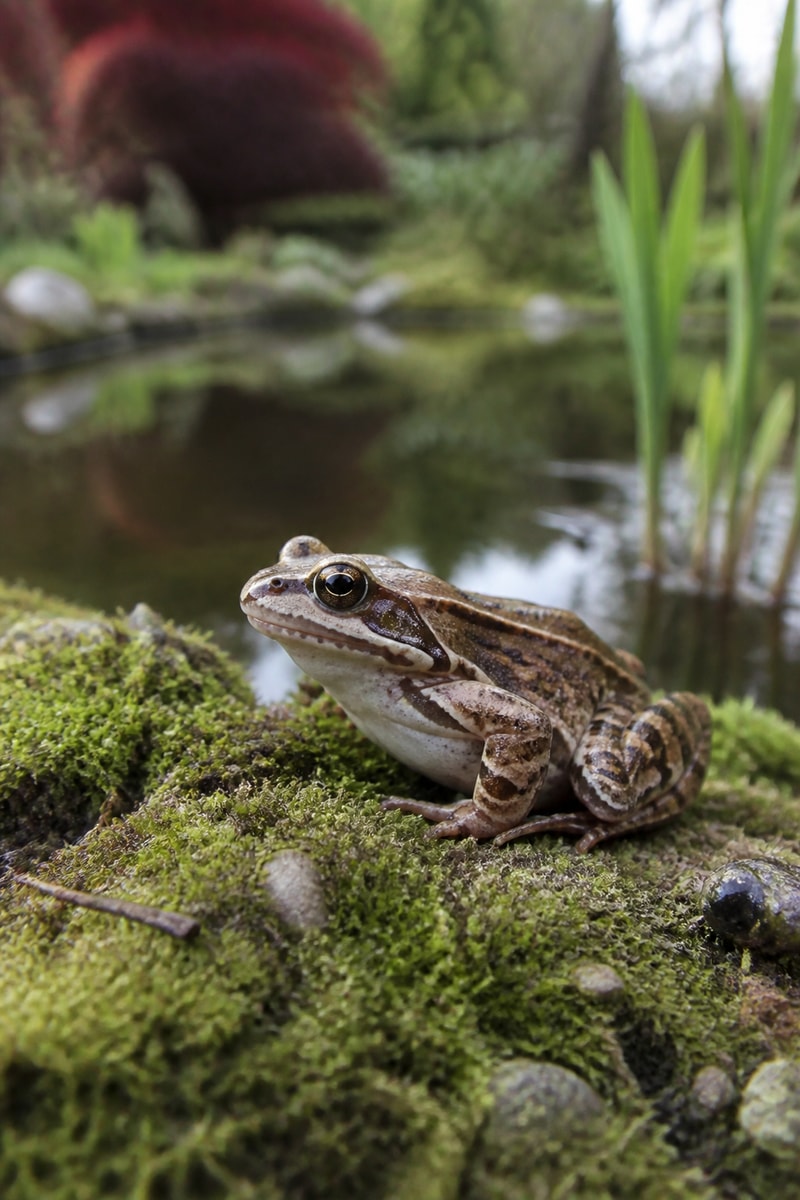
Quick ID anchor: Smooth-skinned frog usually brown, olive, or yellowish with a dark patch behind the eye and irregular dorsal spots. Lacks the large green discs of tree frogs; horizontal pupils. Confirm with behaviour and habitat before you log the discovery.
Diet
Adults eat insects, slugs, worms, and other small invertebrates caught on land or near water. Tadpoles graze algae and detritus before metamorphosis.
Behaviour
Breed in early spring in ponds and ditches, laying clumps of spawn. Hibernate in mud, compost, or damp refuges; spend much of the year foraging in damp vegetation away from water.
How to identify
Smooth-skinned frog usually brown, olive, or yellowish with a dark patch behind the eye and irregular dorsal spots. Lacks the large green discs of tree frogs; horizontal pupils.
Interesting facts
- 01
Common frogs hibernate underwater, breathing through their skin.
- 02
Tadpoles take about 12 weeks to metamorphose into froglets.
- 03
Frogs absorb water through their skin rather than drinking.
Conservation status
Common frogs are Least Concern in the UK but declining in some areas from pond loss, road mortality during spring migrations, and disease. Garden ponds are increasingly important habitat.
Sources: IUCN Red List
Keep exploring
Free on iOS
Catch the Common Frog
Spot one in the wild, then scan it in Catch'Um to log your common discovery.