
Field guide · common
Common Buzzard
Meowing call over the hedgerows — Britain’s most familiar soaring hawk.
Least Concern
Buteo buteo
Overview
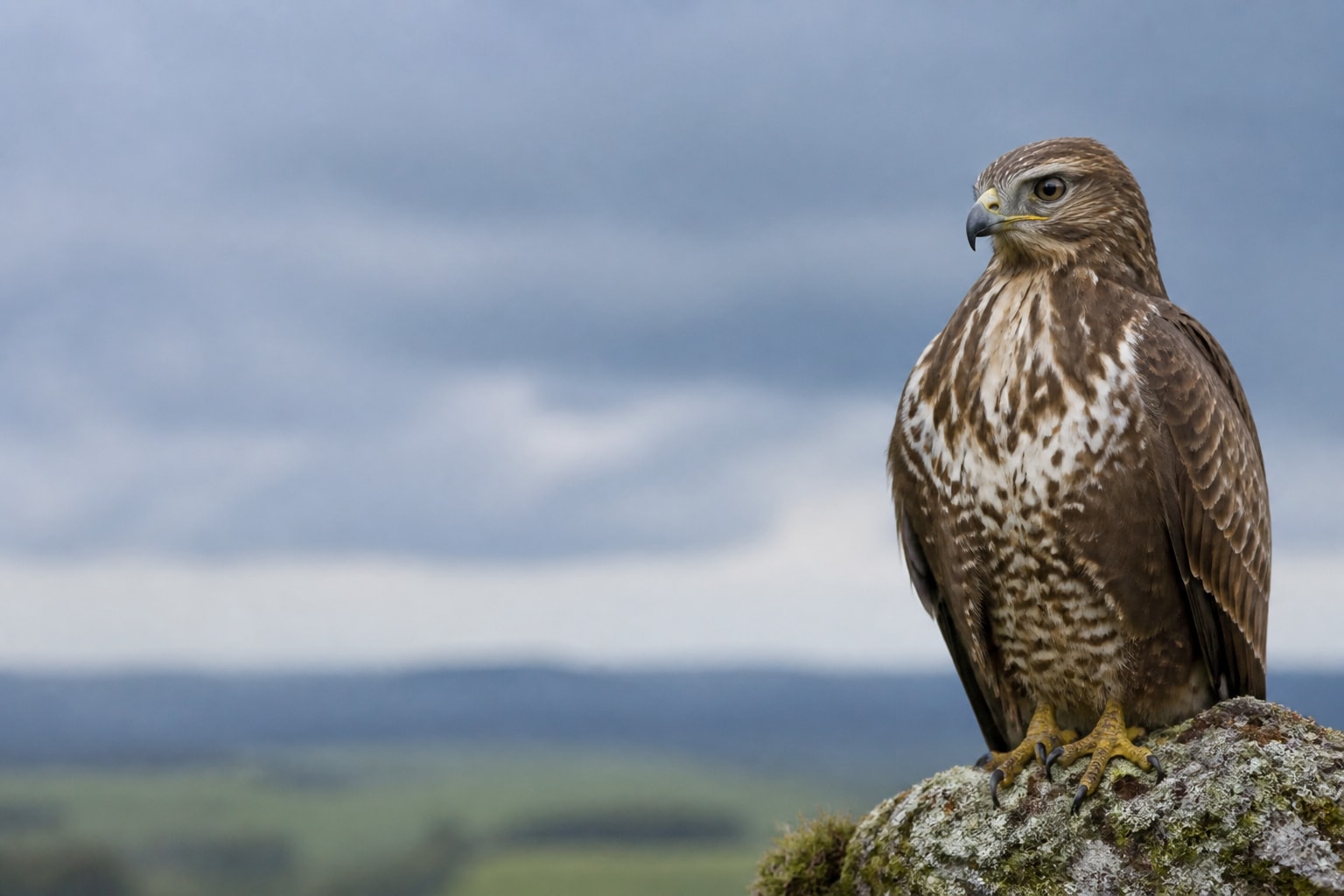
Common buzzards are medium-sized raptors that soar on broad wings above farmland, moors, and woodland edges. Their plaintive mewing calls and variable brown plumage make them the everyday large hawk of the UK countryside.
For UK collectors, the buzzard is a common skyline bird — roadside thermals, ‘pee-oo’ call, and a recovery success story after past persecution.
- Scientific nameButeo buteo
- Length48–58 cm
- Weight550–1,300 g
- LifespanAround 12–25 years in the wild
- DietRabbits
- ConservationLeast Concern
- RegionBritish Countryside Skies
Where to see them
Habitat
- Farmland edge
- Woodland fringe
- Moorland
- Coastal hill
Farmland with trees, woodland edges, moorland, and coastal hills across the UK, nesting in trees and hunting over open ground.
Field notes
Field scale for the Common Buzzard: length around 48-58 cm; weight 550-1,300 g. Typical lifespan: Around 12-25 years in the wild.
When you are scanning habitat, prioritise farmland edge, woodland fringe, moorland, and coastal hill. Those settings are where a clean look and a usable photo are most likely.
Quick ID anchor: Broad-winged hawk with a shortish rounded tail and variable brown mottling. Confirm with behaviour and habitat before you log the discovery.
Diet
Rabbits, small mammals, birds, earthworms, beetles, and carrion.
Hunt from soaring flight or roadside perches over open fields.
Behaviour
Soar in pairs or singles on warm thermals; display with rolling dives.
Build stick nests in trees; territories held through the breeding season.
How to identify
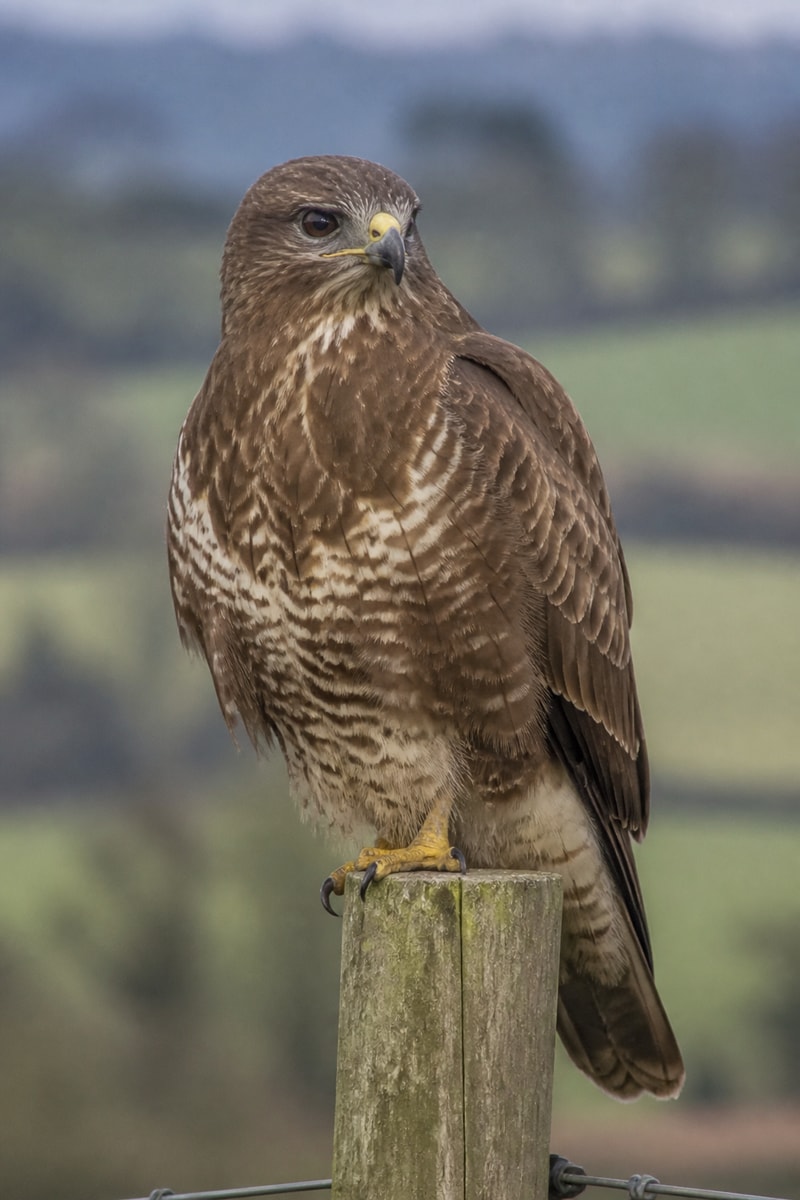
Broad-winged hawk with a shortish rounded tail and variable brown mottling.
Pale breast band common; call is a drawn-out mewing cry.
Interesting facts
- 01
Britain’s most widespread and numerous large raptor.
- 02
Distinctive mewing ‘pee-oo’ call while soaring.
- 03
Plumage varies from nearly white to dark brown.
- 04
Diet includes rabbits, voles, birds, worms, and carrion.
- 05
Often seen perched on fence posts beside roads.
- 06
Recovered strongly after 20th-century persecution lows.
Conservation status
Common buzzards are Least Concern and have recolonised much of Britain. Illegal persecution and secondary poisoning still occur but populations are generally healthy.
Sources: IUCN Red List

Keep exploring
Free on iOS
Catch the Common Buzzard
Spot one in the wild, then scan it in Catch'Um to log your common discovery.