
Field guide · common
Carrion Crow
Britain's clever black sentinel, a problem-solver that remembers your face for years.
Least Concern
Corvus corone
Overview
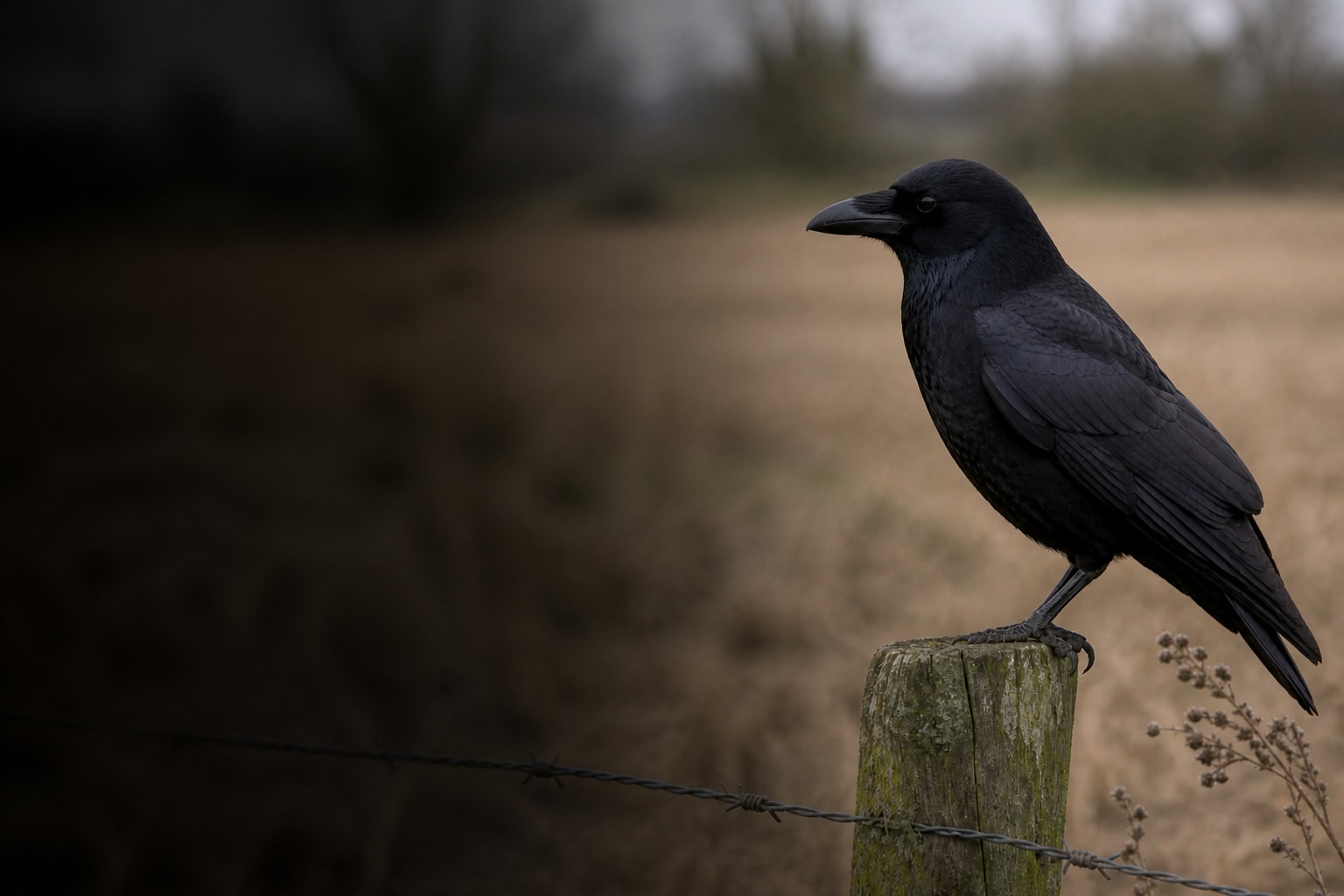
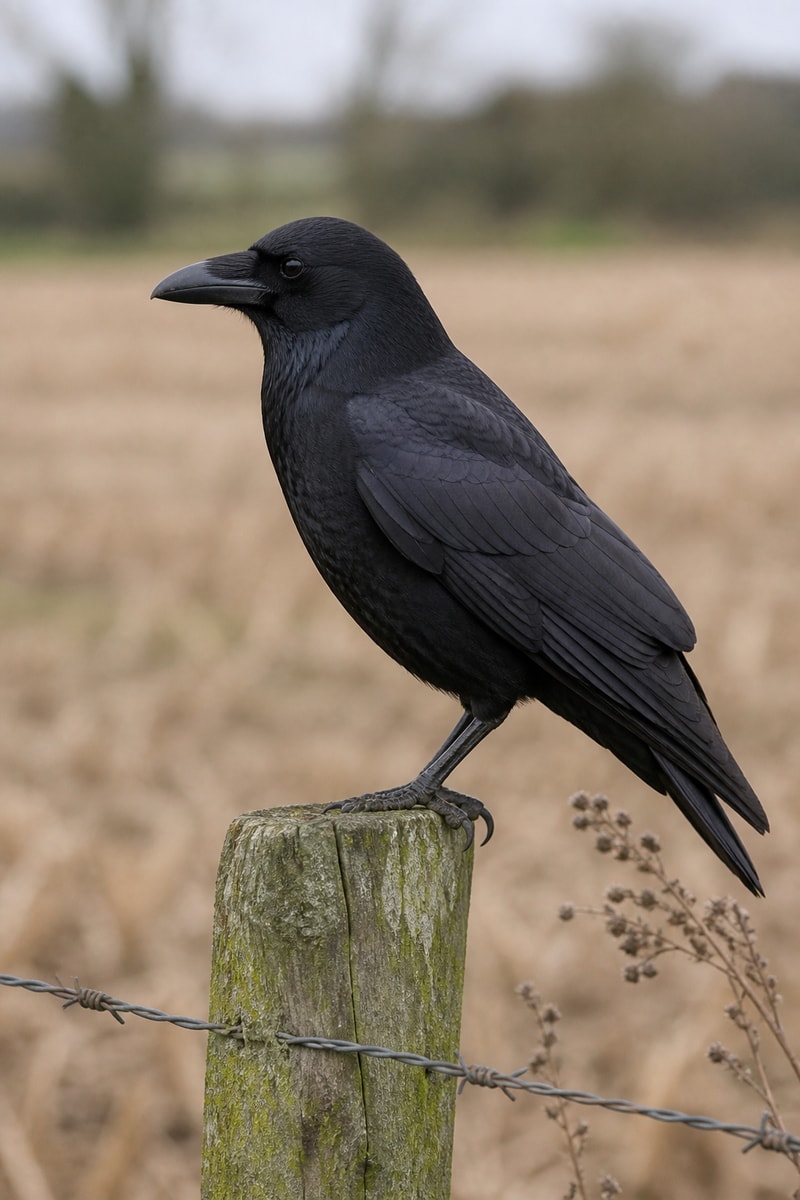
The carrion crow is the all-black corvid of fields, roadsides, and rooftops, sleek, confident, and sharper than it looks. Crows can solve multi-step puzzles, use tools, and remember human faces for years, distinguishing friendly from threatening individuals in a flock.
Common and conspicuous, they are the bird you see on telegraph wires along country lanes, picking over stubble fields, or calling harshly from a chimney pot. Underrated intelligence makes them one of the most interesting commons in the British list.
- Scientific nameCorvus corone
- Length45–47 cm
- Weight400–600 g
- Lifespan4–5 years in the wild typical; some reach 20 years
- DietOmnivore
- ConservationLeast Concern
- RegionFields & Roadsides
Habitat
- Farmland
- Parks
- Coast
- Woodland edge
Carrion crows are found throughout England, Wales, and Scotland in farmland, moorland, coast, and urban areas. They are generalist feeders, carrion, insects, eggs, grain, and scraps, and nest in tall trees, cliffs, and building ledges.
Countries found
Field notes
Field scale for the Carrion Crow: length around 45-47 cm; weight 400-600 g. Typical lifespan: 4-5 years in the wild typical; some reach 20 years.
When you are scanning habitat, prioritise farmland, parks, coast, and woodland edge. Those settings are where a clean look and a usable photo are most likely.
Quick ID anchor: All-black crow with a stout bill and relatively square tail. Lacks the rook's bare grey face patch and the raven's massive size and wedge-shaped tail. In the UK, hooded crows replace it in the north and west. Confirm with behaviour and habitat before you log the discovery.
Diet
True omnivores: invertebrates, grain, fruit, eggs, nestlings, and carrion. Clever problem-solvers that exploit roadside kills and rubbish tips.
Behaviour
Usually seen alone or in pairs (unlike rook flocks). Nest high in trees; harsh 'caw' calls and aerial chases mark territorial disputes.
How to identify
All-black crow with a stout bill and relatively square tail. Lacks the rook's bare grey face patch and the raven's massive size and wedge-shaped tail. In the UK, hooded crows replace it in the north and west.
Interesting facts
- 01
Crows can solve multi-step puzzles and remember human faces for years.
- 02
They use tools, bending wire into hooks to extract food from tubes.
- 03
Carrion crows in Scotland and hooded crows in the Highlands hybridise in a narrow zone.
- 04
They mate for life and defend a territory year-round.
- 05
A group of crows is called a murder, though they are more often seen in pairs or small family groups.
- 06
They cache food and remember hiding places weeks later.
Conservation status
Carrion crows are Least Concern and abundant across Europe. Persecution on farmland has reduced in recent decades, and populations remain stable, a reliable common for collectors across the UK.
Sources: IUCN Red List



Keep exploring
Free on iOS
Catch the Carrion Crow
Spot one in the wild, then scan it in Catch'Um to log your common discovery.